
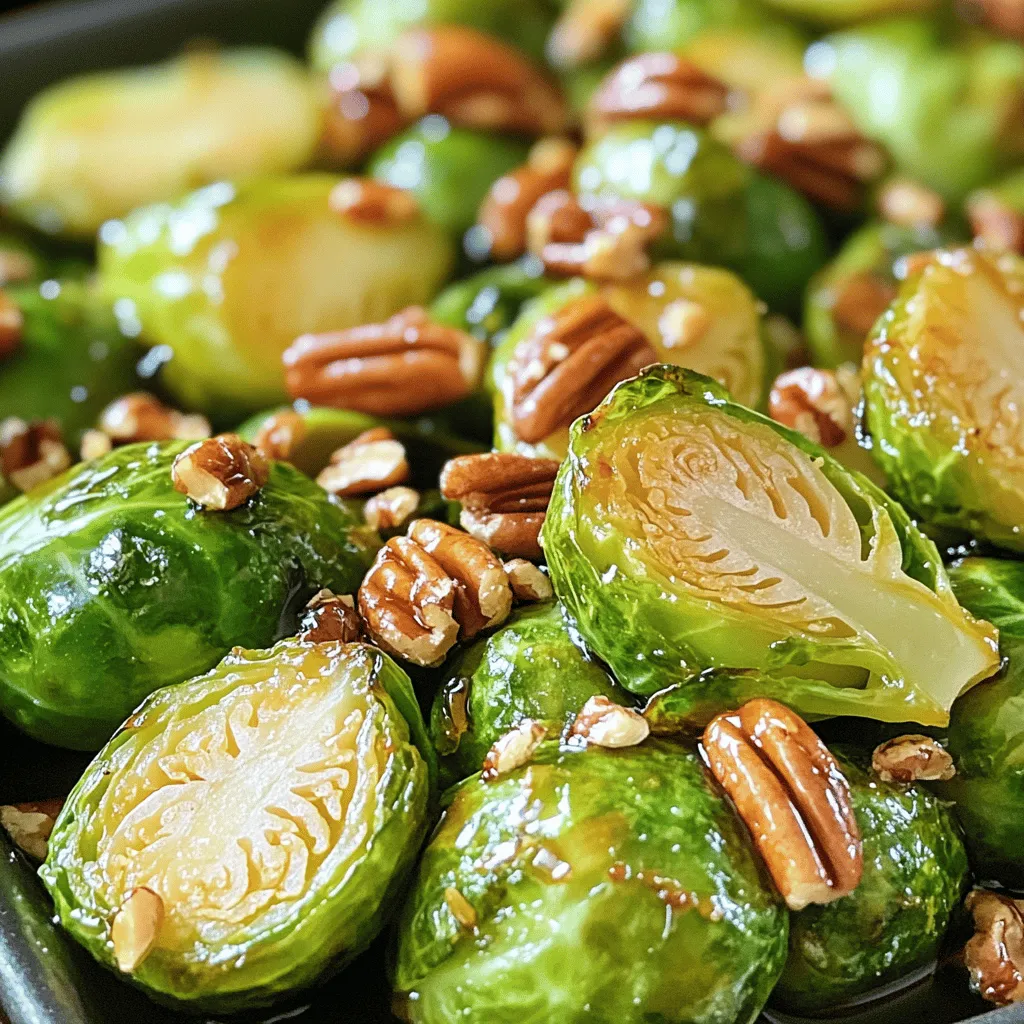
Maple Roasted Brussels Sprouts Flavorful and Easy Delight

Get ready to transform your Brussels sprouts with a delicious twist! In this post, I’ll share a simple recipe for Maple Roasted Brussels Sprouts that pack a flavorful punch. With just a few ingredients, you can create a dish that’s savory, sweet, and easy to make. Whether you’re looking to impress guests or enjoy a tasty snack, these roasted sprouts are a must-try. Let’s dive into the tasty details!
Ingredients
To whip up these delicious maple roasted Brussels sprouts, you will need the following ingredients:
- 1.5 lbs Brussels sprouts, trimmed and halved
- 3 tablespoons pure maple syrup
- 2 tablespoons extra virgin olive oil
- 1 teaspoon garlic powder
- 1 teaspoon sea salt
- ½ teaspoon freshly ground black pepper
- ½ cup pecans, roughly chopped (optional)
- 1 tablespoon balsamic vinegar (optional)
These ingredients combine to create a dish that bursts with flavor. The maple syrup adds sweetness, while the garlic powder and black pepper provide a savory kick. Using fresh Brussels sprouts ensures that you get the best taste and texture. The pecans are a great choice if you want a crunchy element. You can also drizzle balsamic vinegar at the end for a tangy finish, but it’s completely optional.
This recipe is simple yet satisfying. You will enjoy how each ingredient complements the others.
Step-by-Step Instructions
Preparation Steps
- Preheat the oven to 400°F (200°C).
- Trim and halve the Brussels sprouts.
- In a large bowl, mix the Brussels sprouts with olive oil, maple syrup, garlic powder, sea salt, and black pepper.
Roasting Process
- Spread the Brussels sprouts on a baking sheet in a single layer.
- Roast for 20-25 minutes. Shake the pan halfway for even cooking.
Final Touches
- In the last 5 minutes, add the chopped pecans for a nice crunch.
- If you like, drizzle balsamic vinegar over the sprouts before serving.
Tips & Tricks
Ensuring Even Roasting
To get great Brussels sprouts, spacing is key. Spread them out on the baking sheet. If they touch, they steam instead of roast. Roasting needs space for hot air to move. This helps them turn golden and crisp. For crispy edges, shake the pan halfway through cooking. This action gives all sides a nice brown crunch.
Enhancing Flavor
Fresh spices pack a punch! They add more life to the dish. Garlic powder works great, but fresh garlic can shine too. Don’t stop at garlic—try fresh herbs like thyme or rosemary. You can also play with sweeteners. Maple syrup is sweet, but honey or brown sugar adds a new twist. Each sweetener gives a different flavor profile.
Serving Suggestions
Maple roasted Brussels sprouts can fit any meal. They pair well with chicken, turkey, or even fish. You can serve them as a side at dinner or as a snack. They make a tasty appetizer at parties too. Just put them on a platter and watch them disappear. For a special touch, add a sprinkle of feta or Parmesan on top. You’ll find that every bite is a delightful mix of sweet and savory.

Variations
Adding Protein
You can make maple roasted Brussels sprouts even better by adding protein. One option is to use crispy bacon or pancetta. Their savory flavor pairs well with the sweet maple syrup. Simply chop the bacon and cook it until crispy. Then, add it to the Brussels sprouts before roasting. This will give a nice crunch and extra flavor.
If you prefer a vegan option, try using chickpeas or tempeh. These options can add protein without meat. Toss them in with the Brussels sprouts and roast together. They will soak up the maple flavor and add a hearty touch.
Flavor Enhancements
To spice things up, consider adding chili flakes. A pinch can give your dish a nice kick. Just sprinkle them on before roasting. This makes the sweet and savory balance more exciting.
Another way to enhance flavor is by using citrus zest. Try lemon or orange zest for a fresh twist. The bright notes will contrast nicely with the sweet maple. Add the zest right before serving for the best taste.
Seasonal Additions
Roasting Brussels sprouts with other fall veggies is a great idea. Consider adding sweet potatoes or carrots. These vegetables roast well and add color and nutrition to your dish. They also blend perfectly with the maple flavor.
Using seasonal herbs can brighten up your dish too. Fresh rosemary or thyme can add a fragrant touch. Toss these in along with the Brussels sprouts before roasting for a burst of flavor.
Storage Info
Best Practices
To store leftovers, first let them cool. Place the Brussels sprouts in an airtight container. This helps keep them fresh and tasty. You can store them in the fridge for later use. When reheating, use a skillet or oven to keep the texture. Avoid the microwave, as it can make them soggy. Heat them on low until warmed through.
Freezing Instructions
Can you freeze maple roasted Brussels sprouts? Yes, you can! To freeze, let them cool completely first. Spread them on a baking sheet in a single layer. Freeze for a few hours until solid. Then transfer them to a freezer bag or container. This helps prevent clumping.
To thaw, place them in the fridge overnight. You can also reheat them from frozen. Just add a few extra minutes to the cooking time in the oven.
Shelf Life
How long do leftovers last in the fridge? They can last up to 3 days in the fridge. After this time, they may lose flavor and texture. Check for signs of spoilage. Look for any off smells or mold. If you see these, it is best to toss them. Enjoy your delicious maple roasted Brussels sprouts while they are still fresh!
FAQs
What is the best temperature for roasting Brussels sprouts?
The best temperature for roasting Brussels sprouts is 400°F (200°C). At this heat, the sprouts get crispy and caramelized. This temperature helps balance the sweet maple syrup with the savory flavor of the sprouts. Roasting at a lower heat may lead to soggy results, while a higher heat can burn them. Aim for that golden-brown color for the perfect bite!
Can I prepare Brussels sprouts ahead of time?
Yes, you can prepare Brussels sprouts in advance! Trim and halve them a day before. Store them in an airtight container in the fridge. If you mix the sprouts with oil and spices, do it right before roasting. This keeps the flavor fresh. You can also roast them ahead of time and reheat them later. Just remember to warm them gently to keep them crispy.
Are Brussels sprouts healthy?
Brussels sprouts are very healthy! They are low in calories and high in fiber. This veggie is packed with vitamins C and K. They also contain antioxidants that help protect your body. Eating Brussels sprouts can support heart health and digestion. They are a great choice for a nutritious side dish or snack. Enjoy their health benefits while savoring their delicious taste!
This blog post explored how to make tasty maple roasted Brussels sprouts. We covered the ingredients, step-by-step instructions, and handy tips. You learned about mixing, roasting, and adding texture with pecans. We discussed fun variations and smart storage methods.
Remember, these sprouts are not just healthy; they’re versatile. You can make them sweet, savory, or even spicy. So, give this recipe a try and enjoy your delicious creation!
![- 2 cups watermelon, diced into bite-sized cubes - 1 cup fresh pineapple, diced - 1 cup ripe mango, peeled and diced - 1 cup strawberries, hulled and sliced - 1 cup plump blueberries - 1 tablespoon pure honey - 2 tablespoons freshly squeezed lime juice - 1 teaspoon finely grated lime zest - Fresh mint leaves, for a lovely garnish When picking fruits, look for bright colors and firm textures. Choose watermelon that feels heavy for its size. Make sure the skin is smooth and free from blemishes. For pineapple, smell the base; a sweet scent means it's ripe. Ripe mangoes should yield slightly when you press them. Strawberries should be bright red, without white tips. Pick blueberries that are firm and plump, with a deep color. This fruit salad is not just tasty; it’s also packed with nutrients. Watermelon is hydrating and low in calories. Pineapple provides vitamin C and enzymes that aid digestion. Mango is rich in antioxidants and vitamins A and C. Strawberries boost heart health due to their high fiber and vitamin C content. Blueberries are known for their powerful antioxidants. The honey adds a natural sweetness, while lime juice helps with vitamin C and adds a zesty kick. Each bite not only delights your taste buds but also nourishes your body. First, gather all your fruits. You will need watermelon, pineapple, mango, strawberries, and blueberries. Wash each fruit well to remove any dirt. Dice the watermelon into cubes. Cut the pineapple and mango into small pieces. Hull and slice the strawberries. Finally, add the blueberries. Place all the fruit into a large mixing bowl. Be gentle while mixing to keep the fruit intact. In a separate small bowl, combine one tablespoon of honey with two tablespoons of freshly squeezed lime juice. Add one teaspoon of finely grated lime zest for extra flavor. Whisk the mixture together until it is smooth and well-blended. This honey lime dressing will add a sweet and tangy flavor to your salad. Now, drizzle the honey lime dressing over the fruit. Make sure to cover every piece of fruit for the best taste. Use a gentle motion to toss the salad. This helps the dressing coat all the fruit without mashing it. Let the salad sit for about 10 minutes. This resting time allows the flavors to blend well. When ready to serve, garnish with fresh mint leaves. This adds a lovely touch to your fruit salad. Enjoy your Honey Lime Fruit Salad Delight! For a full recipe, visit the [Full Recipe]. Cutting fruit can be fun and easy. Start with a sharp knife for safety. For watermelon, slice it in half. Then, cut each half into thick wedges. Remove the rind and dice the flesh into cubes. Pineapple is best peeled and cored first. Cut the fruit into thick slices, then dice. For strawberries, remove the green tops and slice them. Keep your cuts even for a pretty look. You can add more fun to the salad. Try adding a splash of orange juice. This will give it a citrus twist. You can also mix in a pinch of cinnamon for warmth. Chopped nuts like almonds or walnuts add crunch. If you like creamy, add a dollop of yogurt. These extra flavors make the salad pop! Make your fruit salad shine with great presentation. Use a clear glass bowl to show off the colors. You can layer the fruits for a rainbow effect. Garnish with mint leaves on top for a fresh touch. A few extra blueberries scattered around add visual flair. Serve with colorful spoons for added fun. Remember, we eat with our eyes first! {{image_4}} You can switch up fruits in your Honey Lime Fruit Salad. Try using peaches or nectarines for a juicy twist. Grapes add a nice pop, and kiwi brings a tart flavor. You might also add oranges for an extra citrus kick. Mix and match based on your taste! Change your fruit salad with the seasons. In summer, use berries and stone fruits for freshness. Fall is great for apples and pears, while winter calls for citrus fruits like clementines and grapefruits. Spring gives you the chance to add strawberries and rhubarb for a bright taste. Add nuts or seeds for a crunchy texture. Almonds and walnuts are perfect options. If you prefer seeds, sprinkle in some pumpkin or sunflower seeds. These additions not only improve texture, but they also boost the nutrition of your salad. Enjoy the added flavor and health benefits! Store leftover honey lime fruit salad in an airtight container. This keeps the fruit fresh and tasty. If you can, eat it within a day or two. The longer it sits, the softer the fruit may get. I recommend using glass or plastic containers with tight-fitting lids. These help lock in moisture and prevent spills. If you have smaller portions, use smaller containers for easy access. The salad stays fresh for about two days in the fridge. Keep it away from foods with strong odors. To refresh the taste, add a little more honey or lime juice before serving. If you notice any browning, remove those pieces before enjoying. For the full recipe, make sure to check the main article! Yes, you can make Honey Lime Fruit Salad a few hours ahead. However, I recommend serving it fresh. If you prepare it too early, the fruit may get soft and lose its crunch. If you decide to make it ahead, store it in the fridge. This keeps it cool and fresh. Just remember to add the dressing right before serving to keep the fruit juicy. The best fruits for Honey Lime Fruit Salad are those that are ripe and sweet. I love using: - Watermelon - Pineapple - Mango - Strawberries - Blueberries These fruits blend well together, creating a vibrant and tasty mix. You can also try using kiwi or grapes for extra flavor. The key is to choose fruits that you enjoy and that are in season. Yes, you can use another sweetener if you prefer. Options include agave syrup or maple syrup. These sweeteners work great in the dressing. Just keep in mind that the flavor may change slightly. I suggest starting with the same amount as the honey. You can always adjust it to your taste. For a sugar-free option, consider using a sugar substitute that you like. In this blog post, we explored how to make a tasty Honey Lime Fruit Salad. We discussed the key ingredients, tips for selecting fresh fruits, and the nutritional benefits they offer. You learned step-by-step instructions for preparation, dressing, and serving. We also shared tips for cutting fruits and enhancing flavor. Plus, variations for using different fruits and tips for storage were provided. Creating this salad is simple and rewarding. Enjoy it yourself or share it with friends. It’s a fun and healthy treat everyone will love.](https://dishtreats.com/wp-content/uploads/2025/07/a7fe8aa9-0619-4c4c-8a63-94d099c8a4d2-768x768.webp)
![- Medium head of cauliflower - Garlic cloves - Grated Parmesan cheese - Extra virgin olive oil - Garlic powder - Smoked paprika - Salt and pepper - Fresh parsley To convert cups to grams, remember that 1 cup of cauliflower is about 100 grams. For cheese, 1 cup of grated Parmesan is around 100 grams too. If you want more garlic flavor, you can add extra garlic cloves. Adjust the garlic powder to your taste. Using fresh ingredients makes a big difference. Fresh cauliflower offers better taste and texture. Fresh garlic gives a stronger flavor. For those with dietary needs, you can swap Parmesan cheese with a vegan version made from nuts or nutritional yeast. Always choose high-quality olive oil for a rich flavor. Quality ingredients lead to a better dish! First, break down the cauliflower. Remove the leaves and stem. Cut the head into bite-sized florets. Make sure they are all similar in size. This step helps them cook evenly. Next, take six cloves of garlic and finely mince them. You want the garlic to blend well with the cauliflower. Gather the other ingredients: olive oil, garlic powder, smoked paprika, salt, and pepper. Now, preheat your oven to 425°F (220°C). This temperature is perfect for roasting. While the oven heats, grab a large bowl. Add the cauliflower florets, minced garlic, olive oil, garlic powder, smoked paprika, salt, and pepper. Toss everything together with your hands or a spoon. Ensure each floret is well-coated. Line a large baking sheet with parchment paper for easy cleanup. Spread the cauliflower in a single layer on the sheet. Place the baking sheet in the preheated oven. Roast the cauliflower for about 20 to 25 minutes. Stir halfway through to achieve a nice golden brown. After roasting, take the baking sheet out of the oven. Sprinkle the grated Parmesan cheese over the hot cauliflower. The heat will melt the cheese beautifully. Return it to the oven for another five minutes. Wait until the cheese is bubbly and delicious. When it's done, let it cool for a few minutes. For a fresh touch, garnish with finely chopped parsley before serving. If you want to explore the full recipe, check it out here: [Full Recipe]. To ensure even roasting, spread the cauliflower in a single layer. This allows the hot air to circulate around each floret. Use a large baking sheet lined with parchment paper for easy cleanup. Keep an eye on your cauliflower as it roasts. Aim for a golden color and tender texture. Stir the florets halfway through the cooking time to promote uniform browning. You can boost the flavor with extra spices and herbs. Consider adding a pinch of cayenne for heat or thyme for an earthy touch. If you want deeper flavor, try marinating the cauliflower in olive oil and spices before roasting. This helps the flavors soak in, making each bite delicious. This roasted garlic Parmesan cauliflower pairs great with many main dishes. I love it with grilled chicken or fish. For best practices in garnishing, sprinkle fresh parsley on top before serving. This adds color and freshness to your dish. Serve it in a rustic bowl or a beautiful platter. A drizzle of olive oil enhances its appeal. Enjoy your flavorful roasted garlic Parmesan cauliflower as a delightful side dish! For the full recipe, check out the details. {{image_4}} You can easily change a few ingredients in this dish. If you're looking for a vegan option, use nutritional yeast instead of Parmesan. This swap gives you a cheesy flavor without dairy. For other veggies, try broccoli or Brussels sprouts. Both will roast nicely and absorb the garlic flavor. If you want a different taste, you can grill the cauliflower. Grilling brings a smoky flavor that pairs well with garlic. Another option is using an air fryer. It cooks faster and makes the cauliflower crispy. Both methods keep the dish delicious. You can adjust ingredients based on the season. In fall, add some pumpkin spice for warmth. In spring, include fresh herbs like dill or tarragon. For holiday meals, mix in some cranberries or nuts for a festive twist. These changes keep the recipe fresh and exciting. To store leftovers, place the cauliflower in an airtight container. This keeps it fresh and tasty. Use it within three days for the best flavor. Glass or BPA-free plastic containers work well for storage. They seal tightly and prevent moisture loss. For reheating, the oven is your best friend. Preheat it to 350°F (175°C). Spread the cauliflower on a baking sheet and bake for about 10 minutes. This method keeps it crispy. Microwaving works too, but it can make the cauliflower soggy. To avoid this, place a paper towel over the dish to absorb excess moisture. You can freeze the cauliflower before cooking. Just toss it with the oil and seasonings, then spread it in a single layer on a baking sheet. Freeze until solid, then transfer to a freezer bag. To cook from frozen, no need to thaw. Just roast it at 425°F (220°C) for 30-35 minutes, adding the cheese in the last five minutes. This method keeps the flavors locked in. How can I make this dish ahead of time? You can prepare the cauliflower ahead. Simply season it and spread it on a baking sheet. Cover the sheet tightly with plastic wrap. Store it in the fridge for up to a day. When ready, roast it as per the recipe. This saves time and keeps flavors fresh. What can I serve with roasted garlic Parmesan cauliflower? This dish pairs well with many meals. It complements grilled chicken or fish nicely. You can also serve it with a hearty salad. For a vegetarian option, try it with quinoa or rice. The flavors enhance any meal you create. Is this recipe gluten-free? Yes, this recipe is gluten-free. All the ingredients are safe for those on a gluten-free diet. Just ensure that the Parmesan cheese is labeled gluten-free. This makes it easy for everyone to enjoy. Can I make this dish low-carb? Absolutely! Cauliflower is a great low-carb choice. It’s naturally low in carbs and high in fiber. You can enjoy this dish without worry. It fits perfectly into a low-carb meal plan. What to do if it's too soggy? If your cauliflower is too soggy, it may need more roasting time. Make sure to spread the florets out on the baking sheet. This helps them roast evenly and stay crisp. You can also reduce the olive oil slightly for less moisture. Why isn’t the cheese melting properly? If the cheese isn’t melting, check the oven temperature. It should be hot enough at 425°F (220°C). Make sure to add the cheese right after roasting. This lets it melt smoothly over the hot cauliflower. If needed, give it a few extra minutes in the oven. This dish combines fresh ingredients and simple steps. You learned how to prepare, roast, and serve roasted garlic Parmesan cauliflower. I shared tips for enhancing flavor and ideas for swapping ingredients. Remember to store leftovers correctly to keep them fresh. Whether you want a quick snack or a tasty side, this recipe works well. You can easily adjust it to suit your tastes. Enjoy cooking and making this dish your own!](https://dishtreats.com/wp-content/uploads/2025/06/e2797ad0-ebfe-4fec-85bd-8200cd052b8d-768x768.webp)

![To make Chicken Pesto Pasta Salad, you need fresh and tasty ingredients. Here’s what you will use: - 2 cups penne pasta - 1 cup cooked chicken breast, shredded - 1/2 cup cherry tomatoes, halved - 1/2 cup mozzarella balls, drained - 1/4 cup fresh basil leaves, chopped - 1/4 cup pesto sauce - 2 tablespoons extra virgin olive oil - Juice of 1 fresh lemon - Salt and black pepper to taste - Optional: 1/4 cup pine nuts, toasted Each ingredient brings its own flavor. The penne pasta serves as a great base. The chicken adds protein. Tomatoes give freshness, while mozzarella adds creaminess. You can change things up with add-ins. Here are some great options: - Spinach or arugula for extra greens - Bell peppers for crunch - Grated Parmesan cheese for a salty kick - Cooked bacon for a smoky flavor - Quinoa instead of pasta for a healthier twist Feel free to mix and match. Your salad can be unique each time you make it. When it comes to pesto, you have choices. You can use fresh homemade pesto or store-bought pesto. Fresh pesto tastes bright and bold. You can make it with basil, garlic, pine nuts, cheese, and olive oil. Store-bought pesto saves time but may have preservatives. Both options work well in your salad. I recommend trying fresh pesto if you have the time. It elevates the dish and adds a personal touch. For the full recipe, check out the [Full Recipe]. 1. Cook the Pasta: Start by boiling water in a large pot. Add salt for flavor. When it boils, add 2 cups of penne pasta. Cook until al dente, about 8-10 minutes. Drain the pasta and rinse it with cold water to cool it down. 2. Mix the Ingredients: In a big mixing bowl, add 1 cup of shredded cooked chicken, 1/2 cup of halved cherry tomatoes, and 1/2 cup of drained mozzarella balls. Use a spatula to mix them well. 3. Combine with Pasta: Add the cooled penne pasta to the bowl. Gently mix to combine everything. Be careful not to break the mozzarella balls. 4. Make the Dressing: In a small bowl, whisk together 1/4 cup of pesto sauce, 2 tablespoons of extra virgin olive oil, and the juice from 1 fresh lemon. Add a pinch of salt and black pepper. 5. Dress the Salad: Pour the dressing over the pasta salad. Use a spoon or tongs to toss everything gently. Make sure all the ingredients are coated. 6. Fold in Fresh Herbs: Add 1/4 cup of chopped fresh basil and optional 1/4 cup of toasted pine nuts. Gently fold them into the salad without bruising the basil. 7. Taste and Adjust: Taste your salad. If it needs more flavor, add more salt, pepper, or lemon juice. 8. Chill Before Serving: Cover the salad with plastic wrap. Let it chill in the fridge for at least 30 minutes. This helps the flavors mix well. - Use a large pot to give the pasta room to move. - Salt the water before adding pasta. This makes it taste better. - Stir the pasta often while it cooks to prevent sticking. - Always taste the pasta a minute before the time is up. It should be firm but not hard. Making the dressing is quick and easy. In just a few steps, you can create a burst of flavor. Start with fresh pesto sauce. If you like a creamier dressing, mix in some yogurt or sour cream. Always taste your dressing before adding it to the salad. Adjust the flavors based on your taste. This simple dressing brings the whole dish together and makes it shine. For the full recipe, check out the details above. Mixing ingredients well is key to flavor. Start with the pasta. Make sure it is cold before adding other items. This keeps everything fresh. Next, add the chicken, tomatoes, and mozzarella. Use a spatula to fold gently. This ensures the mozzarella stays whole. It adds nice pops of flavor to each bite. Taste your dish as you cook. Start with a pinch of salt and pepper. The lemon juice adds brightness, so taste it first. If it needs more zing, add another squeeze. Always remember that you can add more, but you can't take it out. This rule helps you control the flavors. For a great look, serve the salad in a big bowl. Layer the salad for a beautiful view. Add extra basil leaves on top. A sprinkle of toasted pine nuts adds crunch. This makes your dish eye-catching and fun. Enjoy serving this colorful salad at any gathering! You can find the full recipe in the main article. {{image_4}} You can boost your Chicken Pesto Pasta Salad with more veggies and proteins. Adding fresh spinach or arugula gives a nice crunch. Bell peppers add color and sweetness. Toss in some peas or zucchini for a nutritious kick. You can also swap chicken for shrimp, tofu, or chickpeas. This way, you can cater to different tastes and dietary needs. When it comes to ingredients, you have choices. Using homemade pesto elevates your dish. It tastes fresh and bright. You can easily make pesto with basil, nuts, olive oil, and garlic. If you’re short on time, store-bought pesto works too. Just pick a brand with simple, quality ingredients. This saves time without losing flavor. You can adjust this recipe for various diets. For a gluten-free option, use gluten-free pasta. Many brands offer great alternatives. If you want a vegan version, replace the chicken with chickpeas or roasted vegetables. Use a vegan pesto made from nuts and nutritional yeast instead of cheese. These swaps keep the dish tasty and satisfying for everyone. To store leftover chicken pesto pasta salad, place it in an airtight container. Make sure the lid seals tightly to keep the salad fresh. You can keep it in the fridge for up to three days. If you notice the salad looking dry, add a splash of olive oil or lemon juice before serving. This will help restore some moisture. Freezing pasta salad is not the best choice since the texture can change. If you do want to freeze it, separate the chicken and pasta from the veggies and dressing. Store each part in a freezer-safe bag or container. You can freeze it for up to one month. When ready, thaw it in the fridge overnight before serving. Reheating chicken pesto pasta salad is simple. If you have stored it in the fridge, serve it cold or at room temperature. If you prefer it warm, place it in a microwave-safe dish. Heat it for about 30 seconds at a time until it reaches your desired warmth. Be careful not to overheat, as it can make the pasta mushy. Always check the seasoning again after reheating and adjust as needed. You can use tofu, shrimp, or chickpeas as great chicken alternatives. Tofu gives a nice texture. Shrimp adds a seafood twist. Chickpeas provide protein and a hearty feel. You can also try cooked turkey or beef for a different taste. The key is to use a protein you enjoy. This salad stays fresh in the fridge for three to five days. Make sure to store it in an airtight container. The flavors will blend nicely as it sits. However, the longer it sits, the softer the pasta becomes. Yes, you can prepare this salad a day in advance. It tastes even better after the flavors meld overnight. Just keep it covered in the fridge. If you use fresh basil, add it right before serving to keep it vibrant. Check out the Full Recipe for complete details! This article covered how to make a tasty Chicken Pesto Pasta Salad. You learned about key ingredients, and how to cook pasta just right. I shared some helpful tips for mixing and serving. Remember, you can add veggies or change spices to fit your taste. Store leftovers well for future meals. This salad is great for lunch or a gathering. Enjoy your cooking and happy eating!](https://dishtreats.com/wp-content/uploads/2025/06/0440c548-7b14-481e-8658-8224512ec7fd-768x768.webp)
![To make delicious grilled veggie kabobs, gather these fresh ingredients: - 1 bell pepper (any color), cut into 1-inch pieces - 1 zucchini, sliced into rounds - 1 yellow squash, sliced into rounds - 1 red onion, cut into wedges - 8 cherry tomatoes - 1 cup mushrooms, cleaned and stems removed - 3 tablespoons olive oil - 2 cloves garlic, finely minced - 1 teaspoon smoked paprika - 1 teaspoon dried oregano - Salt and freshly ground black pepper to taste - 8 skewers (wooden or metal) Fresh vegetables make a big difference in flavor. You can swap in seasonal veggies, like asparagus or eggplant, based on what you find at the market. This keeps your kabobs fresh and exciting. If you have frozen vegetables, use those too! Just remember to thaw and drain them well. Fresh veggies often taste better but frozen can be a great backup. Using fresh ingredients ensures better taste and texture. Fresh veggies hold their shape and crunch better on the grill. When you bite into a grilled kabob, you want that satisfying crunch. Plus, fresh produce packs more nutrients and flavor. So, always try to choose fresh when you can! For the full recipe, check the section above. Cutting vegetables evenly ensures they cook at the same rate. Aim for 1-inch pieces for bell peppers and wedges for onions. Slice zucchini and yellow squash into rounds. If using wooden skewers, soak them in water for at least 30 minutes. This step prevents burning and keeps them strong. Marinating vegetables adds rich flavor. Combine olive oil, minced garlic, smoked paprika, and oregano. Toss in salt and pepper, then mix well. Add your veggies and coat them with the marinade. Let them sit for 15 minutes to soak up the flavors. Preheat your grill to medium-high heat. A hot grill helps create nice grill marks and a good sear. Place the kabobs on the grill grates. Arrange them evenly for better cooking. Cook for about 10-15 minutes. Turn them occasionally to ensure even cooking. Look for tender veggies with nice grill marks. To serve kabobs, use a rustic platter for a warm touch. Garnish with fresh herbs for added color. Serve with tzatziki or yogurt dip for a creamy contrast. Pair with a light salad or grilled protein for a complete meal. Enjoy your delicious creation! For the full recipe, check out the Grilled Veggie Kabobs details above. To boost the taste of your grilled veggie kabobs, try different marinades. Balsamic vinegar adds a sweet tang. Citrus juices like lemon or lime give a bright kick. You can also add spices or herbs. Consider rosemary, thyme, or cayenne pepper for extra flavor. Smoking the veggies adds depth too. If you have a grill with a smoker box, use it. Wood chips like hickory or mesquite can make a big difference. When you assemble your kabobs, think about color and texture. Alternate your veggies for a pretty look. Start with a bell pepper, then add a mushroom, followed by a cherry tomato. This keeps the kabob interesting. To prevent veggies from falling apart, push them snugly together on the skewer. Avoid overloading them; a little space helps. You can also add proteins like chicken or shrimp, or even cheese cubes for variety. This makes your kabobs more filling and tasty. For a twist, try marinating the protein in the same mix as the veggies. If you want to dive deeper into the recipe, check out the Full Recipe for more details! {{image_4}} You can easily customize grilled veggie kabobs by using seasonal vegetables. Here are some ideas: - Summer: Try corn on the cob, eggplant, and asparagus. - Fall: Use butternut squash, Brussels sprouts, and sweet potatoes. - Winter: Consider root veggies like carrots, turnips, and beets. You can also grill fruits alongside your veggies. Fruits add sweetness and a nice contrast. Pineapple, peaches, and bell peppers work well. Skewer them together for fun color and taste. For a great look and texture, combine different colors and shapes. Mix round cherry tomatoes with long zucchini slices. Use bright peppers with earthy mushrooms. This creates visual interest on your plate. You can make grilled veggie kabobs vegan by omitting any animal products. The recipe is already plant-based, so it’s a perfect choice. If you want a gluten-free version, ensure your marinade is gluten-free. Most spices and oils are safe, but check labels. You can enhance nutrition by adding grains or legumes. Try adding cooked quinoa or chickpeas to your kabobs. This gives extra protein and fiber. If you follow a low-carb diet, focus on non-starchy vegetables. Zucchini, bell peppers, and mushrooms are great picks. You can skip the starchy veggies like corn or potatoes. Check out the Full Recipe for more ideas on how to adapt these kabobs! To keep your leftover kabobs fresh, store them in the fridge. Place them in an airtight container. They can last up to three days. For longer storage, freeze them. Wrap each kabob in plastic wrap, then place them in a freezer bag. They can stay frozen for up to three months. When reheating kabobs, use the oven or grill. Preheat the oven to 350°F. Place the kabobs on a baking sheet. Heat them for about 10 minutes. This method keeps the veggies tender. You can also grill them for 5 minutes on medium heat. Avoid microwaving, as it makes them soggy. The freshness of your ingredients matters. Bell peppers and zucchini last well in the fridge for about a week. Tomatoes and mushrooms are best if used within three days. Always check for signs of spoilage before using leftovers. You can prep veggies ahead of time for easy grilling. Cut your bell pepper, zucchini, and onion in advance. Store them in the fridge in sealed bags. This saves time when you're ready to grill. Kabobs are great for meal plans. You can mix and match different veggies throughout the week. Pair them with grains or salads for a full meal. They also work well for lunch boxes. Just make sure to keep them cool until you eat. If you have a gathering, kabobs are a hit! You can set up a kabob station. Guests can choose their favorite veggies. This adds fun and personalization to your meal. Kabobs not only taste great but also look colorful and inviting on the table. For the complete recipe, check out the [Full Recipe]. Can I make these kabobs in the oven? Yes, you can! Set your oven to 400°F. Place the kabobs on a baking sheet. Bake for about 20 minutes, turning halfway through. This gives you a tasty option when grilling isn't possible. What are the best vegetables for grilling? The best vegetables for grilling include: - Bell peppers - Zucchini - Yellow squash - Red onion - Cherry tomatoes - Mushrooms These veggies hold up well on the grill and taste great! How to know when the vegetables are done cooking? Look for nice grill marks and tenderness. You can pierce them with a fork. If they are soft but still firm, they are ready to eat. How to make grilled veggie kabobs more flavorful? Use a good marinade with olive oil, garlic, and spices. Let the veggies soak in the marinade for at least 15 minutes. This step really boosts their taste. Why should you marinate vegetables? Marinating adds flavor and helps keep them juicy. The oil and spices soak into the veggies, making each bite delicious. What type of skewers work best for grilling? Both wooden and metal skewers work well. If using wooden skewers, soak them first. This prevents burning. Metal skewers can be reused and do not need soaking. Can I use tofu or tempeh in veggie kabobs? Yes, tofu or tempeh can add protein. Cut them into cubes and marinate like the veggies. They grill nicely and taste great with the other flavors. How do I prevent vegetables from burning on the grill? Start with a clean grill and preheat it. Keep an eye on the kabobs while grilling. Turn them often to ensure even cooking and avoid burning. What can I serve alongside grilled veggie kabobs? Serve kabobs with dips like tzatziki or hummus. They also pair well with rice, quinoa, or a fresh salad. Adding some bread can complete the meal nicely. You now have all the tools to create delicious grilled veggie kabobs. We covered essential ingredients, preparation methods, grilling tips, and serving ideas. Remember, fresh ingredients make a big difference. You can also customize with various vegetables and flavors. Don’t forget to store leftovers properly for future meals. Enjoy your grilling adventure, and get creative with your kabob variations. With practice, you'll master this fun cooking method that delights everyone!](https://dishtreats.com/wp-content/uploads/2025/06/56cc5cbd-3bee-4e7d-a92f-dff27107e6fe-768x768.webp)