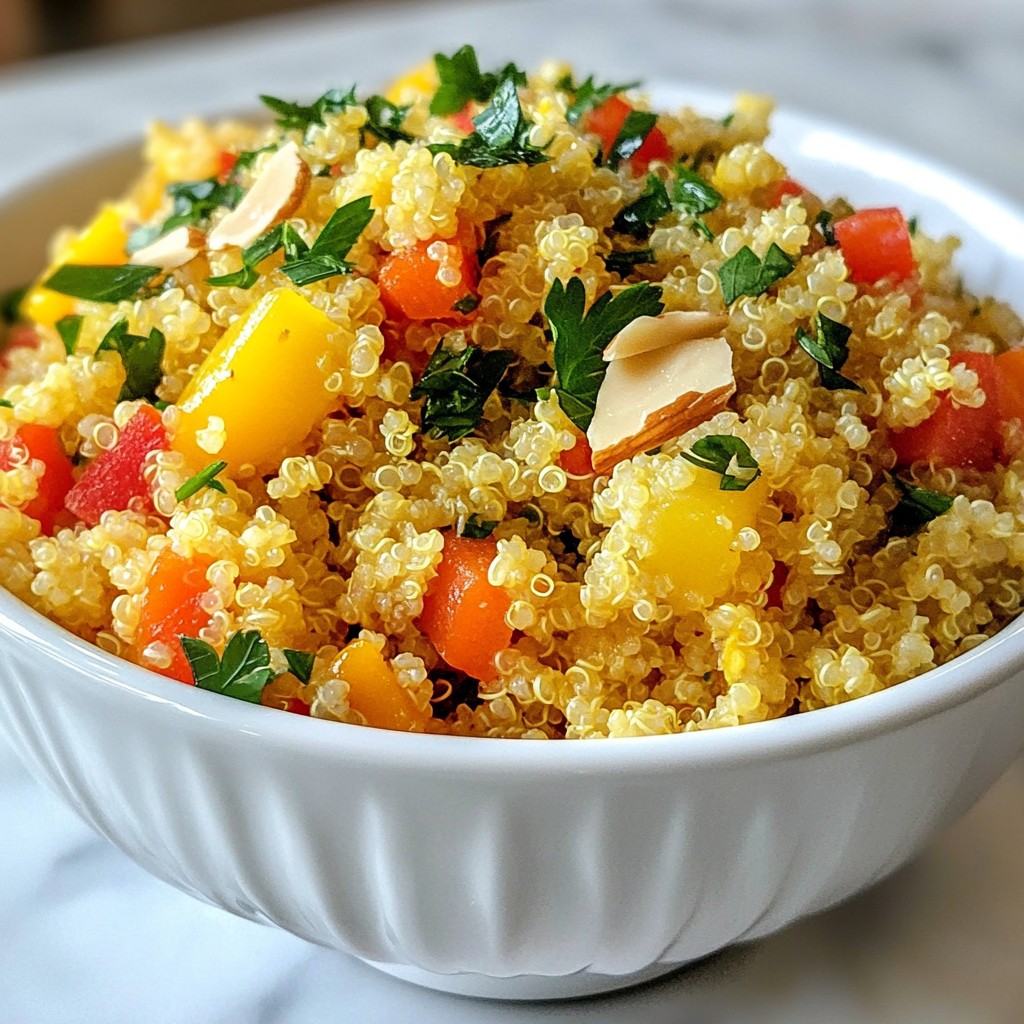
Looking for a quick and tasty side dish? My Lemon Herb Quinoa Pilaf is just what you need! This simple recipe bursts with fresh flavors and is packed with nutrients. I’ll guide you step-by-step so you can whip it up in no time. Plus, I’ll share tips for ingredient swaps and storage, ensuring your pilaf stays delicious. Dive into this flavorful adventure and impress your taste buds today!
Why I Love This Recipe
- Bright and Fresh Flavor: The combination of lemon juice and zest with fresh herbs elevates this pilaf, making it a refreshing side dish that pairs well with almost any meal.
- Nutritious and Wholesome: Quinoa is a complete protein packed with nutrients, making this recipe not only delicious but also a healthy choice for any diet.
- Easy to Prepare: This pilaf comes together in just 30 minutes, making it a quick and convenient option for busy weeknight dinners.
- Versatile and Customizable: You can easily swap in your favorite vegetables or add different nuts to tailor this dish to your taste preferences.
Ingredients
Detailed list of ingredients
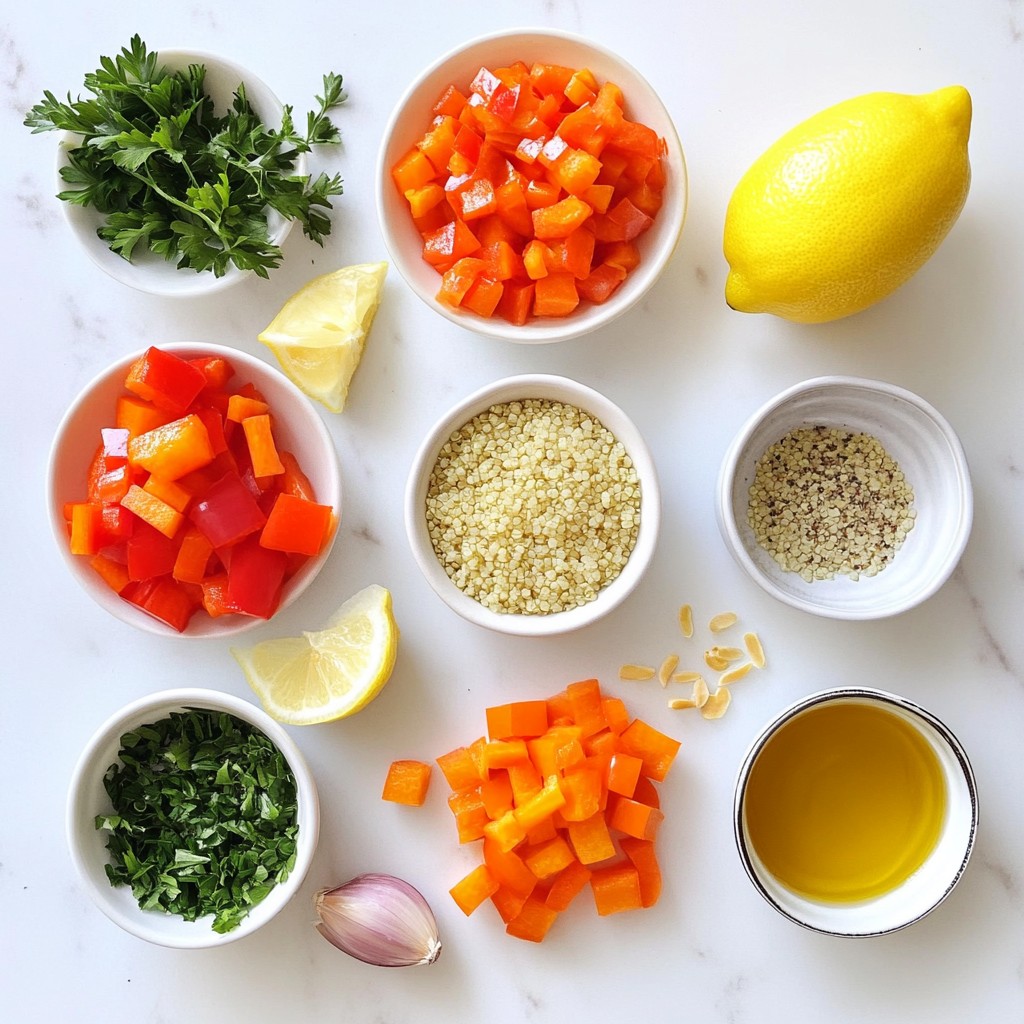
- 1 cup quinoa, thoroughly rinsed
- 2 cups vegetable broth (or water for a lighter flavor)
- 1 tablespoon extra virgin olive oil
- 1 small onion, finely chopped
- 2 cloves garlic, minced
- 1 bell pepper, diced (any color for visual appeal)
- 1 medium carrot, peeled and diced
- 1 teaspoon dried oregano
- 1 teaspoon dried thyme
- Zest and juice of 1 large lemon
- Sea salt and freshly cracked black pepper, to taste
- 1/4 cup fresh parsley, finely chopped
- 1/4 cup slivered almonds, toasted (optional)
Notes on ingredient substitutions
You can swap quinoa with couscous or brown rice if you prefer. Use chicken broth instead of vegetable broth for added flavor. If you don’t have slivered almonds, you can use chopped walnuts or sunflower seeds. Fresh herbs can replace dried ones; just use three times more fresh herbs.
Tips for selecting fresh herbs and vegetables
Choose herbs that look vibrant and smell strong. Fresh parsley should be bright green and crisp. For vegetables, pick those that feel firm and heavy. A bell pepper should have smooth skin and no blemishes. Carrots should be bright orange, firm, and not limp. When buying herbs, look for ones without yellow leaves.
Step-by-Step Instructions
Preparation and cooking methods
1. Start by rinsing 1 cup of quinoa under cold water. This helps remove any bitter taste.
2. In a medium-sized saucepan, heat 1 tablespoon of extra virgin olive oil over medium heat. Wait until it shimmers.
3. Add the finely chopped onion to the pan. Sauté for about 3-4 minutes until it turns soft and translucent.
4. Mix in 2 minced garlic cloves and cook for 1 more minute. You want the garlic fragrant but not burnt.
5. Toss in 1 diced bell pepper and 1 diced medium carrot. Cook for 5 minutes, keeping them slightly crisp.
6. Stir in the rinsed quinoa, 1 teaspoon of dried oregano, and 1 teaspoon of dried thyme. Add sea salt and black pepper to taste. Toast for 2 minutes to enhance the flavor.
7. Pour in 2 cups of vegetable broth, along with the zest and juice of 1 large lemon. Raise the heat until it boils.
8. Once boiling, reduce the heat to low, cover the pan, and let it simmer for 15 minutes. The quinoa will be fluffy when done.
9. After 15 minutes, remove from heat but keep the lid on for another 5 minutes. This resting time is vital for perfect quinoa.
10. Finally, fluff the quinoa with a fork. Mix in 1/4 cup of finely chopped fresh parsley. If you like, add 1/4 cup of toasted slivered almonds for crunch.
Visual cues for each step
- Rinsing quinoa: Look for clear water, not cloudy.
- Onion: It should be soft and clear.
- Garlic: You’ll smell it before it browns.
- Vegetables: They should soften but still have a little bite.
- Quinoa: It should look fluffy and not sticky after cooking.
Importance of ingredient order
The order of adding ingredients matters. Starting with oil and onions builds a strong flavor base. Adding garlic next prevents it from burning. Cooking vegetables before quinoa allows them to release moisture. Toasting quinoa enhances its nutty flavor. Finally, adding broth and lemon creates a bright, fresh taste. This method ensures a balanced and flavorful dish.
Tips & Tricks
Best practices for cooking quinoa
To cook quinoa perfectly, start by rinsing it well. This removes any bitterness. Use two cups of liquid for every cup of quinoa. This ratio keeps it fluffy. Heat the oil before adding onions. This helps them cook evenly. Once the quinoa simmers, cover it tightly. This keeps the steam in, cooking the grains. Let it rest after cooking. This step helps the grains separate.
Flavor enhancements and ingredient pairings
You can boost the flavor of your pilaf with fresh herbs. Try adding basil or cilantro for a fresh twist. You can also add spices like cumin or paprika. For more crunch, toss in nuts or seeds. Toast them lightly to enhance their flavor. Serve your pilaf with grilled chicken or fish. It pairs well with roasted vegetables too. A splash of balsamic vinegar can also brighten the dish.
Troubleshooting common issues
If your quinoa is mushy, you may have used too much liquid. Always measure carefully. If it tastes bland, add more seasoning or lemon juice. This will lift the flavors. If the quinoa sticks together, it may need more resting time. Fluff it gently with a fork after resting. If you forget to rinse, it can taste bitter. Always rinse to avoid this issue.
Pro Tips
- Rinse the Quinoa: Always rinse quinoa thoroughly under cold water before cooking to remove its natural coating, called saponin, which can impart a bitter taste.
- Toast for Extra Flavor: Lightly toasting the quinoa in the pan for a couple of minutes before adding the liquid enhances its nutty flavor and adds depth to the dish.
- Customize Your Veggies: Feel free to swap in your favorite vegetables or whatever you have on hand, such as zucchini or peas, for a personalized touch.
- Resting is Key: Allow the quinoa to rest covered after cooking for a few minutes; this helps to fluff it up and improve the texture.
Variations
Ingredient variations for dietary preferences
You can easily adapt Lemon Herb Quinoa Pilaf to fit your diet. Here are some ideas:
- Gluten-free: Quinoa is naturally gluten-free, making it safe for those with gluten issues.
- Vegan: Use vegetable broth instead of chicken broth. This keeps the dish plant-based.
- Protein boost: Add beans or chickpeas for extra protein. They blend well with quinoa.
- Nut-free: Omit the slivered almonds if you have nut allergies. The dish remains tasty without them.
Serving suggestions and meal pairings
This pilaf pairs well with many dishes. Here are some favorites:
- Grilled chicken or fish: The light, fresh flavors of the pilaf balance rich proteins.
- Roasted vegetables: Use seasonal veggies for added color and nutrients.
- Salads: Serve with a crisp green salad for a complete meal.
- Wraps: Try it in a wrap with some greens and avocado for a tasty lunch.
Seasonal adaptations of the recipe
You can change this pilaf with the seasons. Here’s how:
- Spring: Add peas or asparagus for brightness.
- Summer: Use fresh tomatoes and basil for a Mediterranean twist.
- Fall: Stir in roasted squash or pumpkin for warmth and sweetness.
- Winter: Incorporate hearty greens like kale or spinach for extra nutrition.
These variations make Lemon Herb Quinoa Pilaf a versatile, year-round dish!
Storage Info
Proper storage techniques for leftovers
After you enjoy your Lemon Herb Quinoa Pilaf, let it cool down to room temperature. Once cooled, transfer the pilaf into an airtight container. This helps keep it fresh and tasty. You can store the pilaf in the fridge for up to five days. If you see any moisture or condensation in the container, it’s best to dry it off before sealing.
Shelf life and reheating tips
When stored correctly, your quinoa pilaf can last up to five days in the fridge. To reheat, simply scoop out the amount you want. You can use a microwave or a skillet. If using a microwave, heat it for 1-2 minutes. Stir halfway through to ensure even heating. If using a skillet, add a splash of water, cover, and heat on low. This keeps it moist and avoids drying out.
Freezing options for meal prep
If you want to save some for later, you can freeze the pilaf. Place it in a freezer-safe container, leaving some space for expansion. The pilaf can stay fresh in the freezer for up to three months. To thaw, move it to the fridge overnight. Reheat it as mentioned above. This makes meal prep easy and ensures you always have a tasty dish ready.
FAQs
What is quinoa and its health benefits?
Quinoa is a tiny seed that acts like a grain. It is rich in protein and fiber. Quinoa has all nine essential amino acids. This makes it a complete protein source. It is gluten-free, perfect for those with gluten issues. Quinoa is also high in vitamins and minerals like magnesium and potassium. Its high fiber content helps with digestion and keeps you full longer.
Incorporating quinoa into your meals can help maintain a balanced diet. It can support heart health and weight management. It is a great base for salads, bowls, and pilafs.
Can I use brown rice instead of quinoa?
Yes, you can use brown rice instead of quinoa. Brown rice has a different texture and flavor. It takes longer to cook, so adjust your cooking time. Typically, brown rice needs about 40-45 minutes to cook, while quinoa cooks in just 15 minutes.
Brown rice is also nutritious, but it has less protein than quinoa. If you want a different taste, try using brown rice. Just remember to check the liquid ratios, as brown rice may need more water or broth.
How to make Lemon Herb Quinoa Pilaf vegan?
To make this pilaf vegan, simply use vegetable broth instead of chicken broth. All the other ingredients are already plant-based. You can also add more veggies if you like. Try adding peas or spinach for extra color and nutrients.
Make sure to check any canned products for animal products. Enjoy this tasty dish, knowing it's friendly for all diets!
This blog post covered essential ingredients, cooking methods, and helpful tips for making quinoa. You learned about ingredient substitutions and how to select fresh herbs. We explored methods to enhance flavors and troubleshoot common issues. Seasonal variations and smart storage tips also were shared.
In the end, quinoa is versatile and packed with nutrients. Using these tips, you can make delicious meals that fit your needs and preferences. Enjoy experimenting with this healthy grain!