
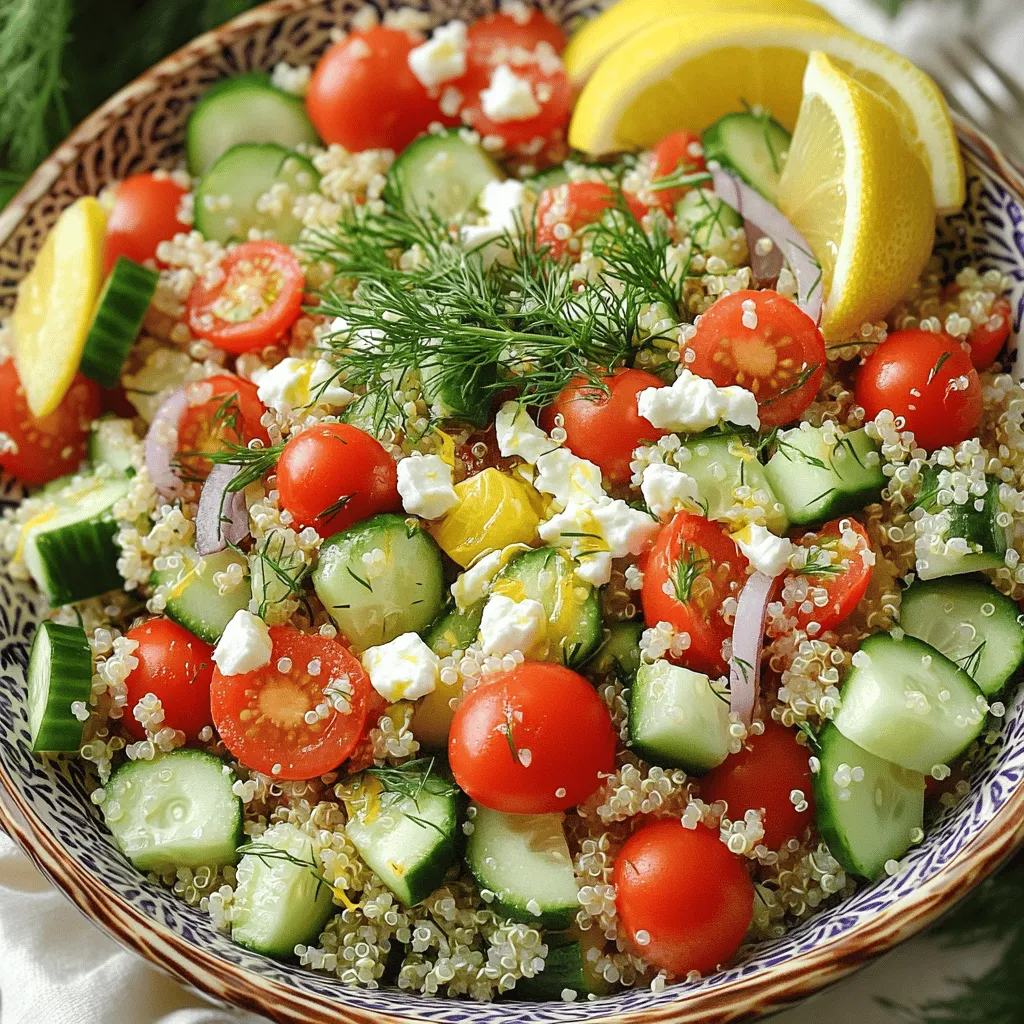
Looking for a light and tasty dish? My Lemon Dill Quinoa Salad is just what you need! This refreshing meal combines bright flavors and healthy ingredients. Packed with nutrients, it’s perfect for lunch or dinner. I’ll guide you step-by-step, showing how to make this dish unique. Whether you want protein options or seasonal swaps, I’ve got you covered. Let’s dive in and create something delicious together!
Ingredients
List of Ingredients
– 1 cup quinoa, thoroughly rinsed
– 2 cups vegetable broth (or water for a lighter flavor)
– 1 cup cherry tomatoes, halved
– 1 cucumber, diced into small cubes
– 1/4 red onion, finely chopped
– 1/4 cup fresh dill, chopped
– 1/4 cup feta cheese, crumbled (optional but adds a rich flavor)
– 1/4 cup extra virgin olive oil
– 3 tablespoons freshly squeezed lemon juice
– Salt and pepper, to taste
Nutritional Information
This Lemon Dill Quinoa Salad packs a nutritious punch. Each serving provides a balance of carbs, protein, and healthy fats. Quinoa is a complete protein, meaning it has all nine essential amino acids. One cup of cooked quinoa has about 220 calories, 8 grams of protein, and 5 grams of fiber. The fresh veggies add vitamins and minerals while keeping the salad low in calories. Feta cheese, if used, adds creamy flavor but increases the calorie count slightly.
Benefits of Key Ingredients
– Quinoa: This grain is gluten-free and full of protein. It keeps you full and satisfied.
– Dill: This herb has antioxidants and may help digestion. It adds a fresh taste.
– Lemon juice: High in vitamin C, it boosts your immune system and brightens flavors.
– Cherry tomatoes: Packed with vitamins A and C, they add sweetness and color.
– Cucumber: This veggie hydrates you and adds crunch. It’s low in calories and high in water.
Using these fresh, wholesome ingredients makes this salad a perfect choice for a light meal.
Step-by-Step Instructions
Cooking the Quinoa
To start, you need one cup of quinoa. Rinse it well under cold water. This step removes any bitter taste. Next, in a medium saucepan, add the rinsed quinoa and two cups of vegetable broth. You can use water if you prefer a lighter flavor. Heat the mixture on medium-high until it boils. Once it boils, lower the heat to a gentle simmer. Cover the saucepan and let it cook for 15 to 20 minutes. The quinoa will become fluffy, and most of the broth will absorb. After cooking, remove it from heat and let it cool for a few minutes.
Preparing the Vegetables
While the quinoa cools, it’s time to prep the veggies. Grab a large mixing bowl. Add one cup of halved cherry tomatoes, a diced cucumber, and a finely chopped red onion. I love adding fresh dill, so toss in a quarter cup of chopped dill. If you want a richer taste, crumble in a quarter cup of feta cheese. This adds a creamy texture that pairs well with the other ingredients.
Making the Dressing
Now, let’s create a zesty dressing. In a small bowl, whisk together a quarter cup of extra virgin olive oil and three tablespoons of fresh lemon juice. Add salt and pepper to taste. This dressing brings all the flavors together. I recommend tasting it before mixing it into the salad. You can adjust the salt or lemon juice based on your preference.
Combining Ingredients
Once the quinoa has cooled slightly, fluff it with a fork. Add the quinoa to the bowl with the vegetables. Drizzle the dressing over the mixture. Gently toss everything together until all the ingredients are well-coated. Taste your salad to see if it needs more seasoning. For the best flavor, cover the bowl with plastic wrap and refrigerate for at least 30 minutes. This allows the flavors to blend beautifully. Enjoy your fresh and healthy Lemon Dill Quinoa Salad!
Tips & Tricks
Perfecting Quinoa Texture
To make fluffy quinoa, rinse it well before cooking. This removes the bitter coating called saponin. Use two parts liquid to one part quinoa. For a rich taste, use vegetable broth instead of water. Cook the quinoa until it absorbs the liquid and looks fluffy. Let it cool before mixing it into your salad. This keeps it from clumping together.
Using Fresh Herbs
Fresh herbs make this salad shine. I love using fresh dill for its bright flavor. Chop the dill finely for the best taste. You can also mix in parsley or mint for a twist. Always add herbs just before serving to keep them fresh. This simple step boosts the taste and makes your salad look vibrant.
Flavor Enhancements
To elevate the flavor, use high-quality olive oil. A splash of lemon juice adds zing. Taste your salad before serving; adjust salt, pepper, or lemon juice as needed. If you want a creamier texture, add crumbled feta cheese. For extra crunch, toss in nuts or seeds. These small changes can turn a good salad into a great one!
Variations
Adding Protein Options
Want to boost your Lemon Dill Quinoa Salad? Add protein! You can mix in cooked chicken, shrimp, or chickpeas. Each of these adds flavor and makes the salad heartier. If you want a quick option, canned chickpeas work great. Just rinse them and toss them in. For a warm touch, grill some chicken or shrimp and slice them before adding to the salad.
Vegan and Vegetarian Adaptations
This salad is easy to adapt for vegans and vegetarians. Just skip the feta cheese or replace it with a vegan alternative. Nutritional yeast is a good option for a cheesy flavor without dairy. You can also add some avocado for creaminess. This keeps the salad rich and satisfying while still being plant-based.
Seasonal Vegetable Swaps
Using seasonal vegetables can keep your salad fresh and exciting. In spring, try adding asparagus or peas. In summer, bell peppers and zucchini are great. In fall, roasted sweet potatoes add a warm touch. For winter, you can toss in some shredded carrots or Brussels sprouts. These swaps not only change the taste but also bring different colors to your plate.
Storage Info
How to Properly Store Leftovers
To keep your Lemon Dill Quinoa Salad fresh, store it in an airtight container. Make sure to let it cool first. Once it’s cool, add it to the container and seal it tightly. This helps keep the flavors intact. If you have extra dressing, store it separately. This way, the salad won’t get soggy.
Shelf Life and Reheating Tips
When stored correctly, the salad lasts up to three days in the fridge. I recommend eating it cold, as it tastes best that way. If you want to reheat, use a microwave but only for a short time. Heat in 20-second intervals to avoid overcooking the quinoa. Remember, reheating may change the texture a bit.
Serving Suggestions for Meal Prep
This salad is perfect for meal prep. You can pack it in individual containers for easy lunches. Pair it with grilled chicken or fish for protein. It also makes a great side dish for barbecues or picnics. Garnish with extra dill or lemon wedges before serving for a fresh touch.
FAQs
How can I make this salad gluten-free?
To make Lemon Dill Quinoa Salad gluten-free, use quinoa as your base. Quinoa is naturally gluten-free. Always check for cross-contamination if you buy pre-packaged quinoa. Also, ensure your vegetable broth is gluten-free. Most brands are safe, but a quick check will ease your mind.
Can I use different grains besides quinoa?
Yes, you can use other grains like rice, bulgur, or farro. Each grain adds a unique flavor and texture. For a lighter option, try using cauliflower rice. Just note that cooking times will vary based on the grain you choose. Adjust your method and enjoy a new twist on this salad.
What are some good pairings for Lemon Dill Quinoa Salad?
This salad pairs well with grilled chicken, fish, or shrimp. It also works great as a side dish for roasted vegetables. You can serve it with a light yogurt dressing or a simple vinaigrette. For a complete meal, add some chickpeas or beans for extra protein.
This blog post covered the key ingredients for a tasty Lemon Dill Quinoa Salad. We discussed how to cook quinoa, prepare veggies, and make a simple dressing. Tips on perfecting texture and enhancing flavor can make a difference. You can also add protein, adapt for vegan diets, or change veggies by the season. Proper storage helps keep leftovers fresh too. Overall, this salad is flexible, nutritious, and easy to make. Enjoy experimenting with your version!