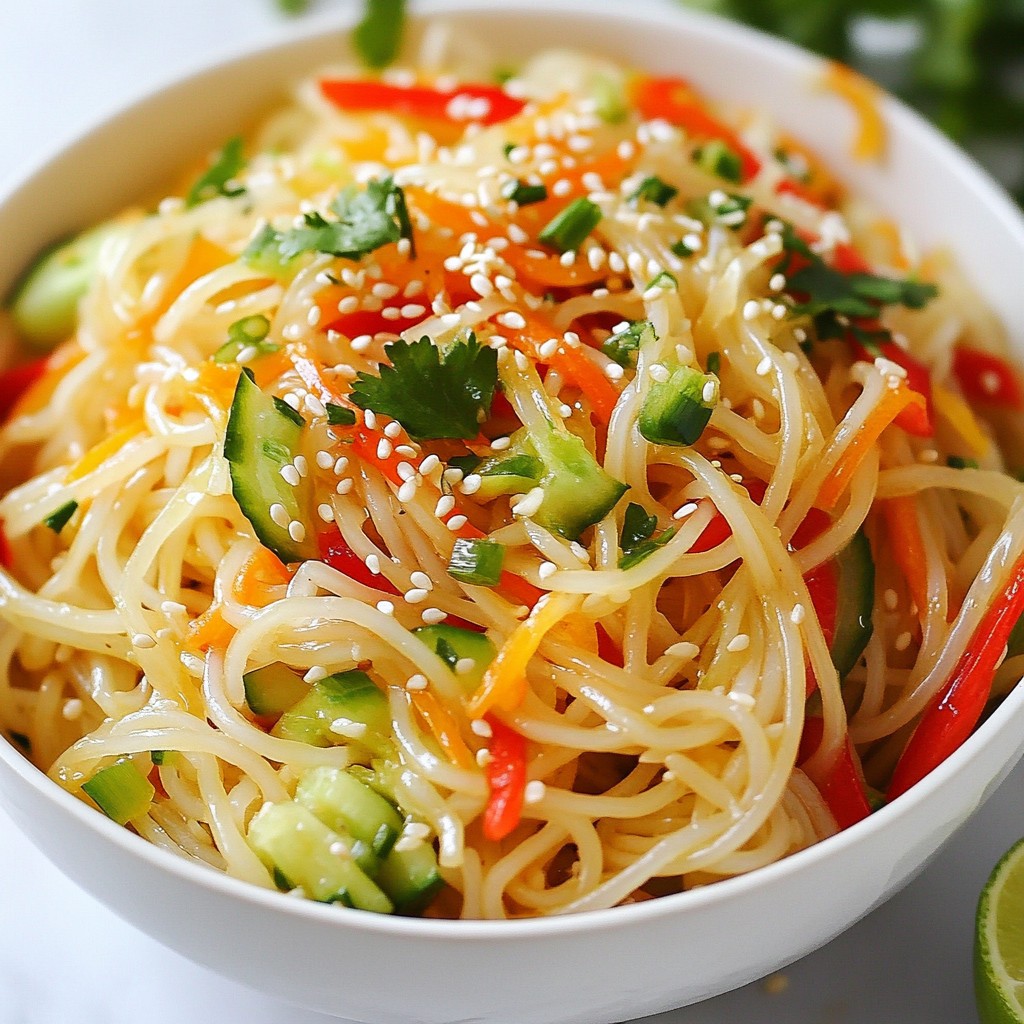
Do you want a meal that's as easy to make as it is tasty? This Flavorful Sesame Ginger Noodle Salad is just what you need! With fresh veggies and a zesty dressing, you'll love how simple it is to prepare. In this post, I'll share a step-by-step guide along with tips to customize this dish. Let’s dive into the delicious world of noodles and flavors that everyone will enjoy!
Why I Love This Recipe
- Fresh and Colorful: This salad is bursting with vibrant vegetables that not only look amazing but also provide a fresh crunch in every bite.
- Quick and Easy: With a prep time of just 15 minutes, this recipe is perfect for busy weeknights or when you need a healthy meal in a hurry.
- Flavorful Dressing: The sesame ginger dressing adds a delightful zing that enhances the taste of the noodles and vegetables beautifully.
- Customizable: You can easily adjust the ingredients based on what you have on hand or your personal preferences, making this salad versatile and fun.
Ingredients
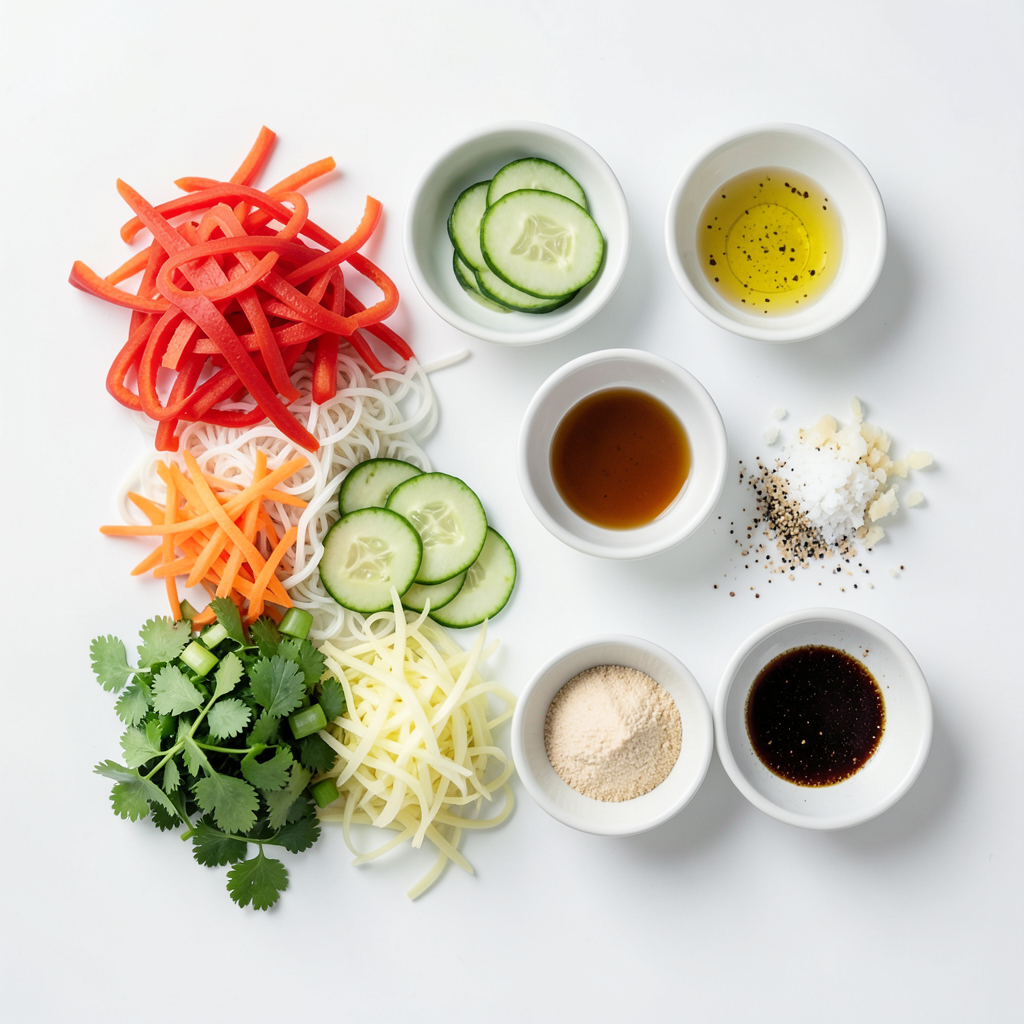
List of Ingredients
- 8 oz. rice noodles
- 1 red bell pepper, julienned
- 1 cucumber, thinly sliced
- 2 carrots, grated
- 4 green onions, chopped
- ¼ cup fresh cilantro, roughly chopped
- 1 tablespoon sesame oil
- 2 tablespoons soy sauce (or tamari for gluten-free)
- 1 tablespoon rice vinegar
- 1 tablespoon honey or agave syrup
- 1 tablespoon freshly grated ginger
- 1 teaspoon garlic powder
- 2 tablespoons sesame seeds
- Salt and pepper, to taste
Nutritional Information
This salad is light yet filling. Each serving offers a good mix of carbs, vitamins, and healthy fats. You get about 200 calories per serving. It has fiber from veggies, and the rice noodles give you energy. The healthy fats come from sesame oil and seeds. This dish is also low in saturated fat, making it a smart choice for many diets.
Possible Substitutions
You can switch out ingredients easily. If you can’t find rice noodles, use whole wheat or soba noodles. For a crunchier bite, add chopped bell pepper or radishes. You can swap out the honey for maple syrup if you want it vegan. If you like more flavor, try adding chili flakes or fresh herbs like basil or mint.
Step-by-Step Instructions
Cooking the Rice Noodles
First, bring water to a boil in a pot. Add 8 oz. of rice noodles. Cook them according to the package instructions. Typically, it takes about 4-6 minutes. Once they are al dente, drain them. Rinse the noodles under cold water. This stops the cooking and keeps them from getting mushy. Set the noodles aside to cool completely.
Preparing the Vegetables
Next, gather your fresh veggies. Slice 1 red bell pepper into thin strips. Thinly slice 1 cucumber. Grate 2 carrots. Chop 4 green onions into small pieces. Roughly chop ¼ cup of fresh cilantro. In a large mixing bowl, toss all these colorful veggies together. This mix adds crunch and flavor to your salad.
Making the Dressing
Now, let’s make the dressing. In a small bowl, whisk together 1 tablespoon of sesame oil and 2 tablespoons of soy sauce (or tamari for gluten-free). Add 1 tablespoon of rice vinegar and 1 tablespoon of honey or agave syrup. Stir in 1 tablespoon of freshly grated ginger and 1 teaspoon of garlic powder. Mix until everything is smooth and well combined. This dressing gives the salad its tasty kick.
Tossing the Salad
Time to bring it all together! Drizzle the dressing over the mixed vegetables. Add the cooled rice noodles to the bowl. Using tongs or forks, toss everything carefully. Make sure each piece is coated in the dressing. Sprinkle 2 tablespoons of sesame seeds on top. Season with salt and pepper to your taste. Toss once more to blend all the flavors. Let the salad sit for about 10-15 minutes. This rest allows the flavors to meld beautifully before serving.
Tips & Tricks
Perfecting the Texture of Noodles
To get the best noodles, always cook them until they are al dente. This means they should be firm but not hard. After cooking, drain the noodles right away. Rinse them under cold water to stop cooking. This keeps them from getting mushy. Toss the noodles gently to ensure each strand is cool and separate.
Enhancing Flavors with Fresh Herbs
Fresh herbs can make your salad pop. Use cilantro as the main herb for a bright taste. You can also add some mint or basil for extra flavor. Chop the herbs roughly to release their oils. Mix the herbs well with the veggies for a balanced taste.
Serving Suggestions
Serve your salad in a big bowl or on individual plates for a nice look. Top it with sesame seeds for a crunchy touch. You can also add lime wedges on the side. The lime will give a zesty kick when squeezed over the salad. Enjoy this dish as a main course or a side dish at your next meal!
Pro Tips
- Chill Your Noodles: After rinsing the rice noodles, allow them to cool completely in the refrigerator for a firmer texture before mixing with the salad.
- Customize Your Veggies: Feel free to add other vegetables like bell peppers, snap peas, or avocados for extra flavor and nutrition.
- Adjust the Sweetness: Depending on your taste preference, you can increase or decrease the amount of honey or agave syrup in the dressing.
- Make It Ahead: This salad can be prepared a few hours in advance; just keep the dressing separate until you're ready to serve to maintain freshness.
Variations
Adding Proteins (Tofu, Chicken, Shrimp)
You can boost the flavor and nutrition of your salad by adding proteins. Tofu works great for a vegan option. Simply cube it and sauté until golden. For chicken, grill or bake breast pieces. Slice them thinly before adding to the salad. Shrimp is another tasty choice. Cook them in a skillet until pink. Add any of these proteins after tossing the noodles and veggies with the dressing.
Vegan and Gluten-Free Options
To make this salad vegan, use agave syrup instead of honey. For gluten-free, swap regular soy sauce with tamari. Make sure your rice noodles are also gluten-free. Check the label to ensure they fit your diet. These small changes keep the taste intact while catering to dietary needs.
Creative Add-Ins (Avocado, Edamame, etc.)
You can get creative with add-ins. Sliced avocado adds creaminess and flavor. Edamame gives extra protein and a nice crunch. You can also try bell peppers in different colors or even snap peas for a fresh bite. Experiment with what you love. Each add-in can change the taste and texture of your salad, making it unique every time.
Storage Info
How to Store Leftovers
To keep your Sesame Ginger Noodle Salad fresh, store it in an airtight container. This helps lock in flavor and keeps it crisp. Make sure to separate the noodles from the dressing if you plan to eat it later. This prevents the salad from getting soggy.
Recommended Storage Containers
For the best results, use glass containers with tight-fitting lids. They are great for keeping food fresh and do not stain like plastic. If you use plastic, choose BPA-free options to ensure safety.
Best Timeframe for Consumption
Enjoy your salad within three days for the best taste and texture. After this time, the veggies may lose their crunch. If the salad starts to look or smell off, it’s best to toss it.
FAQs
Can I make Sesame Ginger Noodle Salad ahead of time?
Yes, you can make this salad ahead of time. Prepare it up to a day in advance. Store it in the fridge in a sealed container. The flavors will blend well after sitting. Toss it again before serving to mix all the ingredients.
What type of rice noodles should I use?
I recommend using thin rice noodles for this salad. Look for vermicelli or rice stick noodles. They soak up the dressing and complement the veggies nicely. Just ensure they are gluten-free if needed.
How can I make the dressing spicier?
To spice up the dressing, add chili flakes or fresh sliced chili peppers. You can also use sriracha or another hot sauce. Start with a little and taste as you go. This way, you control the heat level.
Is there a substitute for soy sauce in the dressing?
Yes, tamari is a great substitute for soy sauce. It is gluten-free and has a similar taste. You can also use coconut aminos for a lighter flavor. Both options work well in this recipe.
This blog post covered key parts of making Sesame Ginger Noodle Salad. We explored the main ingredients, step-by-step cooking, and tips for perfect noodles. Variations let you customize the dish, and I shared storage info for leftovers.
You can easily adapt this salad for different diets and tastes. With fresh herbs and creative add-ins, your salad will shine. Enjoy making this fun and delicious meal!