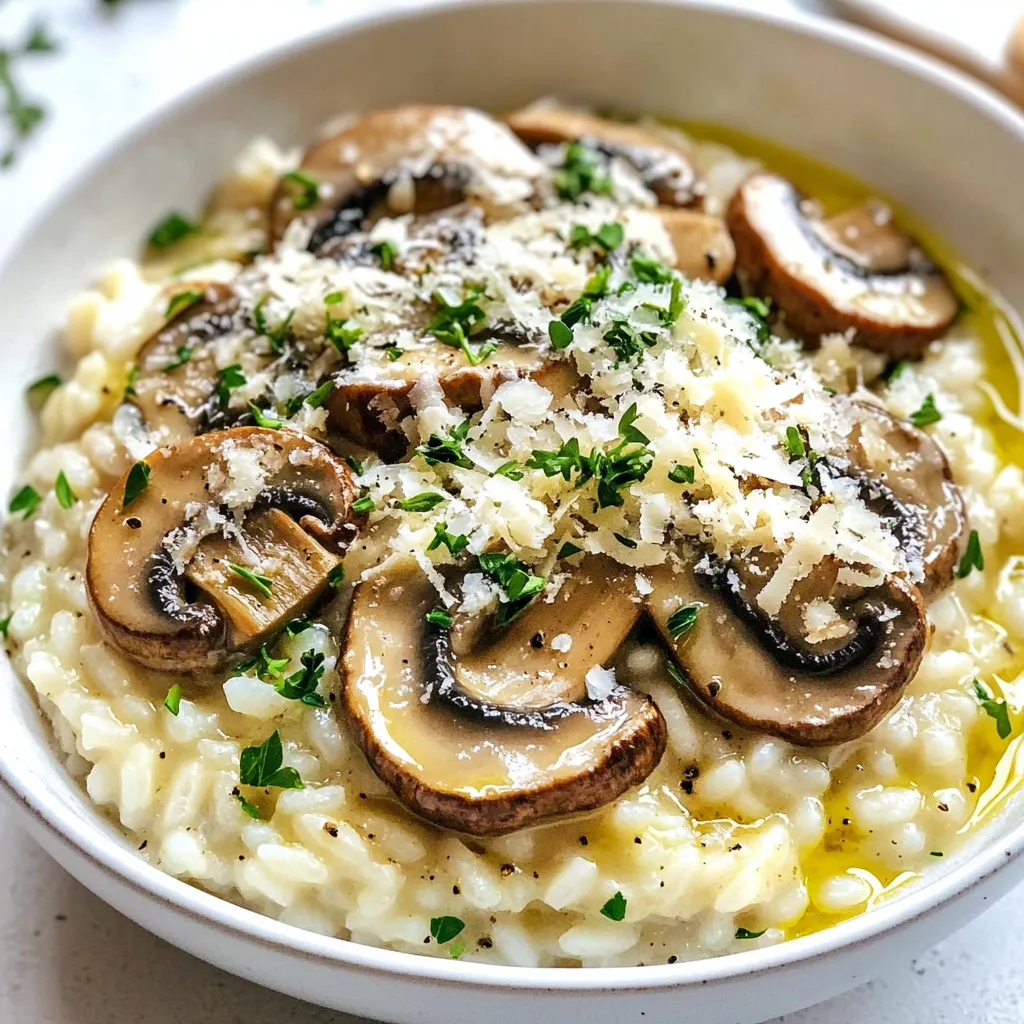
Creamy Mushroom Risotto Delightful and Simple Recipe

Looking for a delicious and simple dish that impresses without the fuss? My Creamy Mushroom Risotto is just what you need! With rich flavors from mixed mushrooms and creamy Parmesan, this recipe ticks all the boxes for comfort food. I’ll guide you through easy steps to achieve that perfect texture. Let’s dive into this mouthwatering adventure and transform your weeknight meals into something special!
Why I Love This Recipe
- Comforting Creaminess: This risotto offers a rich, creamy texture that feels like a warm hug in a bowl.
- Umami Explosion: The combination of mixed mushrooms adds deep, savory flavors that elevate this dish.
- Easy to Customize: Feel free to add your favorite herbs or vegetables to make it your own!
- Impressive Presentation: Garnishing with parmesan and parsley makes it look as good as it tastes!
Ingredients
Main Ingredients
- 1 cup Arborio rice
- 1 cup mixed mushrooms (shiitake, cremini, and button), sliced
- 4 cups vegetable broth (plus extra, if needed)
Additional Ingredients
- 1 small onion, finely chopped
- 2 cloves garlic, minced
- 1/2 cup fresh parmesan cheese, finely grated
- 1/4 cup heavy cream
- 2 tablespoons extra virgin olive oil
- Sea salt and freshly ground black pepper, to taste
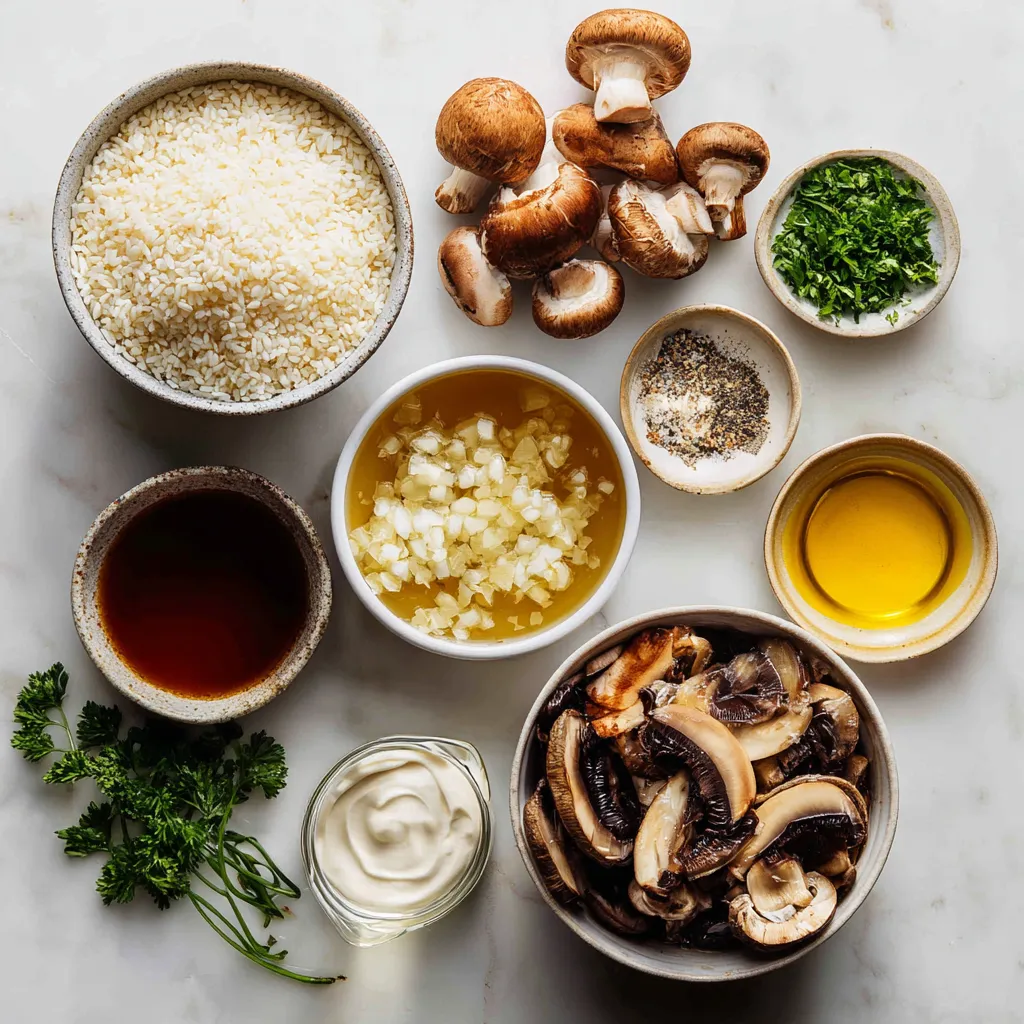
When cooking creamy mushroom risotto, it’s vital to use the right ingredients. Arborio rice is a must. Its starch gives risotto that creamy texture. Mixed mushrooms add depth and umami flavor. Shiitake brings earthiness, while cremini and button mushrooms add mildness.
Next, we need vegetable broth. It’s the base of our dish. Keeping it warm while cooking is key. This helps the rice cook evenly.
For the additional ingredients, onion and garlic lay the flavor foundation. They sauté well and give a sweet aroma. Parmesan cheese and heavy cream bring richness. They elevate the dish to a new level.
Extra virgin olive oil adds a touch of fruitiness to the mix. Sea salt and black pepper enhance all the flavors. Choosing fresh herbs like parsley for garnish also brightens the dish.
Gather these items before you start. It makes the cooking process smooth and fun!
Step-by-Step Instructions
Preparing the Broth
To start, heat your vegetable broth in a medium saucepan. Use medium heat and keep it warm, but do not let it boil. This helps the rice cook evenly. If the broth gets too cool, the risotto won’t be creamy.
Sautéing the Base
In a large skillet, pour in two tablespoons of olive oil. Heat it over medium heat. Add one finely chopped onion and cook for 3-4 minutes. Stir it often until it turns translucent. Next, add two minced garlic cloves. Sauté for one more minute until you smell its nice aroma. Then, toss in one cup of sliced mixed mushrooms. Cook them for about five minutes. They should be tender and golden brown. Season with a sprinkle of sea salt and black pepper to boost the flavor.
Making the Risotto
Once your mushrooms are ready, add one cup of Arborio rice to the skillet. Stir it for about two minutes. This step helps the rice soak up the flavors. Now, gradually pour in the warm vegetable broth, one ladle at a time. Stir often and only add more broth when most of the liquid is absorbed. Keep this up for 18-20 minutes. The rice should be al dente and creamy by now.
Final Touches
After the rice is cooked, take the skillet off the heat. Stir in 1/4 cup of heavy cream and 1/2 cup of finely grated parmesan cheese. Mix well until it is creamy. Taste your risotto and adjust the seasoning. Add more salt and pepper if needed. Let it sit for a few minutes to thicken before serving.
Tips & Tricks
Perfecting the Creaminess
To get that rich, creamy texture, stirring is key. You need to stir the rice often. This movement helps release the starches. Starch makes the risotto creamy. You want to keep the rice moving for even cooking.
When you add broth, timing matters. Always add it slowly, one ladle at a time. Wait until most of the liquid is gone before adding more. This lets the rice absorb the flavors well. Keep the broth warm, but don’t let it boil.
Enhancing Flavor
To boost the taste, use fresh herbs. I love adding thyme or rosemary. They pair well with mushrooms. For seasoning, a pinch of sea salt and black pepper work great.
Choosing cheese is important too. Fresh parmesan adds a nice touch. Grate it finely for better mixing. If you want a different flavor, try pecorino cheese.
Cooking Equipment
The right pan makes a big difference. Use a wide, heavy-bottomed skillet. This helps the rice cook evenly. A non-stick pan can also help prevent sticking.
For even cooking, keep your heat steady. Medium heat works best. If the risotto cooks too fast, it may burn. Stirring often will also help with even cooking.
Pro Tips
- Use Fresh Mushrooms: Opt for fresh mushrooms rather than canned for a more robust flavor and better texture.
- Stir Constantly: Keep stirring the risotto as you add the broth; this helps release the starch from the rice, making it creamier.
- Adjust Liquid Gradually: Add the broth gradually and allow the rice to absorb it fully before adding more for optimal cooking.
- Finish with Butter: For an extra layer of richness, stir in a tablespoon of butter just before serving.

Variations
Mushroom Variations
You can try many types of mushrooms in this dish. Shiitake, cremini, and button mushrooms work well together. Each type brings unique flavors and textures. You might also explore using portobello or oyster mushrooms. They add great depth to your risotto. If you want, throw in seasonal vegetables too. Spinach, peas, or asparagus brighten the dish. Just add them in the last few minutes of cooking.
Ingredient Substitutions
Not everyone can use cream or cheese. If you want a lighter option, use cashew cream. Blend soaked cashews with water for a creamy touch. Nutritional yeast can replace parmesan for a cheesy flavor. If you prefer vegan risotto, use vegetable broth and skip the cheese. This way, you keep all the flavors but make it plant-based.
Flavor Add-Ins
Herbs and spices can change the taste of your risotto. Try adding thyme or rosemary for a fresh kick. A pinch of nutmeg can add warmth too. For protein, consider adding cooked chicken, shrimp, or even lentils. These options make your dish more filling and nutritious. Mix and match to find your favorite flavors!
Storage Info
Refrigerating Risotto
Store leftover risotto in an airtight container. Let it cool first. This helps keep it fresh. Use glass or plastic containers that seal tightly. A good seal prevents air from getting in.
Reheating Tips
To reheat, use the stove, microwave, or oven. If using the stove, add a splash of broth. Stir often to keep it creamy. For the microwave, heat in short bursts. This helps you avoid overcooking. Always check if it’s hot all the way through.
Freezing Risotto
To freeze risotto, cool it completely first. Then, put it in freezer-safe bags. Remove as much air as you can. This helps prevent freezer burn. For thawing, place it in the fridge overnight. Reheat on the stove with a bit of broth to restore creaminess.
FAQs
What is the best rice for risotto?
The best rice for risotto is Arborio rice. This rice has high starch content. It becomes creamy when cooked, making your dish rich and smooth. Arborio rice absorbs flavors well. It cooks evenly, giving you the perfect texture. You can find it in most grocery stores. Always choose good quality rice for the best results.
Can I make risotto ahead of time?
Yes, you can make risotto ahead of time. Cook it fully, then cool it down quickly. Store it in an airtight container in the fridge. When you are ready to eat, reheat the risotto gently. Add a little broth or cream to bring back the creaminess. Stir it well to heat evenly. This way, you save time and still enjoy a warm meal.
How can I adjust the recipe for dietary restrictions?
You can easily adjust this recipe for dietary restrictions. For a gluten-free version, ensure your broth is gluten-free. For vegan risotto, skip the cheese and cream. Use plant-based cheese or nutritional yeast for a cheesy flavor. Coconut cream can be a great dairy-free option. These changes keep the dish tasty and enjoyable for everyone.
What to serve with creamy mushroom risotto?
Creamy mushroom risotto pairs well with many side dishes. A simple green salad adds freshness. Grilled vegetables bring a nice crunch. You can also serve it with garlic bread for a comforting meal. A light soup complements the risotto well. Consider serving a glass of white wine for a special touch. These sides enhance the experience and make a full meal.
This article covered how to make a creamy mushroom risotto. We discussed key ingredients like Arborio rice, mixed mushrooms, and broth. I shared step-by-step instructions to guide you through cooking the risotto, enhancing its flavor, and perfecting the texture.
Finally, I offered tips on variations and storage. With these insights, you can create a risotto that suits your tastes and can be enjoyed fresh or reheated later. Happy cookin
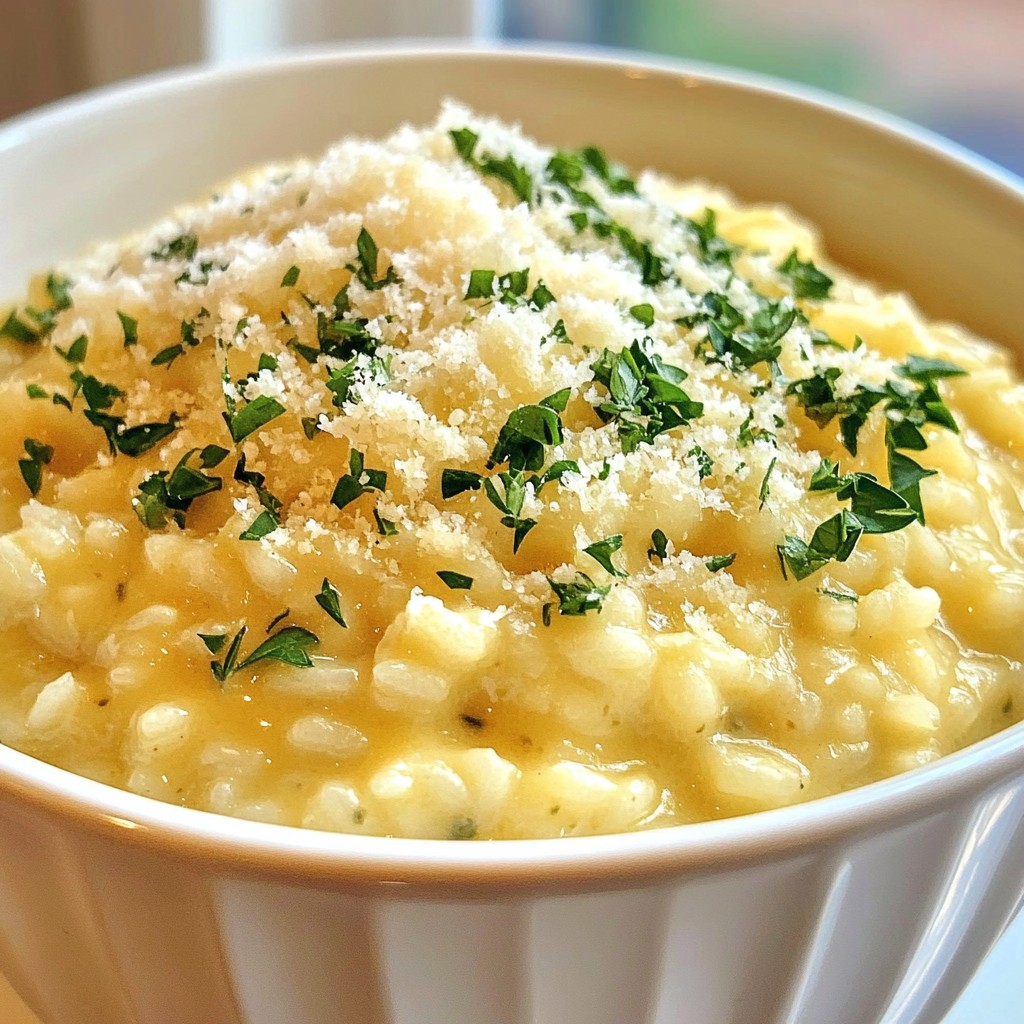
Luxurious Creamy Mushroom Risotto
Ingredients
- 1 cup Arborio rice
- 4 cups vegetable broth
- 1 cup mixed mushrooms (shiitake, cremini, and button), sliced
- 1 small onion, finely chopped
- 2 cloves garlic, minced
- 0.5 cup fresh parmesan cheese, finely grated
- 0.25 cup heavy cream
- 2 tablespoons extra virgin olive oil
- to taste sea salt
- to taste freshly ground black pepper
- for garnish fresh parsley, finely chopped
Instructions
- In a medium saucepan, gently heat the vegetable broth over medium heat. Keep it warm but avoid boiling to ensure the rice cooks evenly.
- Meanwhile, in a large skillet, pour in the olive oil and heat over medium heat. Add the finely chopped onion and sauté for about 3-4 minutes, stirring occasionally until it becomes translucent.
- Quickly add the minced garlic to the skillet and sauté for an additional minute until it releases its fragrant aroma.
- Introduce the sliced mushrooms to the skillet, cooking them down for about 5 minutes until they're tender and have turned a lovely golden brown. Season with a sprinkle of sea salt and a dash of black pepper to enhance their flavor.
- Once the mushrooms are beautifully cooked, add the Arborio rice to the skillet. Stir continuously for about 2 minutes, allowing the rice to lightly toast, absorbing the mushroom and onion flavors.
- Gradually pour in the warm vegetable broth, one ladle at a time, stirring frequently. Only add the next ladleful once most of the liquid has been absorbed. Repeat this process for approximately 18-20 minutes or until the rice is al dente and has a creamy consistency.
- Once the rice is perfectly cooked, remove the skillet from heat. Stir in the heavy cream and finely grated parmesan cheese until thoroughly combined. Taste and adjust the seasoning with additional salt and pepper, if desired.
- Allow the risotto to sit for a couple of minutes to thicken slightly before serving.


![- 1 cup quinoa - 2 cups water or vegetable broth - 1 large cucumber, diced - 1 red bell pepper, diced - 1 cup cherry tomatoes, halved - 1/4 red onion, finely chopped - 1 cup fresh parsley, roughly chopped - 1/4 cup tahini - 2 tablespoons fresh lemon juice - 1 tablespoon extra virgin olive oil - 1 clove garlic, minced - Salt and freshly cracked pepper - 1/4 cup sunflower seeds - Chopped nuts (walnuts or almonds) The ingredients for your Lemon Tahini Quinoa Salad are fresh and colorful. Each one adds flavor and nutrition. Start with quinoa, which is the base of this dish. It is high in protein and gluten-free. For the salad, you need diced cucumber, red bell pepper, cherry tomatoes, red onion, and parsley. The cucumber gives crunch. The red bell pepper adds sweetness. Cherry tomatoes bring juiciness. The red onion gives a mild bite, while parsley adds a fresh taste. Next, let’s talk about the dressing. Tahini is a creamy paste made from sesame seeds. It gives richness to the salad. Lemon juice adds zing and brightness. Olive oil makes it smooth. Garlic adds depth of flavor. A pinch of salt and cracked pepper finishes it off. If you want more texture, try adding sunflower seeds or chopped nuts. They add crunch and healthy fats. This Lemon Tahini Quinoa Salad is easy to make and packed with good ingredients. You can find the Full Recipe to guide you through the steps. First, you need to cook the quinoa. Combine one cup of rinsed quinoa and two cups of water or vegetable broth in a medium saucepan. Bring the mixture to a rapid boil over medium-high heat. Once it boils, lower the heat and cover the pot. Let it simmer for about 15 minutes. The quinoa will soak up all the liquid and become fluffy. After cooking, remove it from heat and let it cool for a bit. While the quinoa cooks, you can prepare the dressing. In a small bowl, whisk together a quarter cup of tahini, two tablespoons of fresh lemon juice, one tablespoon of olive oil, and one clove of minced garlic. Mix until it becomes smooth and creamy. You can add salt and pepper to taste. Now it's time to make the salad. In a large mixing bowl, add one large diced cucumber, one diced red bell pepper, one cup of halved cherry tomatoes, one-fourth of a finely chopped red onion, and one cup of roughly chopped fresh parsley. Stir these ingredients together until they are well mixed. Next, add the cooled quinoa to the bowl with the veggies. Toss everything together gently so the ingredients blend well. Drizzle the tahini dressing over the salad and mix again. For a nice crunch, you can sprinkle a quarter cup of sunflower seeds or chopped nuts on top before serving. For the full recipe, refer to the earlier sections. Enjoy your fresh and flavorful Lemon Tahini Quinoa Salad! To make the best quinoa, start with rinsing it well. This removes any bitter coating. Use cold water and a fine mesh strainer. After rinsing, cook the quinoa in water or broth. Cooking this way adds a nice flavor. Once cooked, let it cool a bit. This helps it mix better with other ingredients. For a creamy dressing, whisk all ingredients together. Use a bowl that allows for easy mixing. If you find clumps, keep whisking until smooth. Adjust the lemon juice and tahini to match your taste. You may like it tangy or mild. Experiment to find your favorite balance. Presentation is key! Serve the salad in colorful bowls. This makes it more inviting and fun. Add lemon slices and fresh parsley on top for a pop of color. These garnishes not only look great but also add extra flavor. For a unique touch, use clear glasses to showcase the vibrant layers of the salad. Check the Full Recipe for more tips on serving! {{image_4}} You can easily boost the protein in your Lemon Tahini Quinoa Salad. Incorporate chickpeas for a hearty touch. These legumes add fiber and flavor. Diced grilled chicken also works well if you want meat. For those following a vegan diet, try tempeh or tofu. Both options soak up flavors and make the salad filling. Feel free to mix in various vegetables. Substitute or add bell peppers, carrots, or creamy avocado. These veggies add crunch and color. You can also use seasonal vegetables for extra freshness. Think of bright summer tomatoes or hearty winter squash. The key is to choose what you enjoy most. Spice up your salad with fun flavors. Add spices like cumin or paprika for a tasty twist. These spices bring warmth and depth to the dish. Fresh herbs like mint or cilantro can brighten things up, too. They add a burst of freshness that takes your salad to the next level. Store your Lemon Tahini Quinoa Salad in an airtight container in the fridge. This keeps it fresh and tasty. It’s best to eat it within 3-5 days. After this time, the flavors may fade, and veggies can lose their crunch. You can freeze quinoa salad if needed. Dress it before serving after you thaw it. Be aware that freezing may change the texture of some vegetables. It’s a good idea to use firmer veggies like bell peppers, as softer ones may not hold up well. I don’t recommend reheating salads. They taste best when served chilled. However, if you want to reheat, you can warm individual components like quinoa or cooked veggies. Just make sure to let them cool before mixing back into the salad. Enjoy the fresh, vibrant flavors! Yes, it's great for meal prep; just dress before serving. This salad stays fresh for days. You can cook the quinoa and chop the veggies in advance. When you are ready to eat, mix in the dressing. This way, the salad will taste fresh. Yes, quinoa is naturally gluten-free. It makes this salad a perfect choice for gluten-free diets. Always check that your other ingredients, like broth, are gluten-free too. This salad is friendly for many diets. You can add different vegetables, proteins, or dressings to suit your taste. Try adding chickpeas for protein or avocados for creaminess. You can also change the herbs or use a different dressing. The choices are endless! It can be a side dish or a main dish, served chilled or at room temperature. For a picnic, serve it cold. If you want a warm meal, let it sit for a bit. Dress it just before serving for the best flavor. Yes, other grains like farro or bulgur can be used as substitutes. Each grain brings a different taste and texture. You can experiment to find your favorite. Just cook them according to package directions. Check the [Full Recipe] for more details! This blog post covered how to make a tasty Lemon Tahini Quinoa Salad. You learned the main ingredients, cooking steps, and tips for perfecting the dish. Remember, feel free to add your favorite proteins or veggies. You can also make it ahead of time for meal prep. Enjoy this salad fresh and chilled for the best flavor. Experiment with it, and you'll find your perfect mix!](https://dishtreats.com/wp-content/uploads/2025/07/0131a3b2-a937-48f9-ad75-9f78e7be101a-768x768.webp)
![- 8 oz. elbow macaroni - 1 lb. ground beef or ground turkey - 1 packet taco seasoning mix - 1 cup diced tomatoes (fresh or canned) - 1 cup canned black beans, drained and rinsed - 1 cup corn (can be frozen or canned) - 2 cups shredded cheddar cheese (divided) - 1 cup salsa (your choice of spiciness) - 1/2 cup sour cream - 1 tablespoon olive oil - Salt and pepper to taste - Chopped green onions and fresh cilantro for garnish Gather these ingredients before you start cooking. This will make the process smooth and fun! The elbow macaroni is the base of this dish. It holds the cheesy sauce very well. Ground beef or turkey adds a hearty touch. You can use either, depending on your taste. The taco seasoning mix gives the pasta that classic taco flavor. Diced tomatoes bring freshness and moisture, while black beans boost protein and fiber. Corn adds a nice sweetness. Cheddar cheese is key for that melty, gooey goodness. Salsa adds a kick; choose your preferred heat level. Sour cream makes the dish creamy and rich. Olive oil helps cook the meat and adds flavor. Finally, salt, pepper, and garnishes like green onions and cilantro make it all pop. When you have everything ready, the fun part starts! You’ll see how these simple ingredients blend into a delicious dish. For the complete recipe, check out the Full Recipe section. To start, cook the elbow macaroni. Follow the package instructions carefully. Aim for al dente texture, which means the pasta should be firm when bitten. This keeps it from getting mushy later. Once done, drain the pasta in a colander and set it aside in a large bowl. While the pasta cooks, heat the olive oil in a large skillet over medium heat. Add the ground beef or turkey. Cook for about 5-7 minutes, stirring often to break up the meat. Look for a nice brown color. After browning, drain any extra fat from the skillet. Next, add the taco seasoning mix, diced tomatoes, black beans, corn, and salsa. Stir well and let the mixture simmer for about 5 minutes. This helps the flavors come together. After simmering, gently fold the cooked macaroni into the skillet. Make sure the pasta gets well-coated with the tasty mixture. Lower the heat to low, then add 1 1/2 cups of shredded cheddar cheese. Stir until the cheese melts into a creamy coating. Remove the skillet from the heat and add the sour cream. Mix it well until fully blended. Taste your dish and add salt and pepper to your liking. For the full recipe, refer to the instructions above. Enjoy your cheesy taco pasta! To get the best taco flavor, use a high-quality taco seasoning mix. It gives a bold taste. I often mix in extra spices, like garlic powder or cumin, for depth. For a creamy texture, add the cheese slowly. Let it melt fully before adding sour cream. This step ensures a smooth, rich sauce. Garnish your cheesy taco pasta with fresh green onions and cilantro. They add color and freshness. You can also use sliced avocado or jalapeños for extra flair. For a complete meal, pair the pasta with a simple side salad or tortilla chips. The crunch complements the creamy pasta well. You can find the full recipe [here]. {{image_4}} You can change up the protein in this dish. Ground turkey is a lighter choice. Ground chicken also works well. If you prefer plant-based options, try meat substitutes made from soy or lentils. Each option gives a unique flavor, but they all blend well with taco spices. If you need gluten-free pasta, many brands offer great options. Just look for gluten-free elbow macaroni. For those avoiding dairy, you can find dairy-free cheese and sour cream at most stores. These alternatives melt nicely and keep the dish creamy. Don’t be afraid to play with flavors! Different salsas add unique twists. You can also add jalapeños for heat. Hot sauce can give it an extra kick, too. These simple changes can make your cheesy taco pasta even more exciting. For the full recipe, check out the Cheesy Taco Pasta Extravaganza. To store your Cheesy Taco Pasta, let it cool first. Place leftovers in an airtight container. This keeps the dish fresh and tasty. It will last in the fridge for about 3 to 4 days. Always check for smells or mold before eating. When you’re ready to eat, reheat the pasta on the stove. Pour the pasta into a skillet over low heat. Stir it often to ensure even heating. You can also add a splash of water or broth to keep it creamy. Microwave is another option. Use a microwave-safe dish and cover it. Heat in short bursts, stirring every minute until it’s hot. Freezing Cheesy Taco Pasta is a great way to enjoy it later. First, let it cool completely. Then, transfer it to a freezer-safe container. Make sure to leave some space for expansion. You can freeze it for up to 2 months. When you are ready to eat, defrost it overnight in the fridge. Reheat it on the stove, just like before, to keep the flavor and texture. Cheesy Taco Pasta can last for about 3 to 5 days in the fridge. To keep it fresh, store it in an airtight container. Look for signs of spoilage like a sour smell or mold. If you see either, it’s best to toss it out. Yes, you can make Cheesy Taco Pasta ahead of time. Cook it and let it cool. Then, store it in the fridge for up to 2 days before serving. When ready to eat, just reheat it in a pan or microwave. Add a splash of water or broth to keep it moist. If you don’t have elbow macaroni, you can use other pasta shapes. Options include rotini, penne, or even gluten-free pasta. Quinoa or rice can also work if you want a grain instead. Just adjust cooking times as needed. We explored a tasty Cheesy Taco Pasta recipe, packed with flavor and fun. You learned about the key ingredients, easy steps for cooking, and tips to nail that taco taste. We also talked about variations to fit your needs, storage tips, and answers to common questions. This dish is not just simple; it’s a crowd-pleaser. Enjoy cooking and sharing your delicious creation!](https://dishtreats.com/wp-content/uploads/2025/07/060fa6b2-3df9-47e4-b794-a1b6a0be3885-768x768.webp)