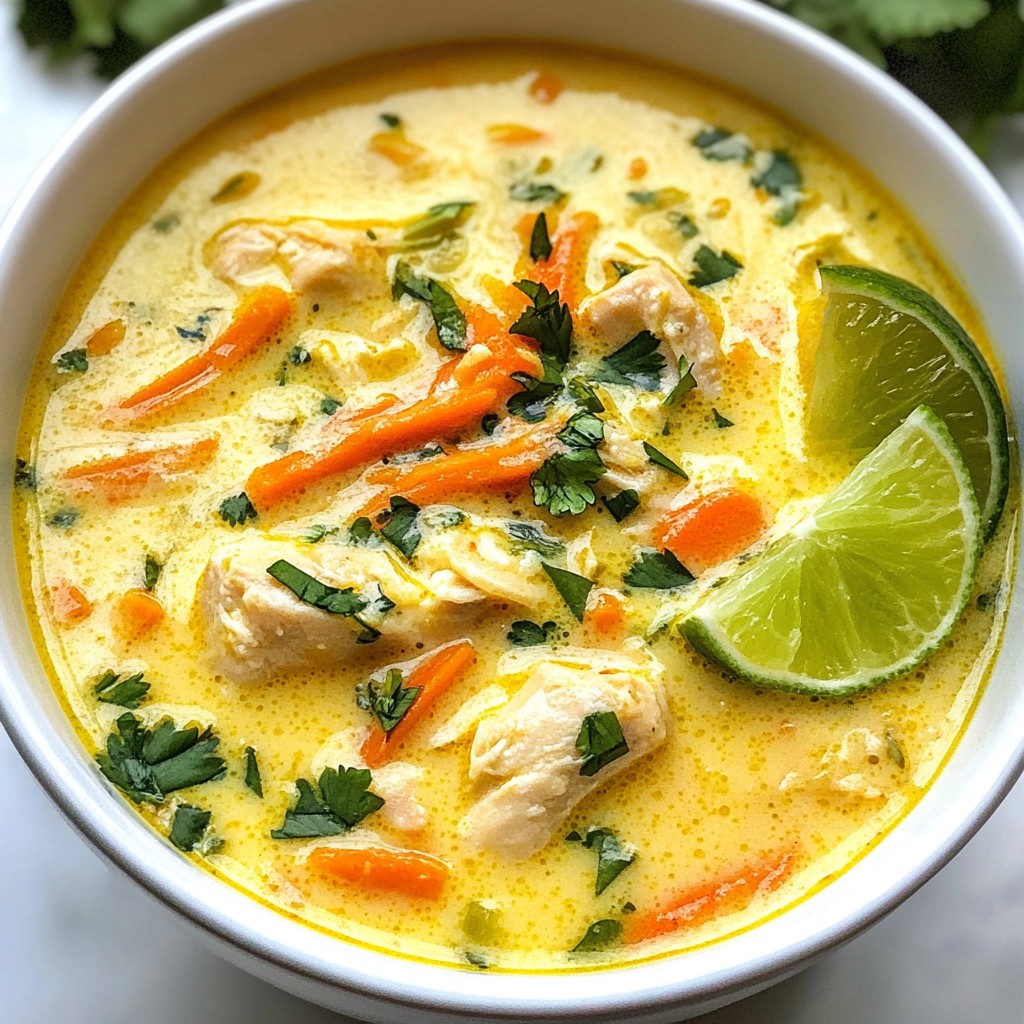
Are you ready to warm your soul with a rich and creamy Coconut Lime Chicken Soup? This dish combines tender chicken, vibrant veggies, and zesty lime, creating a flavorful bowl that's both comforting and nourishing. I’ll guide you through simple steps, tips, and variations to make this recipe your own. Let’s dive into the fresh ingredients and build delicious layers of flavor together!
Why I Love This Recipe
- Bright and Zesty Flavor: The combination of lime and coconut creates a refreshing and vibrant taste that brightens any meal.
- Quick and Easy Preparation: This recipe comes together in just 40 minutes, making it perfect for a weeknight dinner.
- Healthy Ingredients: Packed with lean chicken and fresh vegetables, this soup is nutritious and satisfying.
- Versatile and Customizable: You can easily adjust the ingredients based on your preferences or what you have on hand.
Ingredients
Main Ingredients
- 1 lb boneless, skinless chicken breasts, cut into bite-sized pieces
- 1 can (14 oz) coconut milk, preferably full-fat for creaminess
- 4 cups chicken broth, homemade or low-sodium
- 1 cup shredded carrots, about 2 medium carrots
- 1 cup bell peppers, diced, choose red and yellow for color
- 1 medium onion, finely chopped
- 3 cloves garlic, minced
- 1 tablespoon fresh ginger, grated
- 2 lime leaves, finely sliced, or zest of 1 lime
Seasonings and Add-ins
- Juice of 2 limes, fresh for best flavor
- 2 tablespoons fish sauce, optional for umami depth
- Fresh cilantro, roughly chopped, for garnish
- Salt and freshly cracked pepper to taste
- 2 tablespoons olive oil
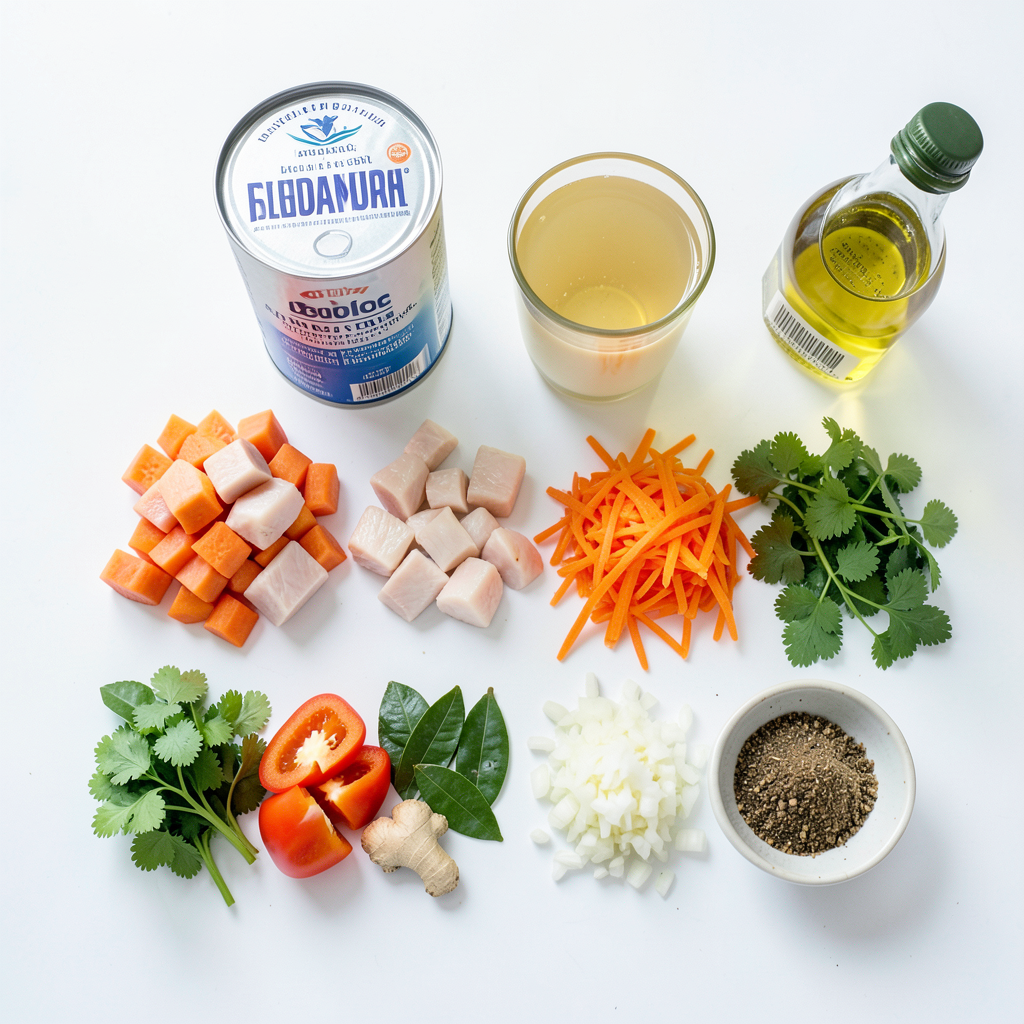
Coconut Lime Chicken Soup is rich and smooth. The chicken provides protein. Coconut milk adds creaminess. Chicken broth gives the soup its base flavor.
For veggies, I like using carrots and bell peppers. They bring color and crunch. The onion, garlic, and ginger are key for aroma and taste. Lime leaves brighten the soup's flavor.
For seasoning, fresh lime juice adds a tasty zing. Fish sauce gives a deep flavor, but it's optional. Cilantro on top makes it look pretty and adds freshness. Don't forget to taste and adjust salt and pepper!
Step-by-Step Instructions
Preparing the Base
First, I heat 2 tablespoons of olive oil in a large pot over medium heat. When the oil shimmers, I add 1 finely chopped onion, 3 minced garlic cloves, and 1 tablespoon of grated ginger. I sauté these for about 3-4 minutes. I want the onion to be soft and fragrant.
Next, I add 1 pound of boneless, skinless chicken breasts, cut into bite-sized pieces. I cook the chicken for 5-7 minutes. I stir occasionally until the chicken is no longer pink.
Building Flavor
Now, I add 1 cup of shredded carrots and 1 cup of diced bell peppers. I prefer using red and yellow peppers for a pop of color. I stir these vegetables into the pot and cook for another 3-4 minutes. They should soften just a bit.
Then, I pour in 4 cups of chicken broth and 1 can of coconut milk. The coconut milk adds creaminess that makes the soup rich. I stir well to mix everything together.
Simmering and Finishing Touches
It's time to bring the soup to a gentle simmer. I add 2 lime leaves or the zest of 1 lime, plus 2 tablespoons of fish sauce if I want more depth. I raise the heat slightly and let the mixture simmer for 15-20 minutes. This helps the flavors blend nicely.
Just before serving, I squeeze in the juice of 2 fresh limes. I taste the soup and adjust the salt and freshly cracked pepper. Finally, I remove the pot from heat and sprinkle chopped fresh cilantro on top. It adds both flavor and a lovely look to the soup.
Tips & Tricks
Achieving the Best Flavor
Using fresh ingredients is key. Fresh chicken, herbs, and vegetables make the soup bright and tasty. I recommend squeezing fresh lime juice right before serving. This adds a zing that brings the dish to life. For lime and salt, taste as you go! Start with less. You can always add more if needed. This way, you keep the balance just right.
Cooking Techniques
Sautéing is where flavor starts. Heat olive oil in a pot. Once the oil shimmers, add onions, garlic, and ginger. Cook them until soft and fragrant. This step builds a strong base for your soup. For the right soup consistency, simmer it gently. A longer simmer lets the flavors blend well. If it's too thick, add a bit of broth.
Presentation Tips
For an impressive look, serve the soup in deep bowls. Add a lime wedge and extra cilantro on top. This brightens the dish and adds color. If you like a bit of heat, sprinkle red chili flakes on top. This adds a pop of flavor and makes the soup visually appealing.
Pro Tips
- Use Fresh Ingredients: Always opt for fresh vegetables and herbs to enhance the flavor and presentation of your soup. Fresh ingredients make a noticeable difference!
- Adjust the Spice Level: If you enjoy a bit of heat, feel free to add sliced red chili or a pinch of red pepper flakes to the soup. You can always adjust the spice according to your taste.
- Make Ahead for Better Flavor: This soup tastes even better the next day! Make it ahead of time and let the flavors meld in the fridge overnight for a delicious result.
- Garnish Creatively: In addition to cilantro, consider adding thinly sliced green onions or a dollop of sour cream for a creamy contrast. A lime wedge on the side adds brightness!
Variations
Protein Substitutes
You can easily change the protein in this soup. Instead of chicken, try shrimp or tofu for a fun twist. Shrimp adds sweetness and cooks quickly. Just add it in the last few minutes of cooking. Tofu gives a nice texture and works well for vegetarians. For a vegetarian version, use firm tofu. Press it to remove excess water, then cut it into cubes. Sauté the tofu until golden before adding it to the soup.
Vegetable Add-ins
Feel free to add other vegetables to your soup. Zucchini, snap peas, or mushrooms work great. They bring extra flavor and nutrients. If you want a seasonal touch, use vegetables that are fresh and in season. For example, spring peas in the spring or butternut squash in the fall can really enhance the dish. Just remember to cut them into small pieces so they cook evenly.
Flavor Adjustments
You can tweak the flavors to suit your taste. If you like spice, add some red chili flakes or diced jalapeños. These can give your soup a nice kick. For a heartier dish, try adding cooked rice or quinoa. This makes the soup more filling and adds texture. Don't forget to adjust the salt and lime juice to keep the flavors bright and balanced!
Storage Info
Refrigeration Guidelines
To store leftovers of Coconut Lime Chicken Soup properly, let the soup cool first. Once cooled, transfer the soup into airtight containers. This helps keep the flavors fresh. I recommend using glass containers or BPA-free plastic ones. These materials can handle heat and cold well. Make sure to leave some space at the top of the container for expansion.
Freezing Instructions
For freezing the soup, let it cool completely before packing it up. Use freezer-safe containers or heavy-duty freezer bags. Remove as much air as possible from bags to avoid freezer burn. When you're ready to eat, thaw the soup overnight in the fridge. To reheat, warm it gently on the stove over low heat. Stir often to avoid sticking. If the soup is too thick after thawing, add a little chicken broth to reach your desired consistency.
Shelf Life
Coconut Lime Chicken Soup lasts about 3 to 4 days in the fridge. In the freezer, it can last up to 3 months. Be alert for signs of spoilage. If you see any off smells or mold, toss it. The soup should smell bright and fresh, just like its ingredients! If the texture changes drastically, it’s better to be safe and not eat it.
FAQs
Can I use light coconut milk?
Yes, you can use light coconut milk. However, it changes the flavor and texture. Full-fat coconut milk gives a rich, creamy taste. Light coconut milk is thinner and less creamy. The soup may taste less rich and comforting. If you prefer a lighter version, go for it. Just remember, the taste will differ.
What substitutions can I make for fish sauce?
If you want a substitute for fish sauce, use soy sauce or tamari. These can fit many diets, as they are vegetarian. You can also use coconut aminos for a sweeter flavor. If you need a gluten-free option, tamari is a good pick. Remember, these substitutes will alter the umami depth of the soup but can still taste great.
How to make the soup spicier?
To add heat to the soup, include sliced jalapeños or red chili flakes. You can also add a dash of hot sauce. Start with a small amount, then taste it. You can always add more heat if you want. Another option is to use spicy curry paste for a different flavor kick. Enjoy experimenting with the heat until it’s just right!
This blog post provided a clear guide for making Coconut Lime Soup. We covered main ingredients, seasonings, and step-by-step instructions. Tips on flavor and presentation help you create a delicious dish. We discussed variations for proteins and vegetables to suit your taste. Proper storage and answers to FAQs ensure your soup stays fresh and flavorful.
Embrace the bold flavors, and enjoy making this dish your own!