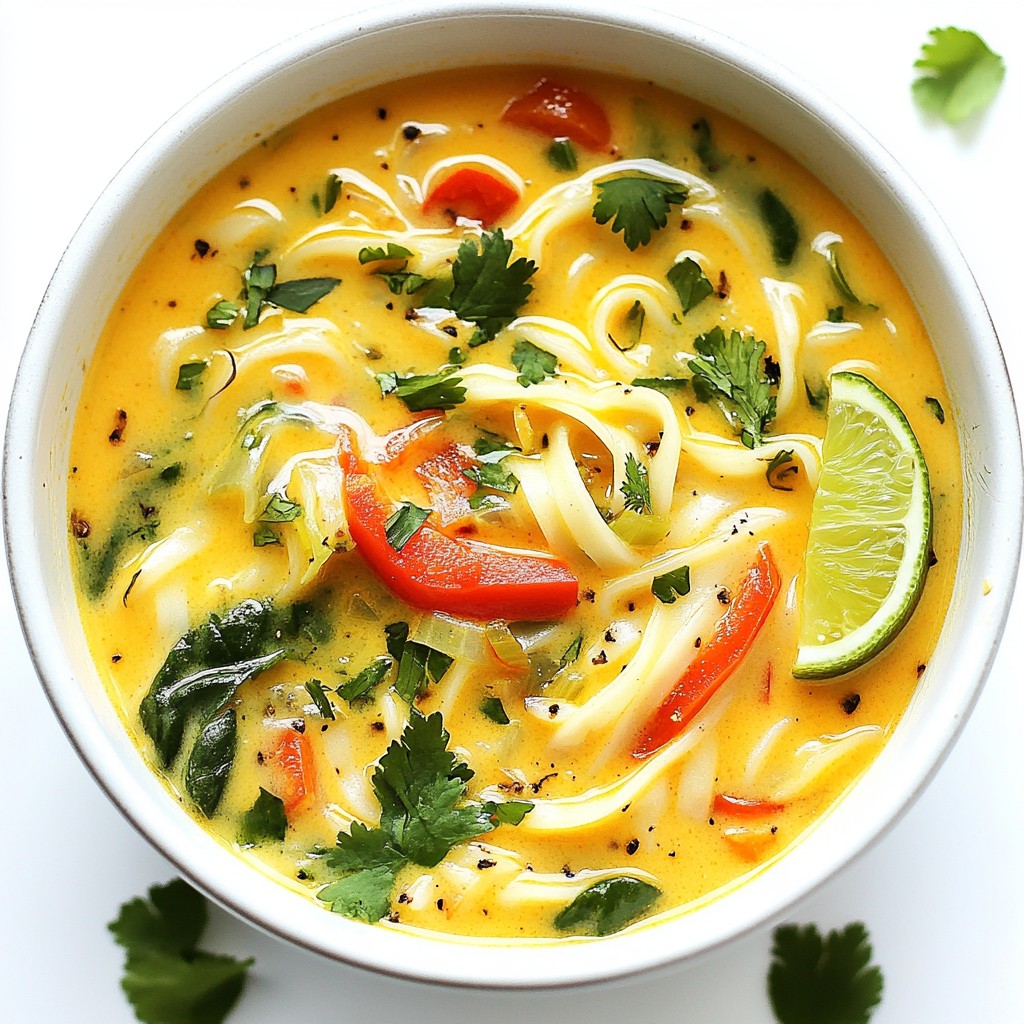
Are you craving a warm, comforting bowl of Coconut Curry Noodle Soup? This simple recipe will take your taste buds on a flavorful journey. With just a few key ingredients and easy steps, you can create a dish that’s both delicious and satisfying. Whether you're a cooking novice or a seasoned chef, this guide will help you whip up a soup that's packed with flavor and easy to enjoy. Let’s get started!
Why I Love This Recipe
- Comforting Warmth: This coconut curry noodle soup is a cozy bowl of warmth, perfect for chilly days or when you need a little comfort food.
- Flavor Explosion: The combination of coconut milk and red curry paste creates a rich and aromatic broth that tantalizes your taste buds with every sip.
- Quick and Easy: This recipe is not only delicious but also quick to prepare, making it a great option for busy weeknights.
- Customizable: You can easily adapt this soup by adding your favorite vegetables or proteins, making it as versatile as it is tasty.
Ingredients
List of Ingredients
- 1 tablespoon coconut oil
- 1 medium onion, finely chopped
- 3 cloves garlic, minced
- 1 tablespoon fresh ginger, grated
- 2 tablespoons red curry paste
- 4 cups vegetable broth
- 1 can (13.5 oz) coconut milk
- 2 tablespoons soy sauce
- 1 tablespoon freshly squeezed lime juice
- 200g rice noodles
- 1 cup baby spinach
- 1 red bell pepper, thinly sliced
- Fresh cilantro, for garnish
- Lime wedges, for serving
- Salt and pepper, to taste
Alternate Ingredient Suggestions
You can swap coconut oil for olive oil if you like. Use yellow curry paste instead of red for a milder taste. If you don’t have rice noodles, try using soba or egg noodles. For extra protein, add cooked chicken or tofu. You can also add other veggies like carrots or mushrooms.
Notes on Freshness and Quality
Always pick fresh produce for the best taste. Choose bright, firm bell peppers and crisp spinach. For the coconut milk, look for a brand with no added preservatives. Fresh garlic and ginger really boost the flavor. Using high-quality broth enhances the soup's depth.
Step-by-Step Instructions
Preparation Steps
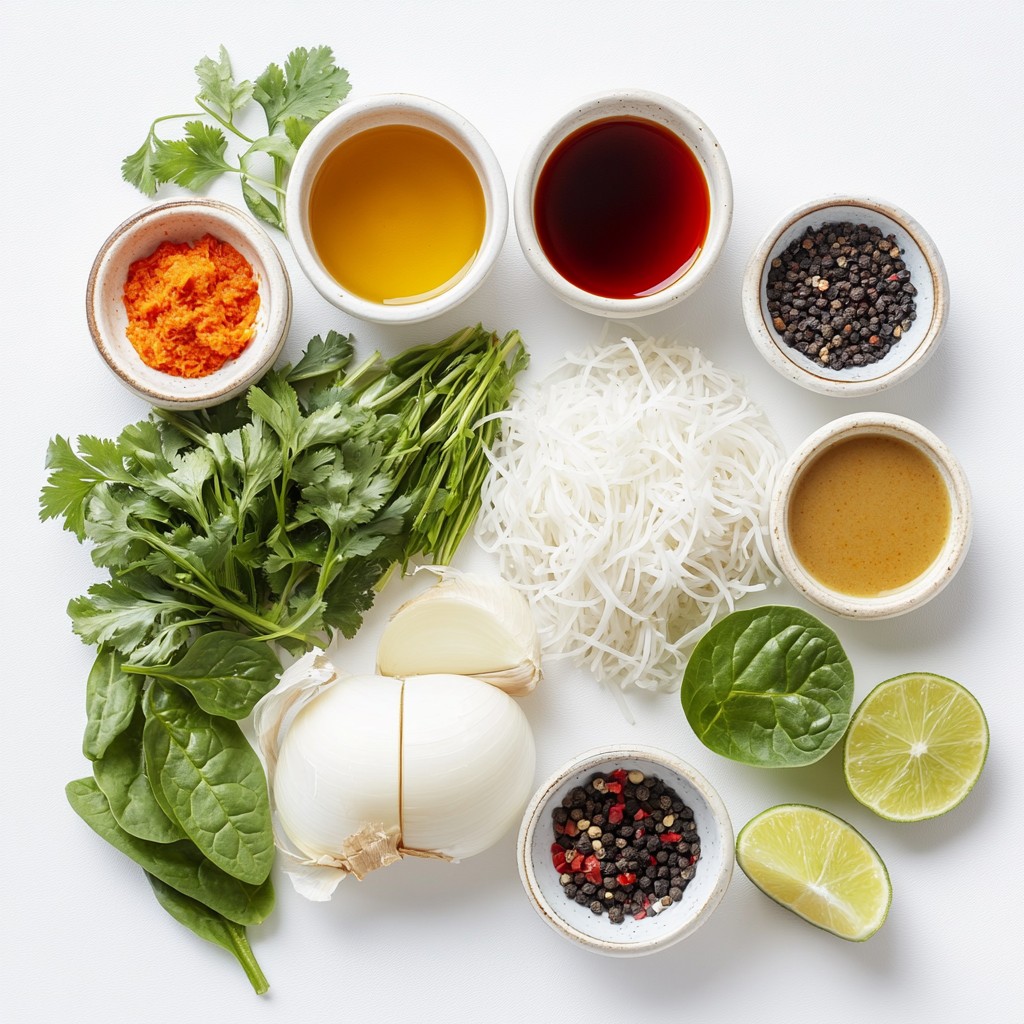
1. Start by gathering all your ingredients. This makes cooking easier and faster. You will need coconut oil, onion, garlic, ginger, red curry paste, vegetable broth, coconut milk, soy sauce, lime juice, rice noodles, spinach, bell pepper, cilantro, lime wedges, salt, and pepper.
2. Chop the onion finely. Mince the garlic and grate the ginger. Thinly slice the bell pepper. This helps the flavors blend well.
3. Heat the coconut oil in a large pot over medium heat. Wait until the oil melts before adding the chopped onion.
Cooking Method
1. Sauté the onion for about 5 minutes. Stir occasionally until it becomes translucent and fragrant.
2. Add the minced garlic and grated ginger. Stir them into the onion mixture. Cook for another 1-2 minutes.
3. Mix in the red curry paste. Let it cook for one minute to boost its flavor.
4. Slowly pour in the vegetable broth and coconut milk. Stir well to combine everything. Add the soy sauce and lime juice next.
5. Raise the heat slightly and bring the soup to a gentle simmer. This blends all the flavors together nicely.
6. Add the rice noodles to the pot. Cook them according to the package instructions, usually 4-6 minutes. They should be tender but still a bit firm.
7. In the last minute of cooking, add the sliced bell pepper and baby spinach. Stir well to mix and cook until the vegetables are tender.
8. Taste the soup and season with salt and pepper. Adjust to your liking.
Final Serving Instructions
1. Ladle the hot coconut curry noodle soup into bowls.
2. Garnish with fresh cilantro for a pop of color and flavor.
3. Serve with lime wedges on the side for a zesty kick. Enjoy your delicious soup!
Tips & Tricks
Perfecting Flavor Balance
To make your coconut curry noodle soup shine, balance is key. Start with fresh ingredients. Use ripe lime juice to add brightness. Fresh cilantro brings a nice herb flavor. Adjust the salt and pepper for your taste. Always taste as you cook. This way, you can tweak it to your liking.
Adjusting Spice Levels
If you like heat, add more red curry paste. A little goes a long way. For less spice, use a smaller amount. You can also add a pinch of sugar to balance the heat. This helps create a sweeter taste. If it gets too spicy, add more coconut milk to mellow it out.
Common Mistakes to Avoid
One common mistake is overcooking the noodles. They should be tender but firm. Follow the package time closely. Another mistake is not tasting the soup. Always taste before serving. This way, you can adjust flavors. Lastly, don't skip the fresh lime juice. It adds a vital zing that brightens the soup.
Pro Tips
- Fresh Ingredients: Using fresh vegetables and herbs will elevate the flavor of your coconut curry noodle soup significantly.
- Customize Your Spice Level: Adjust the amount of red curry paste based on your preference for heat; start with less and add more if desired.
- Perfectly Cooked Noodles: To avoid mushy noodles, cook them just until al dente, as they will continue to soften in the hot soup.
- Garnish Creatively: Consider adding sliced chili or toasted coconut flakes as additional garnishes for extra texture and flavor.
Variations
Protein Additions
You can boost your soup with different proteins. Chicken, shrimp, or tofu work great. If you use chicken, add it after the onions. Cook it until golden before adding other ingredients. For shrimp, toss them in during the last few minutes. They cook fast and add nice flavor. If you prefer tofu, use firm tofu. Cut it into cubes and sauté it with onions for a tasty option.
Vegan/Vegetarian Options
This soup is easy to make vegan or vegetarian. Simply skip any meat and use tofu or just veggies. You can add chickpeas for extra protein. They pair well with the rich coconut flavor. Always check your broth. Make sure it's vegetable-based to keep it vegan. Add more veggies like carrots, mushrooms, or broccoli to make it hearty and colorful.
Flavor Enhancements
To elevate the taste, try adding fresh herbs like basil or mint. They give a nice twist to the soup. A dash of chili flakes can add heat if you like spice. You can also use lime zest for more citrus flavor. Another great idea is to mix in a spoon of peanut butter for a creamy touch. Each of these changes will make your soup unique and delicious.
Storage Info
Refrigeration Guidelines
After making your coconut curry noodle soup, let it cool a bit. Then, transfer it to an airtight container. Store it in the fridge for up to three days. This soup tastes even better the next day as the flavors meld together.
Freezing Instructions
If you want to save some for later, freezing is a great option. Pour the cooled soup into freezer-safe containers. Leave some space at the top since it will expand when frozen. You can freeze the soup for up to three months. Just remember, the noodles may become softer after freezing.
Reheating Tips
To reheat your soup, you have a few easy options. You can use the stovetop or a microwave. If using the stovetop, pour the soup into a pot and heat it over medium heat. Stir often until it's hot. If using a microwave, put the soup in a microwave-safe bowl. Heat in short bursts, stirring between, until it’s warm. Add a splash of broth if it looks too thick. Enjoy your soup warm, topped with fresh cilantro and a lime wedge!
FAQs
What can I substitute for coconut milk?
You can use almond milk or cashew cream. These add a nutty taste. You can also try oat milk for a lighter option. If you want a thicker texture, blend silken tofu with water. This mix gives a creamy feel without the coconut flavor.
How do I make the soup spicier?
Add fresh chili peppers or red pepper flakes to the mix. You can also increase the red curry paste. If you want more heat, let the soup simmer longer after adding the spices. Always taste as you go. This way, you control the spice level.
Can I use other types of noodles?
Yes, you can! Rice noodles are great, but try udon or soba noodles. Egg noodles also work if you want something heartier. Adjust the cooking time based on the type of noodle you choose. Just make sure they are tender but not mushy.
This blog post covered ingredients, cooking steps, and tips for success. We discussed how to choose fresh items, cooking methods, and serving ideas. You learned ways to adjust flavors and avoid common mistakes. We explored protein options, vegan choices, and storage tips.
In the end, creativity in cooking leads to the best meals. Experiment to find what works for you. Happy cooking!