
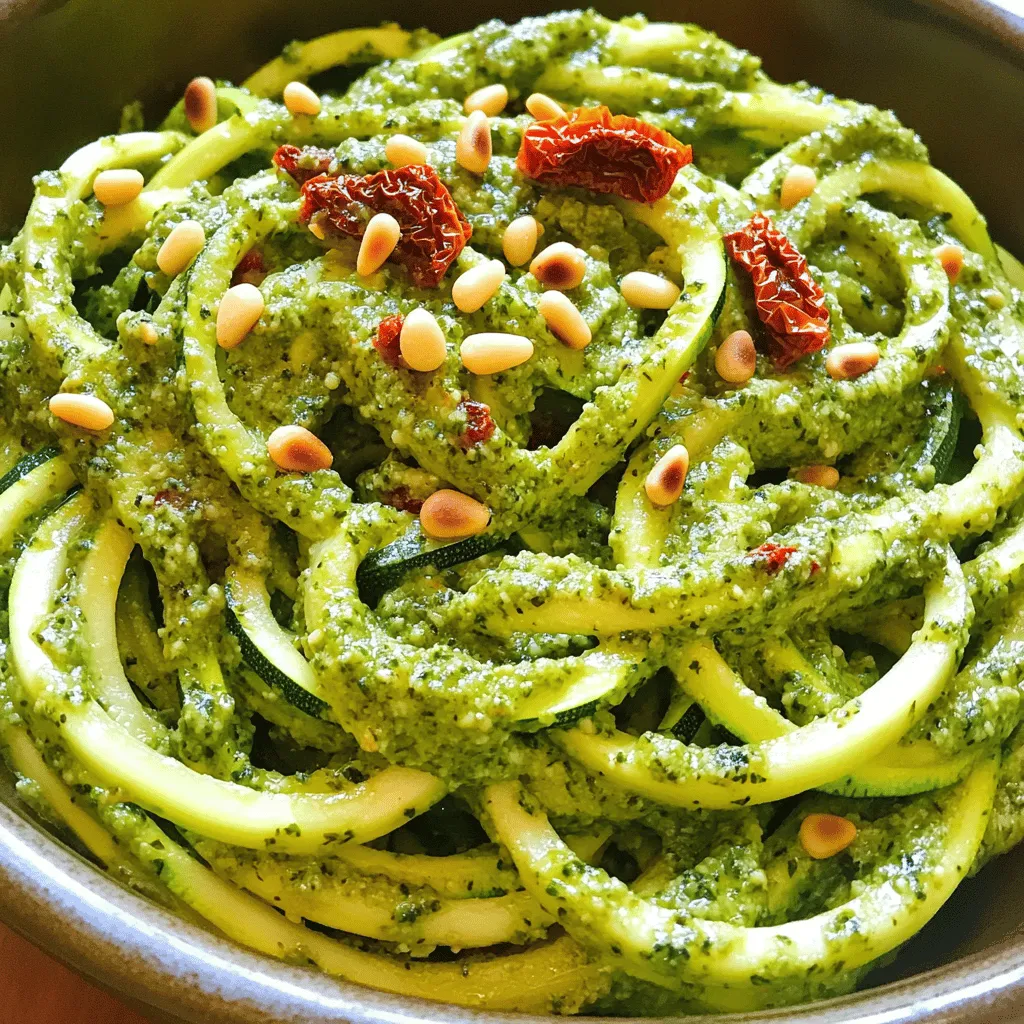
21. Zucchini Noodles with Pesto Flavorful and Easy Dish

Looking for a quick yet tasty dish? Zucchini noodles with pesto might be your new favorite! This easy recipe is not only full of flavor but also offers a healthy twist to traditional pasta. With fresh basil, garlic, and creamy Parmesan, you can whip this up in no time. Ready to impress your taste buds? Let’s dive into the simple steps and vibrant ingredients that make this dish a must-try!
Ingredients
Main Ingredients for Zucchini Noodles with Pesto
- 3 medium zucchinis, spiralized
- 1 cup fresh basil leaves
- 1/4 cup pine nuts
- 1/4 cup grated Parmesan cheese (or nutritional yeast)
- 2 garlic cloves
- 1/3 cup extra-virgin olive oil
- Salt and pepper to taste
Optional Ingredients
- 1/2 cup sun-dried tomatoes
- 1/4 teaspoon crushed red pepper flakes
When you make zucchini noodles, the main ingredients are key. The zucchinis are the stars. They give you a fresh base for your dish. Spiralizing them creates fun and easy-to-eat noodles. Fresh basil adds a fragrant touch. Pine nuts lend a lovely crunch and richness. Grated Parmesan cheese gives a savory depth. Garlic adds a punch of flavor. Extra-virgin olive oil brings it all together, making the dish smooth and rich. Finally, don’t forget salt and pepper to enhance the taste.
If you want to add a twist, consider the optional ingredients. Sun-dried tomatoes add a sweet, tangy burst. Crushed red pepper flakes can spice things up for those who like heat.It’s a perfect guide for making this vibrant dish.
Step-by-Step Instructions
Preparing the Pesto
- Combine basil, pine nuts, Parmesan, garlic, salt, and pepper in a food processor.
- Blend until roughly chopped before adding olive oil.
Making pesto is quick and simple. I love to use fresh basil leaves. They bring a bright flavor. The pine nuts add a nice crunch. If you want, you can toast them for more taste. Parmesan cheese gives that creamy feel. Garlic adds depth, while salt and pepper bring balance.
Once you blend these ingredients, drizzle in the olive oil. Keep blending until you reach a smooth, creamy mix. Check the taste. If you need more salt or pepper, add it now. Set this pesto aside; it’s the star of the dish!
Cooking the Zucchini Noodles
- Heat olive oil in a skillet over medium heat.
- Sauté zucchini noodles for 2-3 minutes until slightly softened.
Cooking zucchini noodles is quick. I heat olive oil in my skillet first. Then, I add the spiralized zucchini. Sauté them gently. You want them tender but still a bit firm. This usually takes about 2 to 3 minutes. Avoid cooking them too long, or they get mushy.
Bringing it All Together
- Toss zucchini noodles with the prepared pesto.
- Mix in chopped sun-dried tomatoes and optional crushed red pepper flakes.
Once the zucchini noodles are ready, take the skillet off the heat. Add your prepared pesto. Toss the noodles well to coat them with that vibrant green sauce. I like to add chopped sun-dried tomatoes for a burst of flavor. If you want some heat, sprinkle in crushed red pepper flakes.
This dish is colorful and tasty. It has a fresh taste that is perfect for any meal.
Tips & Tricks
Perfecting Your Pesto
To make the best pesto, use fresh ingredients. Fresh basil gives a bright taste. You can adjust the mix’s smoothness by changing the olive oil amount. If you want it thicker, add less oil. For a creamier sauce, pour in more.
Cooking Zucchini Noodles
When cooking zucchini noodles, avoid overcooking them. This keeps them firm and crunchy. A quick sauté for 2-3 minutes is best. Pat the noodles dry before cooking. This step helps cut extra moisture and prevents the dish from getting soggy.
Serving Suggestions
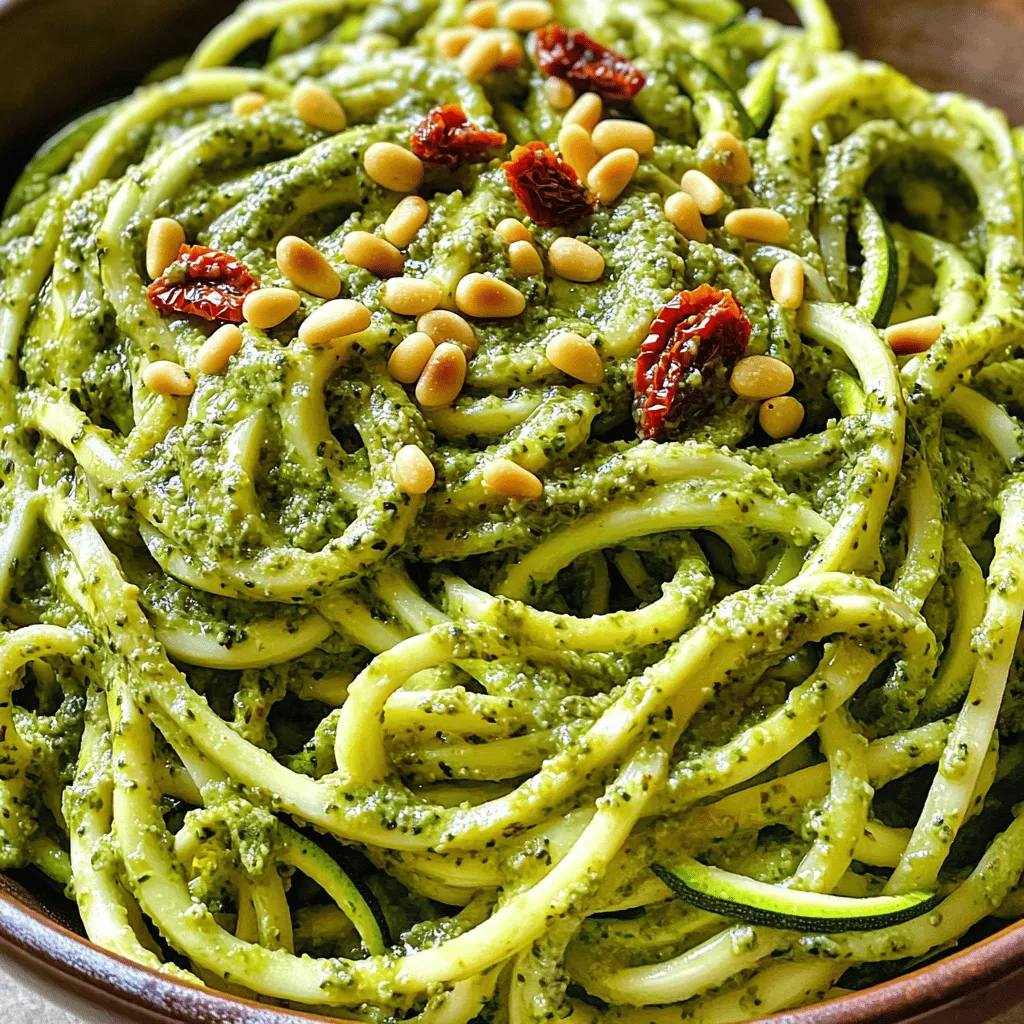
Garnish your dish with toasted pine nuts for a nice crunch. A sprinkle of extra cheese adds flavor and richness. Serve it in a colorful bowl to make it look inviting. A great presentation makes every meal more enjoyable!
Variations
Vegan Zucchini Noodles
For a vegan twist, swap the Parmesan with nutritional yeast. This gives your pesto a rich, cheesy flavor without dairy. You can also try using other nuts, such as walnuts or almonds. These nuts can add different textures and tastes to your pesto.
Adding Proteins
Want more protein? You can add grilled chicken, shrimp, or chickpeas to your dish. These options make it hearty and filling. Drizzle with balsamic reduction for an extra flavor boost. This adds a sweet and tangy touch that pairs well with the pesto.
Zucchini Noodles with Other Sauces
Don’t limit yourself to pesto! Marinara or Alfredo sauce works great too. You can mix in fresh vegetables or herbs for added color and taste. Try bell peppers, spinach, or parsley. Each adds a unique flavor to your dish. Experiment and find your favorite combination!
Storage Info
Storing Leftovers
After you finish your meal, store any leftovers in an airtight container in the fridge. The dish tastes best when eaten within 2-3 days. This keeps the flavors fresh and the texture nice.
Freezing Options
You can freeze zucchini noodles with pesto in portions for up to 3 months. Make sure to seal them in freezer bags or airtight containers. When ready to eat, thaw them in the fridge overnight. Reheat gently to avoid mushiness.
Using Leftover Pesto
If you have leftover pesto, store it separately for longer freshness. It works well as a sandwich spread or dip. You can enjoy it on crackers or with fresh veggies. This way, you get more use from your ingredients.
FAQs
What are zucchini noodles?
Zucchini noodles, or “zoodles,” are a low-carb alternative to traditional pasta. They come from spiralizing fresh zucchini. This method turns zucchini into long, thin strands that resemble spaghetti. Zoodles are light and refreshing, making them perfect for warm days. They absorb flavors well, making them an excellent base for sauces like pesto.
Can I make zucchini noodles ahead of time?
Yes, you can spiralize zucchini noodles ahead of time. Store them in the fridge for up to a day. For the best texture, consume them within this time. If you keep them longer, they may release water and become soggy. To avoid this, you might want to pat them dry with a paper towel before use.
How many calories are in zucchini noodles with pesto?
This dish usually has fewer calories than regular pasta. The exact number varies based on portion size and added ingredients. A serving of zucchini noodles with pesto may range from 150 to 300 calories. This makes it a great choice if you’re watching your calorie intake.
What if I don’t have a spiralizer?
You can still enjoy zucchini noodles without a spiralizer. Use a veggie peeler to create thin slices of zucchini instead. This method won’t give you the same noodle shape, but it still works well. You can also use a box grater for a different texture. Just cook them gently to keep them from getting too mushy.
Zucchini noodles with pesto offer a healthy twist on a classic dish. You learned about fresh ingredients, step-by-step preparation, and useful tips. Remember to adjust your pesto for flavor and texture. Enjoy experimenting with different proteins and sauces for variety. This dish is quick to make and easy to store. With simple steps, you can create a delicious meal. Get ready to enjoy zucchini noodles that are tasty and good for you.
![- 1 lb boneless, skinless chicken breast, thinly sliced - 1 large bell pepper (red or yellow), sliced into strips - 1 cup broccoli florets, cut into bite-sized pieces - 1 cup snap peas, trimmed - 1 medium carrot, julienned - 1/4 cup low-sodium soy sauce - 1 tablespoon honey - 1 tablespoon rice vinegar - 2 tablespoons sesame oil, divided - 3 cloves garlic, finely minced - 1 tablespoon fresh ginger, finely minced - Sesame seeds for garnish - 3 green onions, chopped (white and green parts kept separate) Using these ingredients, you can create a dish that bursts with flavor. Each element adds its own unique taste. The chicken breast serves as a great protein base. Bell peppers and broccoli contribute crunch and color. Snap peas and carrots add sweetness and texture. When you use sesame oil, garlic, and ginger, you create a rich aroma. These cooking essentials infuse the dish with depth. Finally, the sesame seeds and green onions provide a delightful finish. They enhance the dish's look and add a touch of brightness. For the full recipe, check the detailed instructions. Heat a large skillet or wok over medium-high heat. Add 1 tablespoon of sesame oil. When the oil shimmers, add the thinly sliced chicken. Season it with salt and pepper. Cook the chicken for 5-7 minutes. Stir it often until golden brown and fully cooked. Once done, remove the chicken from the skillet and set it aside. In the same skillet, add the second tablespoon of sesame oil. Let it heat up. Then, add the minced ginger and garlic. Sauté these for about 30 seconds. This step helps unlock their amazing flavors. Now, add the sliced bell pepper, broccoli florets, snap peas, and julienned carrot to the skillet. Stir-fry the vegetables for 4-5 minutes. You want them tender but still crisp. This keeps the dish colorful and crunchy. Return the cooked chicken to the skillet with the vegetables. In a separate small bowl, mix the soy sauce, honey, and rice vinegar. Whisk these until they blend well. Pour this sauce evenly over the chicken and veggies in the skillet. Stir everything together gently. Bring the mixture to a simmer over medium heat. This helps combine all the flavors and makes the dish more delicious. Next, slowly add the cornstarch slurry to the stir-fry. Stir constantly as you add it. Cook for 1-2 more minutes until the sauce thickens to your liking. This gives the dish a nice glossy finish. Remove the skillet from the heat. Add the chopped green tops of the green onions. Toss everything gently to combine. Serve the stir-fry on plates. Sprinkle sesame seeds on top for extra crunch. Enjoy this delightful meal! For the full recipe, you can refer to the earlier sections. For the best chicken stir-fry, use boneless, skinless chicken breast. Thinly slice it for quick cooking. This cut stays tender and soaks up flavors well. Heat your skillet over medium-high heat. This helps sear the chicken quickly, locking in moisture. Want to spice things up? Try adding a dash of red pepper flakes for heat. You can also mix in a splash of hoisin sauce for extra sweetness. Serve this stir-fry with jasmine rice or noodles. Both options soak up the sauce nicely. To plate your dish, start with a mound of rice in the center. Arrange the chicken and veggies around it. This creates a beautiful, colorful display. For garnish, sprinkle sesame seeds and chopped green onions on top. This adds a nice crunch and fresh flavor. For the full recipe, click here: [Full Recipe]. {{image_4}} You can easily change the protein in this dish. If you don’t like chicken, try these options: - Pork: Thinly sliced pork loin works well. - Beef: Flank steak adds great flavor. - Tofu: Firm tofu is perfect for a vegetarian option. - Shrimp: Quick-cooking shrimp gives a seafood twist. For vegetarian or vegan options, stick with tofu or tempeh. These protein sources soak up flavors well and add a nice texture. If you use tofu, press it to remove excess water for better frying. You can swap vegetables based on what’s in season or what you like best. Here are some great choices: - Zucchini: Adds a nice crunch and color. - Mushrooms: They bring an earthy flavor. - Asparagus: Great for spring dishes. - Cauliflower: A fun way to add some fiber. Mixing different veggies can also create a more colorful dish. Try to use at least three different kinds for variety. Adjust the sauce to match your taste. If you like it sweeter, add more honey. For a spicier kick, toss in some red pepper flakes. You can also switch vinegars. Here are some options: - Apple cider vinegar: It gives a fruity flavor. - Balsamic vinegar: Adds depth and sweetness. - White vinegar: For a sharper taste. Experimenting with these changes makes the dish your own. Don’t be afraid to try new flavors! For the full recipe, check the original instructions. To store leftovers, let the stir-fry cool down first. Place it in an airtight container. This keeps it fresh for up to three days in the fridge. When you're ready to eat, just take out the portion you want. If you want to freeze the stir-fry, use a freezer-safe bag or container. Remove as much air as possible to prevent freezer burn. You can freeze it for up to three months. Remember, some veggies may lose crunch when thawed, so choose your mix carefully. To reheat, the best method is on the stovetop. Add a splash of water or broth to keep it moist. Heat it over medium until hot. If you prefer the microwave, use a microwave-safe dish. Cover it with a damp paper towel to keep steam in. This helps maintain the texture and flavor. You can make this dish your own by adding personal touches. Try using different vegetables like zucchini or bok choy. You can also swap chicken for shrimp or tofu. Add your favorite nuts for a crunchy texture. Experiment with spicy sauces to kick up the heat. Each change can give you a new dish! Yes, frozen vegetables work well in this stir-fry. They save time and are easy to use. However, keep in mind that they may cook faster than fresh ones. You might need to adjust your cooking time. Aim for 3-4 minutes instead of 4-5 minutes for the veggies to stay crisp. Stir-fry goes great with several side dishes. Serve it with steamed jasmine rice for a classic touch. You can also pair it with brown rice for a healthier option. Noodles, like soba or rice noodles, also work well. Add a simple side salad for freshness and extra crunch. Absolutely! This sesame ginger chicken stir-fry is perfect for meal prep. Cook a big batch and divide it into containers. It stores well in the fridge for up to three days. To reheat, use a microwave or skillet. Just be sure to add a splash of water to keep it moist. To make this dish healthier, try a few simple swaps. Use less oil, or replace it with cooking spray. Choose low-sodium soy sauce to cut down on salt. Add more vegetables to increase fiber and nutrients. You can also cut back on honey for fewer calories. This blog post covered how to make a tasty Sesame Ginger Chicken Stir-Fry. We discussed key ingredients like chicken, fresh veggies, and flavorful sauces. I shared step-by-step cooking instructions, along with tips to enhance flavor and presentation. We also explored variations for dietary needs and the best ways to store leftovers. In summary, stir-fry is easy, fun, and flexible. You can customize it to suit your tastes. Enjoy making this dish your own, and share it with friends and family!](https://dishtreats.com/wp-content/uploads/2025/06/887f9040-7330-4bb7-a0e7-766c5efe9124-768x768.webp)


