
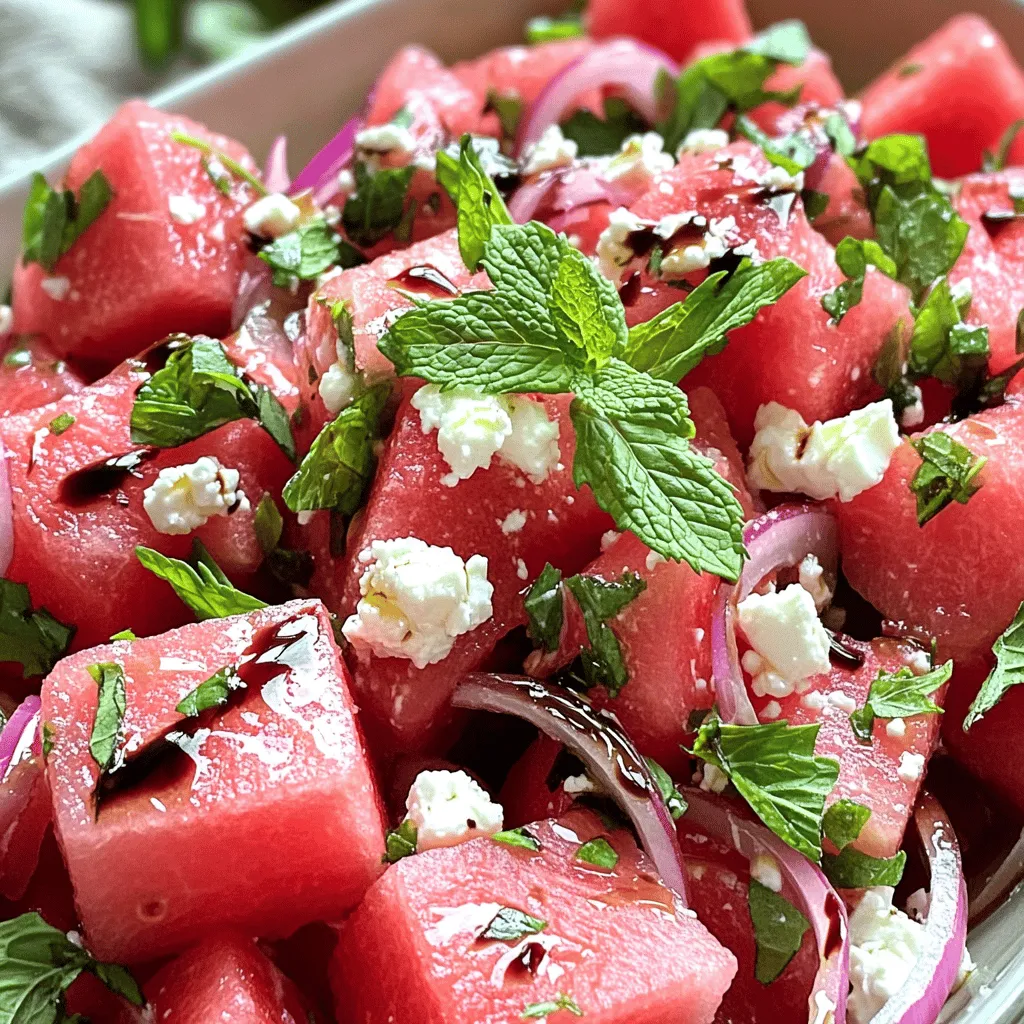
Fresh Watermelon Feta Salad Delightful and Easy Recipe

Looking for a light and tasty dish? My Fresh Watermelon Feta Salad recipe is perfect for you! This salad bursts with flavor and uses simple, fresh ingredients. It’s the ideal mix of sweet watermelon and salty feta, making it a delightful treat for warm days. Plus, it’s easy to make and even easier to enjoy. Let’s dive into the ingredients and get started on this refreshing dish!
Ingredients
Key Ingredients for Fresh Watermelon Feta Salad
For this salad, you need a few key ingredients. Here is what you’ll need:
- 4 cups fresh watermelon, cut into bite-sized cubes
- 1 cup feta cheese, crumbled
- 1/4 cup fresh mint leaves, finely chopped
- 1/4 cup red onion, delicately thinly sliced
- 2 tablespoons high-quality extra virgin olive oil
- 2 tablespoons rich balsamic glaze
- Sea salt and cracked black pepper, to taste
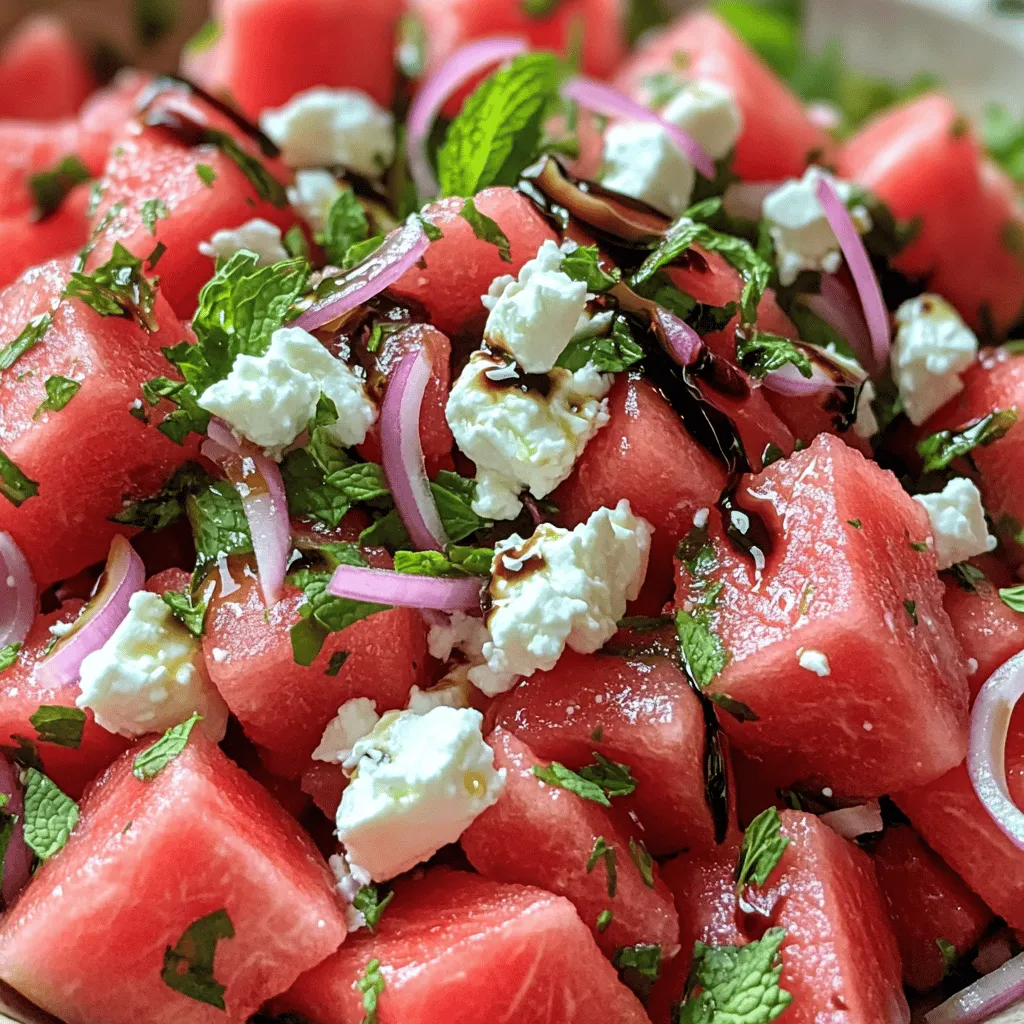
Each ingredient plays a role. The watermelon gives a sweet, juicy base. Feta adds a creamy, salty touch. Mint brings freshness, while red onion adds a sharp bite. Olive oil and balsamic glaze tie everything together with richness and flavor.
Optional Ingredients for Enhanced Flavor
You can make this salad even better with some optional ingredients. Here are a few ideas:
- Cucumber, for added crunch
- Lime juice, for a zesty kick
- Arugula, for a peppery twist
- Avocado, for creaminess
These extras can change the taste and texture. Feel free to be creative!
Why Fresh Ingredients Matter
Using fresh ingredients makes a big difference. Fresh watermelon is sweet and hydrating. Quality feta cheese has better taste and texture. Fresh herbs like mint enhance the aroma and flavor.
When you use fresh items, the salad will taste bright and lively. It will look vibrant and inviting, too. This makes your dish not just a meal, but a delightful experience. Always choose the best ingredients for maximum flavor.
Step-by-Step Instructions
Preparation of Watermelon and Feta
Start by cutting the fresh watermelon into cubes. Aim for bite-sized pieces. This helps each piece fit nicely in your mouth. Use about 4 cups of watermelon for a good balance. Next, grab your feta cheese. Crumble the cheese into small bits. You need about 1 cup of feta to add that creamy flavor to the salad.
Mixing Ingredients in a Bowl
Now, take a big mixing bowl. Add the watermelon cubes first. Then, sprinkle the crumbled feta on top. Next, chop up 1/4 cup of fresh mint leaves. Toss the mint into the bowl for a fresh taste. Slice 1/4 cup of red onion thinly and add it as well. This gives a nice crunch and flavor.
Final Seasoning and Serving Recommendations
Drizzle 2 tablespoons of extra virgin olive oil over the mix. Follow this with 2 tablespoons of balsamic glaze for sweetness. Gently use a large spoon to mix everything together. Be careful not to mash the watermelon. Add sea salt and cracked black pepper to taste. Let the salad sit for about 10 minutes. This helps the flavors blend well. Serve it in a chilled bowl for a refreshing touch.Enjoy your salad!
Tips & Tricks
How to Choose Ripe Watermelon
When selecting a watermelon, look for one that feels heavy for its size. A ripe watermelon has a smooth skin with a uniform color. Check for a yellow spot on one side; this spot shows where the fruit rested on the ground. It should be creamy, not white. Give it a gentle tap; a deep sound means it is ripe. Avoid watermelons with soft spots or dents.
Storing Leftovers Properly
If you have leftover salad, store it in an airtight container. Keep it in the fridge for up to three days. To keep the watermelon fresh, avoid mixing it with feta until serving. Store them separately to prevent sogginess. If you notice any extra moisture, drain it before serving again.
Enhancing Flavor Combinations
You can boost the flavor of your salad in many ways. Try adding a splash of lime juice for brightness. A sprinkle of chili powder can add a fun kick. If you like crunch, consider adding nuts like walnuts or pistachios. You can even swap fresh herbs, like basil, for mint. These little changes can make your salad even more delightful.
Variations
Tropical Twist: Adding Pineapple
You can easily add pineapple to this salad. Pineapple brings a sweet and tangy flavor. Just cut it into small cubes like the watermelon. Mix it in with the watermelon and feta. This twist gives a fresh tropical feel to the dish. You can use fresh or canned pineapple, but fresh is best. This variation is perfect for summer barbecues or picnics.
Hearty Additions: Grains and Proteins
If you want to make your salad more filling, add grains or proteins. Quinoa or farro work well here. They add texture and keep you full longer. You can also add grilled chicken or chickpeas. These ingredients make the salad heartier. Just toss them in with the watermelon and feta. This way, you create a balanced meal that is both tasty and healthy.
Vegan Alternatives to Feta Cheese
For a vegan option, try using plant-based feta cheese. There are many great brands available now. You can also make your own using tofu, lemon juice, and herbs. This keeps the creamy texture without dairy. Mix in the tofu like you would with feta. It adds flavor while keeping the dish fresh and light. This option is great for those who are lactose intolerant or vegan.
Storage Info
Best Ways to Store Fresh Watermelon Feta Salad
To keep your Fresh Watermelon Feta Salad fresh, store it in an airtight container. This helps prevent the salad from drying out. Place the container in your fridge. Keep it away from foods with strong odors to maintain its fresh taste. If you need to store the salad longer, consider separating the feta and dressing. This keeps the flavors bright until you’re ready to serve.
How Long Does the Salad Last?
When stored correctly, the salad lasts about three days in the fridge. After that, the watermelon may start to lose its crunch. The feta can also become soggy over time. Always check for any signs of spoilage before eating leftovers. If it smells off or looks different, it’s best not to eat it.
Freezing Options and Considerations
Freezing Fresh Watermelon Feta Salad is not recommended. Watermelon has high water content. When frozen, it turns mushy when thawed. The feta cheese also changes texture, making it less appealing. If you want a refreshing treat, consider freezing watermelon cubes separately. You can then blend them into smoothies or use them in other recipes later.
FAQs
Can I make Fresh Watermelon Feta Salad ahead of time?
Yes, you can make this salad ahead of time. However, it is best to wait to add the dressing until you are ready to serve. This keeps the watermelon fresh and crisp. If you mix it too early, the watermelon might release water and become soggy. I suggest preparing the watermelon and feta the day before, then adding the dressing just before serving.
What can I serve with Watermelon Feta Salad?
This salad pairs well with many dishes. Serve it alongside grilled chicken or fish for a light meal. It also goes great with burgers or sandwiches. If you want a complete feast, add some crusty bread or a simple pasta salad. The fresh flavors of the salad balance rich main dishes nicely.
Is Fresh Watermelon Feta Salad healthy?
Absolutely! This salad is healthy and refreshing. Watermelon is low in calories and high in water content, making it great for hydration. Feta adds protein and calcium, while mint gives a fresh taste. Olive oil provides healthy fats, too. Overall, it is a nutritious choice that is also delicious. Enjoy it guilt-free!
In this blog post, we explored how to make a Fresh Watermelon Feta Salad. We covered key ingredients, step-by-step instructions, and useful tips to enhance flavor. Choosing fresh, ripe ingredients keeps your salad tasty and healthy. You also learned how to store leftovers and even create tasty variations. Enjoy this simple, refreshing dish that adds fun to your meals. It’s easy to prepare and always a hit at gatherings. Remember, fresh is best, so grab the ingredients and get started today!



![To make lemon garlic scallops, you need fresh and simple ingredients. Here is what you will need: - 1 pound sea scallops, thawed if previously frozen - 3 tablespoons extra virgin olive oil - 4 cloves garlic, finely minced - Zest and juice of 1 large lemon - Sea salt and freshly cracked black pepper, to taste - 1 tablespoon fresh parsley, finely chopped - Lemon slices for an elegant garnish Sea scallops are best for this dish. They have a sweet flavor and a firm texture. Choose bright, glossy scallops with a clean scent. Avoid any that smell fishy. Fresh garlic adds a punch of flavor. It gives depth and richness to the dish. Lemon brings brightness and acidity, balancing the sweet scallops. The zest adds an extra layer of lemony goodness. When sourcing ingredients, look for a trusted fish market. Ask about the origin of the scallops. Fresh, high-quality ingredients make a big difference in taste. You want to create a dish that shines with flavor and freshness. For the olive oil, choose a high-quality extra virgin variety. It enhances the overall flavor profile. Fresh parsley adds color and freshness at the end. Always use fresh herbs for the best taste. By selecting quality ingredients, you set the stage for a memorable meal. Follow the [Full Recipe] to create this delightful dish! First, drying scallops is key. Use paper towels to pat them dry. Moisture will stop them from searing well. Next, season both sides with sea salt and black pepper. A light touch works wonders here. When you place them in the skillet, space them out. Overcrowding will steam them instead of searing them. Heat your olive oil in a large skillet on medium-high heat. Watch for it to shimmer but not smoke. Carefully add the dry scallops in a single layer. Let them sear for 2-3 minutes without moving them. This helps form a nice golden crust. Once they look brown, gently flip them using tongs. Now, add the minced garlic to the pan. Cook for another 2-3 minutes. Stir the garlic to stop it from burning. The scallops should become opaque and fully cooked. Remove the skillet from heat right after cooking. Add the lemon zest and juice to the pan. Toss the scallops gently so they soak up the flavors. Lastly, sprinkle fresh parsley over the top. This adds color and fresh taste. For serving, place the scallops on a plate and drizzle the pan juices over them. Garnish with lemon slices for an elegant touch. You can pair them with sautéed greens or a crisp salad for a complete meal. - Overcooking scallops: This is a big mistake. Scallops cook fast. If you cook them too long, they become rubbery. Aim for a golden crust on the outside and opaque inside. - Not using enough oil for searing: Oil helps create a nice crust. If you skimp on oil, the scallops may stick. Use at least three tablespoons to get good results. - Ignoring the resting time post-cooking: Let your scallops rest for a minute after cooking. This helps them stay juicy. Don’t rush this step! - Recommended skillet types for best results: A heavy skillet works best. Cast iron or stainless steel distributes heat evenly. Avoid non-stick pans; they won’t give you a good sear. - Importance of temperature control: Start with a hot skillet. If it's too cool, scallops won’t brown. Heat the oil until it shimmers. This shows it’s ready for the scallops. - Suggestions for seasoning variations: Besides lemon and garlic, try fresh herbs or spices. Thyme, chili flakes, or even a splash of white wine can add depth. Experiment to find your favorite mix! For the full recipe, check out the details above and get cooking! {{image_4}} You can elevate your lemon garlic scallops with a few simple tweaks. - Incorporating herbs: Add fresh thyme or basil for a fragrant twist. These herbs enhance the dish’s aroma and add depth to the flavor. - Alternative citrus options: Try lime or orange juice for a unique taste. Each citrus brings its own brightness and pairs nicely with scallops. - Adding heat: If you like spice, sprinkle in some chili flakes or drizzle Sriracha. The heat balances the dish’s richness and excites your taste buds. Pair your scallops with sides to create a full meal. Here are some ideas: - Suggested side dishes: Serve with sautéed greens for a fresh crunch. A light salad or creamy risotto also works well to complement the scallops. - Pairing with wines or cocktails: A chilled white wine, like Sauvignon Blanc, enhances the dish. For cocktails, a gin and tonic is refreshing and bright. - Plating ideas: For a restaurant-style look, place the scallops on a clean plate. Drizzle the pan juices over them and add lemon slices for a pop of color. A sprinkle of parsley adds a final touch of green. For the full recipe, check out the Lemon Garlic Scallops recipe. After you finish your Lemon Garlic Scallops, store any extras right. First, place them in a shallow, airtight container. This helps keep them fresh. You can put them in the fridge for up to two days. If you wait longer, the taste and texture change. To reheat, use a non-stick skillet. Heat it over low to medium heat. Add a splash of water or broth to keep them moist. Cover the pan with a lid. This method helps keep the scallops tender. You can freeze scallops, but do it right. Raw scallops freeze well if you place them in a sealed bag. Remove as much air as possible. They can stay fresh for up to three months. If you want to freeze cooked scallops, make sure they cool first. Then, follow the same bag method. To thaw, leave them in the fridge overnight. Never thaw scallops in warm water. This can ruin their texture. When you reheat frozen scallops, use low heat again. Check them often to avoid overcooking. Enjoy your scallops as fresh as possible! For the full recipe, check out the details above. You should use sea scallops for this recipe. Sea scallops are larger and have a sweet taste. Bay scallops are smaller and can be more delicate. They work well in soups or pasta but may not sear as nicely. When picking scallops at the market, look for these signs: - They should smell fresh, like the ocean. - The meat should be firm and glossy. - Avoid scallops that look dry or have brown spots. Yes, you can use other oils. Grapeseed oil or avocado oil are good options. They have high smoke points, too. Using different oils can change the flavor. Olive oil adds a rich taste, while grapeseed is lighter. Choose based on your preference and what you have on hand. Perfectly cooked scallops are opaque and firm. They should have a golden crust outside. The safe internal temperature for scallops is 145°F (63°C). Use a food thermometer to check. If you don’t have one, look for that golden color and firm texture. For a full recipe, check out the Lemon Garlic Scallops guide! Lemon garlic scallops are a tasty dish that combines fresh ingredients and simple steps. Using quality sea scallops, fresh garlic, and lemon makes all the difference. I shared tips for cooking and avoiding common mistakes, like overcooking. Remember, you can customize your flavors with herbs or spices. Enjoy your cooking journey. Perfect scallops can impress anyone. With practice, you’ll master this dish and feel confident serving it. Take your time and savor the process!](https://dishtreats.com/wp-content/uploads/2025/07/19c1a638-1668-4343-8a69-d1fc169e2d79-768x768.webp)

. - Ensure even space on the baking sheet for optimal roasting. - Toss halfway through cooking for uniform caramelization. Roasting carrots and chickpeas makes them sweet and crunchy. When you spread them out, they cook evenly. If they touch, they steam instead of roast. This can make them soggy and less tasty. Tossing the mixture halfway is key. It helps to brown all sides well. This step adds more flavor and a lovely texture. - Experiment with different citrus juices like lime or orange. - Substitute tahini with Greek yogurt for a creamy dressing. The dressing can change the whole dish. Use lime juice for a zesty twist. Orange juice gives a sweet touch. Both add freshness and brightness. If you want a creamy option, use Greek yogurt instead of tahini. It makes the dressing rich and smooth. This swap gives a fun flavor change too. - Serve in individual bowls for a refined presentation. - Add a lemon wedge for guests to use. Presenting this salad in bowls looks nice. It makes each serving feel special. Guests can enjoy their own portion. Adding a lemon wedge on the side is a great idea. It lets everyone add a splash of fresh juice. This brightens the salad even more. For the full recipe, check the details above. Enjoy your cooking! {{image_4}} You can make this salad even better. Try adding other roasted veggies. Bell peppers bring sweetness. Sweet potatoes add creaminess. Both enhance flavor and texture. You can also toss in nuts or seeds. Almonds or sunflower seeds add a nice crunch. They make the salad more filling and fun. If you want more protein, try grilled chicken or tofu. Both options work well with roasted carrots and chickpeas. Grilled chicken adds a savory touch, while tofu keeps it plant-based. You can also use canned tuna. It gives the salad a different flavor and makes it heartier. Want to boost flavor? Experiment with fresh herbs. Cilantro or mint can brighten the taste. They add freshness that complements the roasted veggies. You can also spice it up with hot sauce. Just a dash gives the salad a nice kick. It’s a fun way to change the flavor profile. For the complete recipe, check out the Full Recipe section above. Store leftovers in an airtight container in the fridge. They are best consumed within 2-3 days. After that, the carrots may lose their crunch, and the flavors fade. Freezing this salad is not recommended. The dressing may separate when frozen. This can change the texture and taste of your salad. You can enjoy this salad cold or at room temperature. If you prefer, reheat in the oven. This helps retain the texture of the roasted carrots and chickpeas. Yes, use maple syrup instead of honey and omit the feta cheese. This keeps the flavors rich and plant-based. You won’t miss the cheese, trust me. The roasted carrots and chickpeas bring enough taste and texture to satisfy everyone. You can use black beans or white beans as alternatives. Both options provide protein and fiber. They also add a nice twist to the taste. Black beans bring a bit of earthiness, while white beans offer a creamier texture. Serve the dressing on the side to keep the greens crisp until serving. This way, they stay fresh and crunchy. Drizzle the dressing just before you eat for the best taste and texture. Spinach, arugula, or chopped kale work well for base greens. Each option adds a different flavor. Spinach is mild, arugula is peppery, and kale adds a hearty bite. Choose what you like best! This blog post shares a tasty recipe featuring roasted carrots and chickpeas on fresh greens. It walks through each step, from prep to assembly, and includes tips for perfect results. You can even tweak the dressing and add your favorite proteins. Don’t hesitate to make this salad your own. Experimenting with flavors makes cooking fun! Enjoy your healthy, vibrant salad that brings flavor and nutrition to your table.](https://dishtreats.com/wp-content/uploads/2025/07/15b40619-46f3-4baf-96e6-94c974b2a42a-768x768.webp)