
Creamy Avocado Pasta Delightfully Fresh Meal Option

Looking for a fresh and easy meal? Creamy Avocado Pasta is your answer! This delightful dish combines ripe avocados with pasta for a filling, yet healthy option. With just a few simple ingredients, you’ll learn how to whip up a tasty sauce that will impress anyone. Follow along as I share my best tips and tricks for making this creamy goodness into your new favorite meal!
Ingredients
Here’s what you need to make creamy avocado pasta. Gather these fresh ingredients for a delightful meal.
- Spaghetti or choice of pasta
- Ripe avocados
- Garlic
- Fresh basil leaves
- Lemon juice
- Extra virgin olive oil
- Sea salt and black pepper
- Cherry tomatoes (optional)
- Grated Parmesan cheese or nutritional yeast (optional)
Each ingredient adds a special touch to your dish. The ripe avocados create a smooth sauce that coats the pasta beautifully. Garlic adds a nice kick, while fresh basil brings a bright flavor. Lemon juice gives the dish a tangy twist that lifts all the flavors.
Feel free to swap in your favorite pasta. You can even add cherry tomatoes for a pop of color and taste. For a creamy finish, sprinkle with Parmesan cheese or nutritional yeast.
Step-by-Step Instructions
Cooking the Pasta
First, boil a large pot of salted water. Once it bubbles, add your spaghetti. Cook it until it is al dente, which means it should still have a bite. When it’s done, save one cup of the pasta water. Drain the rest and set the pasta aside in a bowl or back in the pot.
Preparing the Avocado Sauce
Next, grab a food processor. Add the pitted and peeled avocados, minced garlic, fresh basil leaves, lemon juice, and olive oil. Blend everything on high speed until it’s smooth and creamy. If the sauce feels too thick, slowly add a few tablespoons of the reserved pasta water until it reaches the right texture.
Combining Ingredients
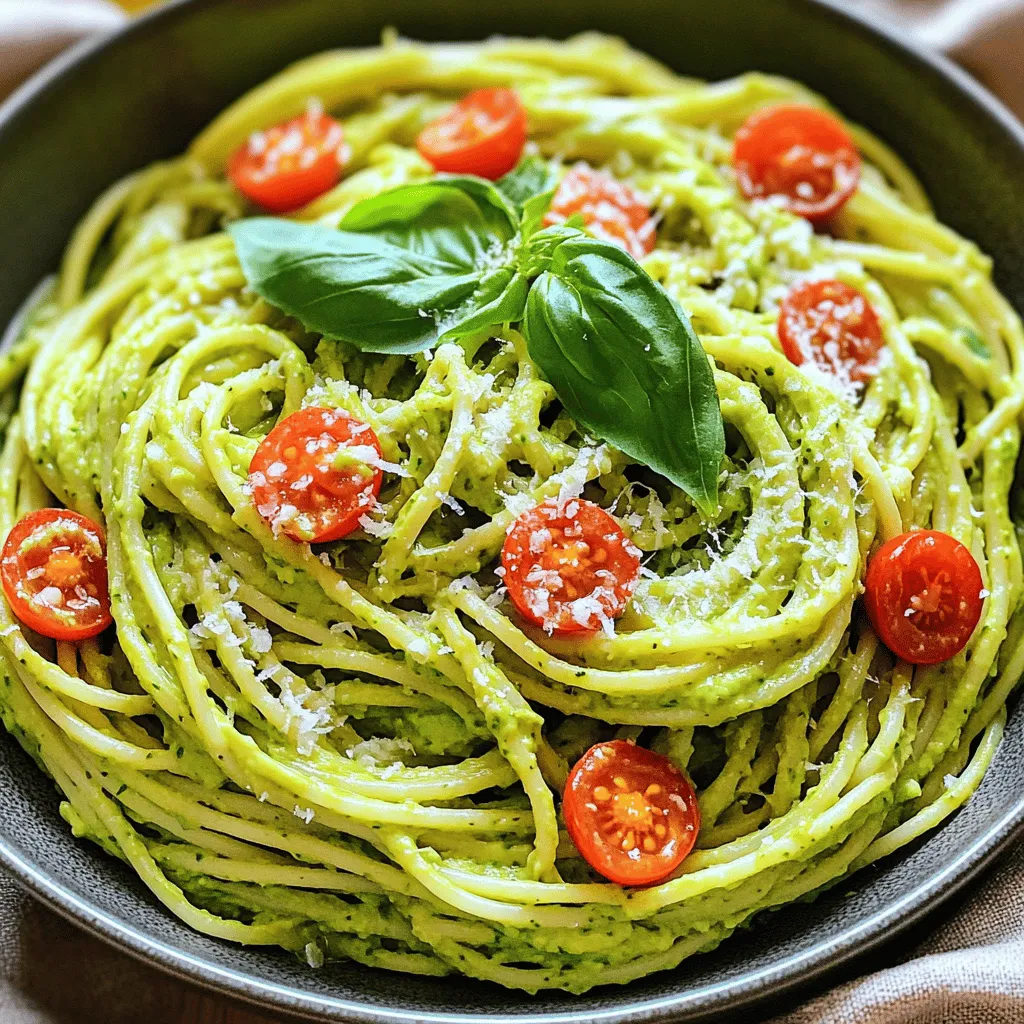
Now it’s time to mix! In a large bowl or the pasta pot, add your cooked spaghetti to the avocado sauce. Use tongs to gently toss them together. Make sure the sauce covers all the pasta evenly. If you feel it needs more moisture, add a bit more reserved pasta water. If you like, fold in halved cherry tomatoes for an extra burst of flavor.
This simple process will give you a creamy avocado pasta that feels fresh and delicious.
Tips & Tricks
Enhancing Flavor
To make your creamy avocado pasta taste amazing, pay attention to salt and pepper. Start with a pinch of sea salt. Taste the sauce and add more if needed. Freshly ground black pepper gives a nice kick. Adjust these seasonings to fit your taste.
For creaminess, you may want to change the thickness. If the sauce feels too thick, add a little reserved pasta water. This helps create a smooth texture. Blend until you reach the creaminess that you love.
Presentation Tips
A little olive oil can make your dish look fancy. Drizzle some extra virgin olive oil over the pasta just before serving. This adds shine and flavor.
Garnishing is key. Add fresh basil leaves on top of your pasta. It adds color and a nice herbal taste. If you like, sprinkle some grated Parmesan cheese or nutritional yeast for that cheesy touch. It makes your dish not just tasty but beautiful too.
Variations
Dietary Alternatives
You can easily adapt this creamy avocado pasta for different diets. For vegan options, skip the Parmesan cheese, or use nutritional yeast instead. Nutritional yeast adds a cheesy flavor without dairy. You can find it in most grocery stores.
If you need gluten-free pasta substitutes, look for pasta made from rice, quinoa, or chickpeas. These options have great taste and texture. They absorb the creamy sauce well.
Ingredient Swaps
Feel free to get creative with herbs and spices. Try fresh parsley or cilantro for a fresh twist. You can also add a pinch of red pepper flakes for a bit of heat.
For added nutrition, think about including more veggies. Spinach or arugula can blend well with the sauce. You can also toss in roasted bell peppers or zucchini for added flavor and color.
These variations keep your meal exciting and fresh every time you make it. Explore these options to find your favorite combinations!
Storage Info
Refrigeration and Freezing
To store leftovers, place the creamy avocado pasta in an airtight container. It stays fresh in the fridge for up to three days. If you want to freeze it, use a freezer-safe bag. Squeeze out as much air as possible to avoid freezer burn. This dish can stay frozen for up to a month, but creaminess may change.
Reheating Suggestions
When you want to reheat the pasta, the best method is the stovetop. Use a non-stick pan over low heat. Add a splash of reserved pasta water to help keep it creamy. Stir gently as it warms up. Avoid the microwave, as it can dry out the sauce and change the texture. Enjoy your creamy avocado pasta just as fresh as when you made it!
FAQs
What can I substitute for pasta?
You can use several tasty options for pasta. Here are some ideas:
- Zucchini noodles: Spiralized zucchini is a fresh, low-carb option.
- Spaghetti squash: Roasted spaghetti squash gives a unique texture.
- Quinoa: This grain adds protein and a nutty flavor.
- Rice noodles: A great gluten-free choice for a different taste.
- Whole grain pasta: For more fiber and nutrients, try whole grain options.
These substitutes keep the dish light and fresh while offering unique flavors.
How do I make this recipe vegan?
To create a vegan version of creamy avocado pasta, make a few simple swaps:
- Skip the cheese: Use nutritional yeast for a cheesy flavor without dairy.
- Use gluten-free pasta: If needed, pick a gluten-free pasta.
- Omit any animal products: Ensure all ingredients are plant-based.
These changes will keep the dish creamy and delicious while being fully vegan.
Can I prepare the avocado sauce ahead of time?
Yes! You can make the avocado sauce in advance. Here’s how to store it:
- Keep it airtight: Use a container with a lid to prevent browning.
- Add lemon juice: This helps keep the sauce bright and green.
- Refrigerate: Store it in the fridge for up to a day.
Mix the sauce with pasta just before serving for the best taste.
This blog post covered a fun, tasty pasta dish with an avocado sauce. You learned about the ingredients, step-by-step cooking, and tips for enhancing flavors. I shared ways to store leftovers and how to make it vegan.
As you explore these ideas, remember to try different herbs and veggies. Cooking should be fun and flexible. Enjoy every bite of your creamy avocado pasta!
![- 8 oz spaghetti or fettuccine pasta - 2 boneless, skinless chicken breasts - 1 cup basil pesto (homemade or store-bought) - 1/2 cup heavy cream - 1/4 cup cherry tomatoes, halved - 1/4 cup freshly grated Parmesan cheese - Fresh basil leaves for garnish - Salt and freshly ground black pepper, to taste - 2 tablespoons extra virgin olive oil Gather these ingredients before you start cooking. The pasta and chicken form the base of your dish. The creamy pesto sauce adds rich flavor. The cherry tomatoes bring a burst of freshness. The Parmesan cheese tops it off with a salty kick. Fresh basil leaves make it look gorgeous. Using fresh ingredients makes a big difference. If you have the time, try making your own pesto. It’s simple and tastes amazing. You can adjust the flavors to your liking. You can also swap the pasta type if you want. Just keep in mind that different shapes may change how the sauce clings to the pasta. For the chicken, you want it juicy and tender. The seasoning is key here. Use good quality olive oil, salt, and pepper. This will help keep the flavor bright and fresh. Once you have everything, you’ll be ready to make a delicious meal. If you want the full recipe, check out the complete guide for step-by-step instructions. Start by boiling a large pot of water. Add a good amount of salt to the water. This will help flavor the pasta. Once the water is boiling, add your spaghetti or fettuccine. Cook it until it is al dente, which means it should be firm to the bite. This usually takes around 8-10 minutes. When done, drain the pasta. Make sure to save about 1/2 cup of the pasta water for later. While the pasta cooks, get ready to season the chicken. Sprinkle salt and pepper on both sides of the chicken breasts. Heat 2 tablespoons of olive oil in a large skillet over medium heat. When the oil is hot, add the chicken. Cook each side for about 6-7 minutes. You want the chicken to turn a nice golden brown. Check that the juices run clear when you cut into it. Once cooked, take the chicken out of the skillet and let it rest for a few minutes. Then, slice it into thin strips. In the same skillet, lower the heat to medium-low. Add your basil pesto to the pan and stir it. You want to warm it through but not burn it. After about a minute, slowly pour in 1/2 cup of heavy cream. Stir it all together until it is well mixed and heated, which should take about 2-3 minutes. Now, add the cooked pasta to the skillet with your creamy pesto sauce. Toss the pasta gently to make sure it gets coated evenly. If the sauce looks too thick, add a little of the reserved pasta water. This will help you reach your desired creamy consistency. To finish, fold in the halved cherry tomatoes and the sliced chicken. Stir everything together for another 2 minutes. This will warm the chicken and tomatoes through. Finally, sprinkle freshly grated Parmesan cheese on top. Toss it lightly to mix. For a bright touch, garnish with fresh basil leaves before serving. For a full recipe, check out the details above! You can use homemade or store-bought pesto for this dish. Homemade pesto gives you full control over flavors, but store-bought saves time. If you want a stronger basil taste, simply add more fresh basil leaves to your mix. For a milder flavor, blend in more nuts or cheese. This helps balance the taste to your liking. To keep your chicken juicy, avoid overcooking it. Cook chicken breasts in a hot skillet for 6-7 minutes on each side. The internal temperature should reach 165°F. Rest the chicken for a few minutes before slicing. This helps the juices stay inside. You can make your sauce thicker or lighter based on your taste. For a richer sauce, use more heavy cream. If you want a lighter option, try half-and-half or low-fat milk. Adding a splash of pasta water helps adjust the sauce's thickness too. This way, you can achieve the perfect creamy texture for your chicken pesto pasta. For the Full Recipe, check out the detailed instructions to create this delightful dish! {{image_4}} Adding vegetables to your Chicken Pesto Pasta makes it even better. It boosts flavor and nutrition. Seasonal veggies like spinach or bell peppers work great. Spinach adds a nice green color. Bell peppers give a sweet crunch. You can toss them in during the last few minutes of cooking. This way, they stay bright and fresh. If you need gluten-free pasta, you have choices! You can use rice pasta or chickpea pasta. These options taste great and cook well. Just follow the package instructions. Cooking times may differ, so keep an eye on them. You want your pasta to be tender but not mushy. Not in the mood for chicken? Try shrimp or tofu instead! Shrimp cooks fast and adds a nice twist. Just sauté them until they turn pink. Tofu is a fantastic plant-based option. Make sure to press it first to remove extra water. Adjust cooking times based on what you choose. This keeps your dish delicious and exciting. For the full recipe, check out the [Full Recipe]. Store any leftovers in the fridge. Use a tight-sealing container to keep your chicken pesto pasta fresh. Glass containers work well, as do plastic ones. Make sure to let it cool down before putting it away. It stays good in the fridge for up to three days. To freeze your chicken pesto pasta, pack it in an airtight container or freezer bag. Remove as much air as possible. This helps prevent freezer burn. You can freeze it for up to three months. Just label the bag with the date so you remember when you froze it. When reheating, use the microwave or stovetop. If using the microwave, heat in short bursts. Stir between each burst to ensure even warming. On the stovetop, add a splash of water or cream to keep it moist. This helps keep the creaminess intact. Enjoy your meal again as if it were fresh! To make chicken pesto pasta from scratch, follow these basic steps: 1. Cook the pasta. Boil water in a large pot, add salt, and cook your choice of spaghetti or fettuccine until al dente. 2. Prepare the chicken. Season boneless chicken breasts with salt and pepper. Sear them in olive oil until golden brown. 3. Make the sauce. In the same skillet, mix basil pesto with heavy cream until warm and creamy. 4. Combine. Toss the cooked pasta with the sauce and sliced chicken. Adjust the sauce with reserved pasta water if needed. 5. Serve. Garnish with cherry tomatoes, Parmesan cheese, and fresh basil. You can find the full recipe above for a detailed guide. Yes, you can make chicken pesto pasta ahead of time. Here are some tips: - Cooked pasta and sauce. Prepare the chicken and sauce, then store them separately from the pasta. This keeps them fresh. - Refrigerate. Store in airtight containers in the fridge for up to three days. - Freeze. For longer storage, freeze the chicken and sauce. Use within two months for best flavor. - Reheat. When ready, reheat the chicken and sauce. Cook the pasta fresh to keep it al dente. Chicken pesto pasta pairs well with various side dishes. Consider these suggestions: - Garlic bread. A warm, crispy slice complements the creamy pasta. - Salad. A light green salad with a tangy vinaigrette balances the richness of the dish. - Roasted vegetables. Seasonal veggies add color and nutrients to the meal. Chicken pesto pasta can be a healthy option. Here’s why: - Protein. Chicken provides lean protein, which is vital for muscle health. - Basil and olive oil. These ingredients are rich in antioxidants and healthy fats. - Pasta. Whole-grain pasta offers fiber, which aids digestion. - Portion control. Adjust the serving size to fit your dietary needs. Absolutely! You can use various pasta types. Here are some alternatives: - Whole wheat pasta. Adds extra fiber and nutrients. - Gluten-free pasta. Great for those with gluten sensitivities. - Zoodles. Spiralized zucchini for a low-carb option. - Penne or rigatoni. These shapes hold the sauce well, providing a satisfying bite. In this post, I covered how to make a delicious chicken pesto pasta. We discussed the main ingredients and their roles, along with simple steps for cooking. I also shared tips for perfecting your dish and exciting variations to try. In closing, this recipe is easy and flexible, letting you customize flavors. Whether you choose to add veggies or change proteins, your meal will impress. Enjoy this tasty dish and make it your own!](https://dishtreats.com/wp-content/uploads/2025/06/ae0d281d-adb6-406a-8a42-58bd8911a0b3-768x768.webp)


