Spicy Korean Gochujang Noodles Quick and Easy Recipe
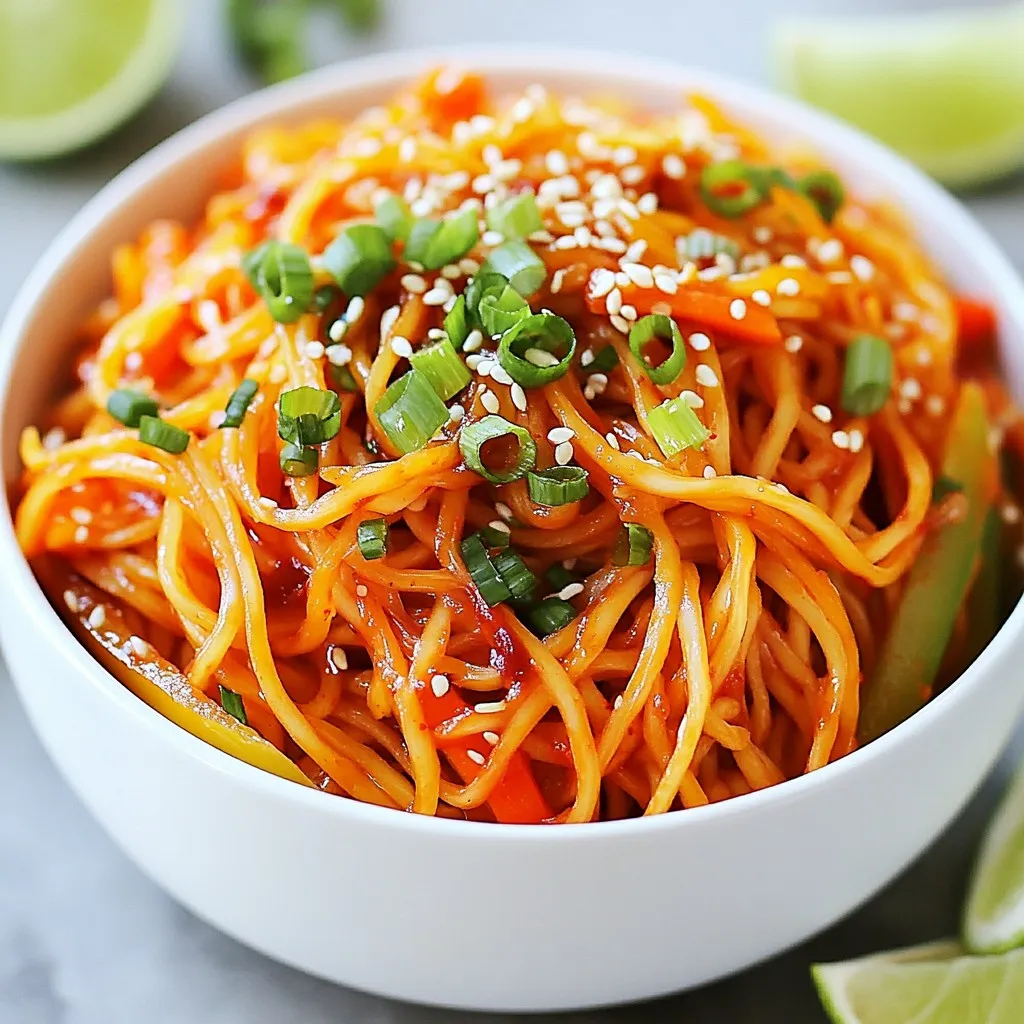
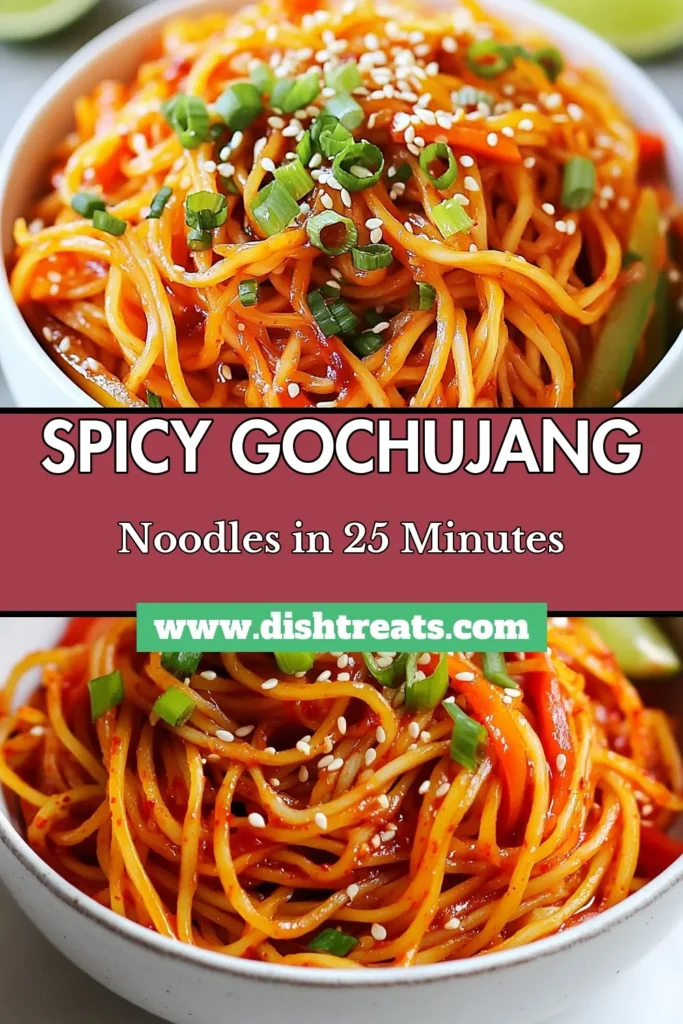
Are you ready to spice up your dinner routine? My Spicy Korean Gochujang Noodles are quick, easy, and bursting with flavor! With just a few steps, you can whip up a delicious meal that combines the rich taste of Gochujang with fresh vegetables and chewy rice noodles. Whether you’re a busy home cook or just looking for something new, this recipe will satisfy your hunger and your cravings. Let’s dive in!
Why I Love This Recipe
- Bold Flavors: The combination of gochujang, sesame oil, and honey creates a delightful balance of spicy and sweet that tantalizes the taste buds.
- Quick and Easy: This dish can be prepared in just 25 minutes, making it perfect for busy weeknights or a last-minute meal.
- Colorful and Nutritious: With vibrant vegetables like carrots and bell peppers, this recipe not only looks good but also packs a nutritional punch.
- Customizable: You can easily adjust the spice level or add your favorite protein to make this dish your own.
Ingredients
Main Ingredients List
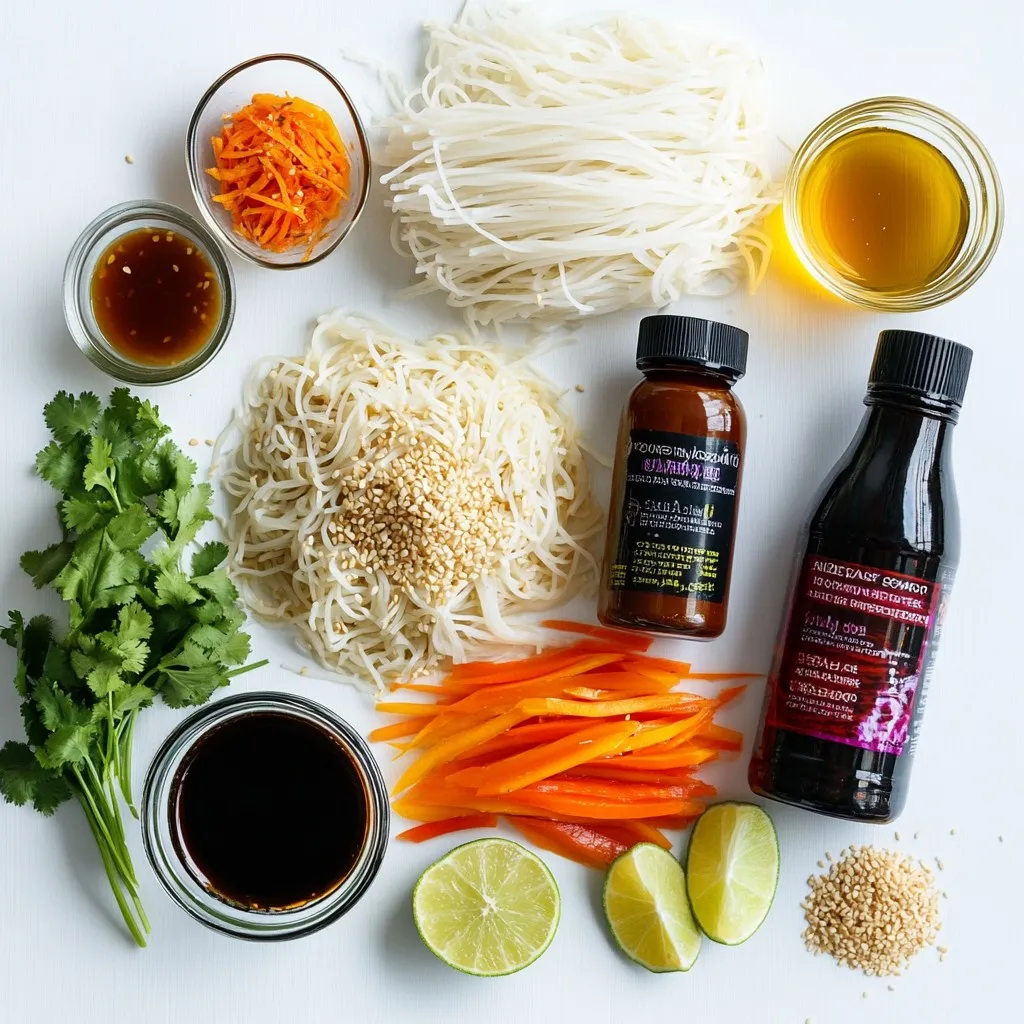
- 8 oz (225g) rice noodles
- 2 tablespoons gochujang (Korean chili paste)
- 1 tablespoon soy sauce
- 1 tablespoon sesame oil
- 1 tablespoon honey or maple syrup
Additional Ingredients
- 2 garlic cloves, minced
- 1 cup shredded carrots
- 1 bell pepper, thinly sliced (any color you like)
- 2 green onions, finely chopped
- Fresh cilantro for garnish (optional but recommended)
- Lime wedges for serving
Nutritional Information
Each serving has about 350 calories. The dish has a good balance of carbs, fats, and protein. You get around 8 grams of protein, 10 grams of fat, and 60 grams of carbs. If you need gluten-free options, use gluten-free soy sauce and rice noodles. This meal is easy to enjoy with dietary needs in mind.
Step-by-Step Instructions
Cooking the Rice Noodles
To cook the rice noodles, start by boiling a large pot of water. Once the water is boiling, add the rice noodles. Cook them for 5-7 minutes. You want them soft but still a bit chewy. After cooking, drain the noodles in a colander. Rinse them under cold water. This stops the cooking and helps them stay firm. Drain again and set aside.
Preparing the Gochujang Sauce
For the sauce, grab a small bowl. In it, mix the gochujang, soy sauce, sesame oil, honey, and sesame seeds. Use a whisk to blend everything well until it becomes smooth. The right ratios of ingredients make the sauce taste just right. Set this flavorful sauce aside for later.
Sautéing the Vegetables
Take a large skillet or wok and heat the vegetable oil over medium heat. Add the minced garlic first. Sauté it for about 30 seconds until it smells great and turns golden. Then, add the shredded carrots and thinly sliced bell pepper. Stir-fry these for 2-3 minutes. You want them to soften a bit but still be crunchy.
Combining Noodles and Sauce
Now, add the drained rice noodles to the skillet. Pour in the gochujang sauce you made earlier. Using tongs or a spatula, toss everything together gently. Make sure the noodles and veggies are well-coated in the sauce. Stir-fry for another 2-3 minutes until everything is heated through.
Garnishing and Serving Suggestions
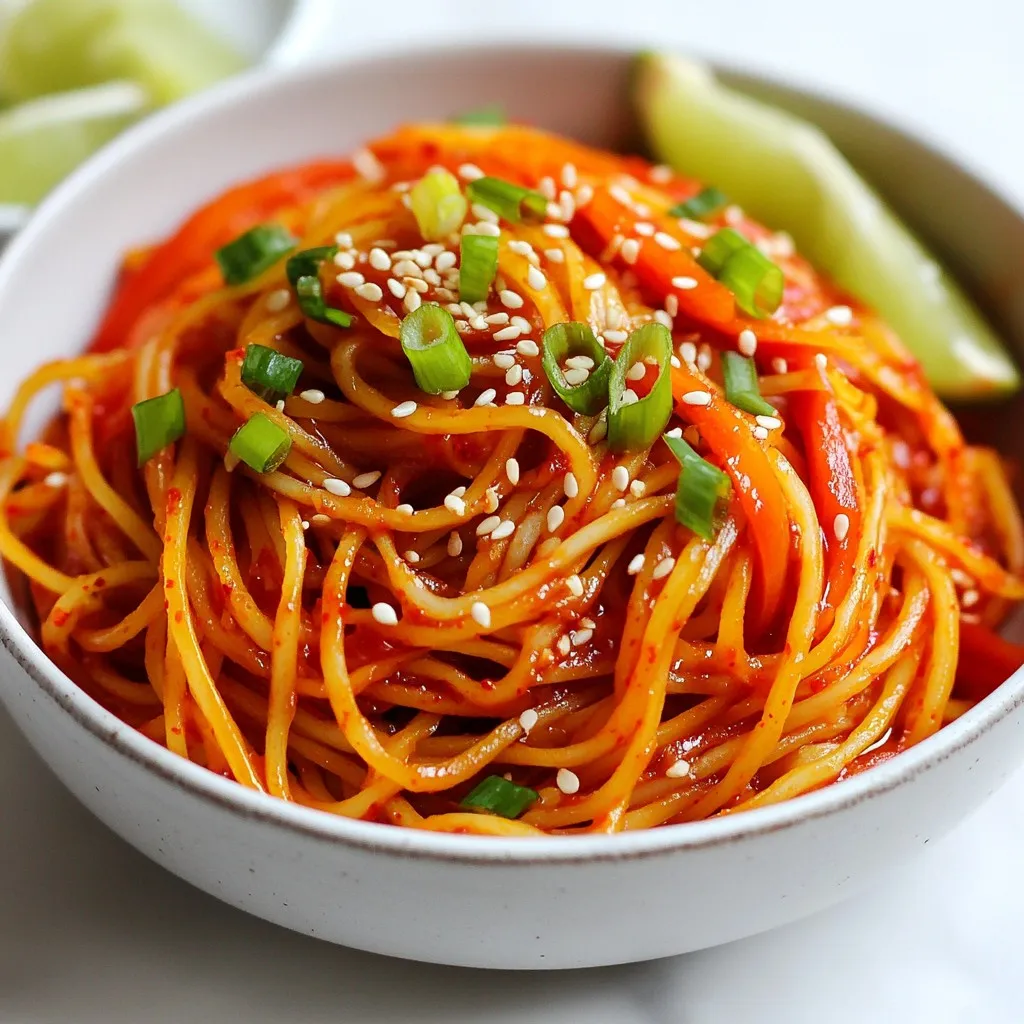
Once done, remove the skillet from the heat. Fold in the chopped green onions for extra freshness. Serve the spicy noodles hot. For a nice touch, garnish with fresh cilantro if you like. Add lime wedges on the side for a zesty kick.
Tips & Tricks
Perfecting Gochujang Noodles
- Cooking time adjustments for texture: Cook the rice noodles for 5-7 minutes. This time gives them a soft yet chewy texture. If you prefer firmer noodles, reduce the cooking time by a minute or two.
- Balancing spice levels: Gochujang is spicy, but you can adjust it. Start with 1 tablespoon and taste as you mix. If you want more heat, add a little more.
Common Mistakes
- Avoiding overcooked noodles: Overcooked noodles turn mushy. After boiling, rinse them under cold water quickly. This stops the cooking process.
- Ensuring proper sauce coating: To coat the noodles well, add the sauce gradually. Toss gently but thoroughly with tongs to mix all ingredients.
Serving Suggestions
- Pairing with proteins: For more protein, add grilled chicken, shrimp, or tofu. Cook them separately and mix them in at the end.
- Complementary side dishes: Serve with a simple cucumber salad or steamed broccoli. These add crunch and balance to your meal.
Pro Tips
- Use Fresh Ingredients: Opt for fresh vegetables and herbs to enhance the overall flavor and texture of your noodles.
- Adjust Spice Level: If you prefer a milder dish, reduce the amount of gochujang or add more honey/maple syrup to balance the heat.
- Cook Noodles Al Dente: Ensure the rice noodles are cooked al dente for the perfect texture and to prevent them from becoming mushy when mixed with the sauce.
- Garnish for Flavor: Don’t skip the fresh cilantro and lime wedges; they add a burst of freshness that complements the spicy noodles beautifully.
Variations
Vegetarian Options
You can easily make these spicy noodles vegetarian. For protein, try using tofu or tempeh. Both options soak up flavor well and add great texture. You can also use chickpeas for a fun twist.
Add more veggies to boost flavor and nutrition! Consider using broccoli, snap peas, or mushrooms. These veggies add color and crunch to your dish.
Spicy and Mild Versions
Want it spicier? Just add more gochujang! Start with a teaspoon at a time. This way, you can find the perfect heat level for you.
If you prefer a milder version, reduce the gochujang. You can also add sweet chili sauce for flavor without too much heat. Another option is to mix in diced bell peppers, which add sweetness.
Carb Alternatives
If you’re looking for lower-carb options, try zucchini noodles. They are easy to make. Just spiralize fresh zucchini for a light, healthy base.
Cauliflower rice is another great choice. It’s low in carbs and adds a nice texture. You can sauté it briefly before adding your noodles and sauce for a tasty meal.
Storage Info
Storing Leftovers
To keep your spicy Korean gochujang noodles fresh, use an airtight container. Glass or plastic containers work well. Make sure the container seals tightly to keep air out. Store the noodles in the fridge for up to three days. This way, they stay tasty and safe to eat.
Reheating Techniques
When reheating, you have two main options: microwave or stovetop. For the microwave, place the noodles in a microwave-safe dish. Add a splash of water to keep them moist. Heat on medium power for one to two minutes, stirring halfway. For the stovetop, heat a skillet over low heat and add a bit of oil. Toss the noodles gently until they warm up. This method helps keep the noodle texture just right.
Freezing Instructions
You can freeze these noodles too! First, let them cool completely. Then, place them in a freezer-safe bag or container. Remove as much air as possible to prevent freezer burn. They can last up to two months in the freezer. To thaw, place the bag in the fridge overnight. Reheat using the stovetop method to keep them from becoming mushy.
FAQs
What is Gochujang?
Gochujang is a thick, red paste made from Korean red chili, glutinous rice, fermented soybeans, and salt. You can use it in many dishes. It adds heat and depth to recipes. The flavor is sweet, spicy, and umami-rich. It brightens up the taste of any meal.
Can I use another type of noodle?
Yes, you can use different noodles. Some great options are soba, udon, or even spaghetti. Just keep in mind that cooking times may change. Soba noodles cook faster, while udon may take longer. Always check the package instructions for best results.
Is this recipe gluten-free?
Yes, this recipe can be gluten-free! Use rice noodles, which are naturally gluten-free. Be careful with soy sauce; choose a gluten-free version. Always check labels for hidden gluten. Cross-contamination can happen, so wash your cooking tools well before use.
This blog post covers all you need to make Gochujang noodles. You learned about the ingredients, cooking steps, and how to store leftovers. With tips on texture, spice levels, and variations, you can customize your dish. Remember, you can adjust the heat and add your favorite veggies. Enjoy making this easy and delicious meal. Don’t hesitate to experiment with proteins or other noodles. Have fun in the kitchen and enjoy your tasty creatio
Spicy Korean Gochujang Noodles
Ingredients
- 8 oz rice noodles
- 2 tablespoons gochujang (Korean chili paste)
- 1 tablespoon soy sauce
- 1 tablespoon sesame oil
- 1 tablespoon honey or maple syrup
- 1 teaspoon sesame seeds
- 1 tablespoon vegetable oil
- 2 cloves garlic, minced
- 1 cup shredded carrots
- 1 bell pepper thinly sliced (any color of your choice)
- 2 green onions, finely chopped
- Fresh cilantro for garnish (optional but recommended)
- Lime wedges for serving
Instructions
- Cook the Noodles: Start by bringing a large pot of water to a rolling boil. Once boiling, add the rice noodles and cook them for 5-7 minutes, until they become soft yet retain a slight chewiness. Drain the noodles and rinse them under cold running water to halt the cooking process. Drain again and set the noodles aside.
- Prepare the Spicy Sauce: In a small mixing bowl, combine the gochujang, soy sauce, sesame oil, honey (or maple syrup), and sesame seeds. Whisk the ingredients together until they form a smooth, well-blended sauce. Set this flavorful sauce aside for later use.
- Sauté the Vegetables: In a spacious skillet or wok, heat the vegetable oil over medium heat. Once hot, add the minced garlic and sauté it for about 30 seconds, or until it becomes fragrant and golden. Next, add the shredded carrots and sliced bell pepper to the skillet. Stir-fry these vegetables for approximately 2-3 minutes, just until they begin to soften but still retain some crunch.
- Combine Noodles with Sauce: To the skillet, add the drained rice noodles along with the prepared gochujang sauce. Using tongs or a spatula, gently toss the noodles and vegetables together, ensuring that everything is well-coated in the spicy sauce. Keep stir-frying for an additional 2-3 minutes or until the dish is heated through thoroughly.
- Garnish and Serve: Once cooked, remove the skillet from heat and fold in the chopped green onions for added freshness. Serve the spicy noodles hot, garnished with fresh cilantro (if desired) and lime wedges on the side to squeeze over the dish for an extra zing of flavor.


![- Shrimp: Use 1 pound of large shrimp. Fresh shrimp works best. Look for shrimp that is pink and firm. Avoid shrimp that smells strong or has a slimy texture. - Honey: Use pure honey for the best flavor. Clover honey or wildflower honey both work well. They add the right sweetness without being too strong. - Lime Juice: Fresh lime juice is best. It gives a bright, zesty flavor. If you use bottled lime juice, choose one with no added sugars for a true taste. - Soy Sauce: Use low-sodium soy sauce. This keeps the dish from being too salty. It adds depth without overpowering other flavors. - Fresh Cilantro: This herb adds a fresh taste. If you don’t like cilantro, try parsley as a mild substitute. - Lime Wedges: Serving lime wedges with the dish boosts the flavor. Squeezing fresh lime juice on the shrimp adds a nice zing. For the full recipe, check the details above. Start by whisking together the marinade ingredients in a bowl. This mixture includes honey, lime juice, soy sauce, minced garlic, minced ginger, and crushed red pepper flakes. Blending these ingredients well is key. It helps the flavors combine and coat the shrimp evenly. The honey adds sweetness, while lime juice gives a zesty kick. Soy sauce brings depth, and garlic and ginger add warmth. This blend will make your shrimp burst with flavor. Once you have the marinade ready, add the peeled and deveined shrimp. Make sure each shrimp gets a good coat of the marinade. Cover the bowl with plastic wrap and let it sit. The best time for marinating is 15 to 20 minutes at room temperature. This allows the shrimp to soak up the flavors. If you let it sit too long, the acid from the lime juice can change the shrimp's texture. Now it's time to cook! Heat olive oil in a large skillet over medium-high heat. Wait until the oil shimmers before adding the shrimp. This heat ensures a good sear. Add the marinated shrimp to the skillet, but remember to save any leftover marinade. Cook the shrimp for about 2 to 3 minutes without stirring. You want one side to turn pink and opaque. Flip the shrimp and cook for another 2 minutes until done. To finish, pour the reserved marinade into the skillet and let it cook for one more minute. This step helps the flavors come together. Remove the skillet from heat and season with salt and pepper. Your spicy honey lime shrimp is now ready to serve. Enjoy it warm, garnished with fresh cilantro and lime wedges. For the full recipe, refer back to the beginning! To cook shrimp just right, avoid overcooking. Shrimp turns pink and opaque when done. Look for a firm texture. If it curls tightly, it may be overcooked. Using a meat thermometer helps ensure perfect shrimp. The ideal internal temperature is 120°F. This temperature keeps your shrimp juicy and tender. To spice things up, adjust the heat levels to your liking. If you enjoy more heat, add extra crushed red pepper flakes. Start with a little and add more if needed. Consider adding aromatics for extra flavor. Garlic and ginger bring warmth. You can also try adding cumin or smoked paprika for a new twist. Use your creativity to enhance flavors you love. {{image_4}} You can try different proteins for this dish. Chicken works well if you prefer it. Tofu is a great choice for a plant-based option, absorbing flavors nicely. Just cut them into bite-sized pieces and follow the same cooking steps. For sweeteners, honey is fantastic, but maple syrup can add a nice twist. Agave syrup is another option to consider. Both alternatives will still give you that sweet touch without losing flavor. Want to switch up the citrus? You can use lemon or orange juice for a fresh taste. Both add a unique zing that pairs well with shrimp. Adjusting the spice level is easy too. If you want more heat, add extra crushed red pepper flakes. For less spice, reduce the amount or leave it out. This way, you can make the dish just how you like it! For the full recipe, check [Full Recipe]. To keep your Spicy Honey Lime Shrimp fresh, follow these tips. - Refrigerator Storage: Place leftovers in an airtight container. Use glass or plastic containers that seal well. Store the shrimp in the fridge for up to three days. Make sure they cool down before sealing to avoid moisture buildup. - Freezing Options: If you want to save shrimp for later, freezing is a great choice. Lay the shrimp flat in a single layer on a baking sheet. Freeze until solid, then transfer to a freezer-safe bag. This method prevents clumping and keeps shrimp fresh for up to three months. Reheating shrimp can be tricky. Here’s how to do it right. - Best Methods: The microwave is quick but can make shrimp rubbery. Instead, use a skillet for better results. Heat a little oil in the skillet over medium heat. Add the shrimp and cook until warmed through. - Maintaining Texture: To avoid rubbery shrimp, don’t overheat them. Just warm until they are hot but still tender. Stir gently to keep them from sticking to the pan. Enjoy your shrimp like they were just cooked! For the full recipe, check out the [Full Recipe]. You can tell shrimp is done by its color and texture. Cooked shrimp turns pink and becomes firm. They should look opaque, not translucent. The safe internal temperature for shrimp is 120°F (49°C). Use a meat thermometer for the best results. Yes, you can prep this dish ahead. Marinate the shrimp and store it in the fridge. This can last for up to 2 hours. If you want to keep it longer, freeze the marinated shrimp. Thaw in the fridge before cooking. Pair this shrimp with rice or a fresh salad. Here are some great options: - Steamed jasmine rice - Quinoa salad - Grilled vegetables - Avocado slices These sides balance the shrimp's spice and sweetness. You can also serve warm tortillas for a fun twist. Check the Full Recipe for more details! You learned how to make Spicy Honey Lime Shrimp with fresh ingredients and easy steps. We talked about the best shrimp, types of honey, and the importance of lime juice. I shared tips on marinating and cooking to get shrimp just right. Remember to check for doneness and how to store leftovers. You can also try new flavors by changing ingredients. Enjoy your dish, share it, and impress your friends. Simple cooking can lead to big smiles!](https://dishtreats.com/wp-content/uploads/2025/07/32f525eb-631f-4155-a120-c5a025aaa712-768x768.webp)